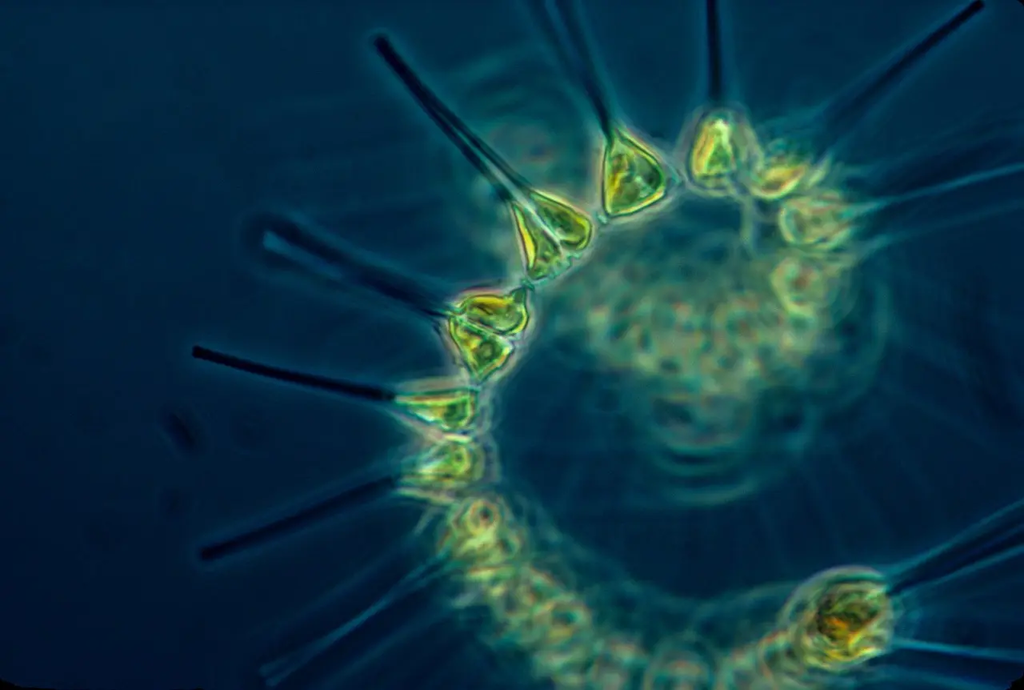
Marine food chains in oceans and seas illustrate how energy and nutrients flow among organisms. At the base are phytoplankton, which use sunlight to produce food through photosynthesis. Small animals like zooplankton eat phytoplankton, and in turn, are consumed by small fish. Larger predators, such as bigger fish, seabirds, and marine mammals, occupy higher levels, maintaining ecological balance and supporting biodiversity in marine ecosystems.
Marine Food Chains
Marine food chains in oceans and seas illustrate how energy and nutrients flow among organisms. At the base are phytoplankton, which use sunlight to produce food through photosynthesis. Small animals like zooplankton eat phytoplankton, and in turn, are consumed by small fish. Larger predators, such as bigger fish, seabirds, and marine mammals, occupy higher levels, maintaining ecological balance and supporting biodiversity in marine ecosystems.
💡 Key Takeaways
- Identify producers, consumers, and decomposers and their roles in marine trophic levels.
- Explain a typical marine food chain (phytoplankton → zooplankton → small fish → larger fish → top predator) and how energy moves between levels.
- Differentiate between a marine food chain and a marine food web, and understand energy transfer efficiency.
- Describe how human activities (overfishing, pollution, climate change) impact marine food chains and the importance of sustainable practices.
❓ Frequently Asked Questions
What is a marine food chain?
A sequence showing who eats whom in the ocean, starting with producers like phytoplankton and ending with top predators.
Who are the producers and primary consumers in the ocean?
Producers such as phytoplankton and seaweed use sunlight to make food. Primary consumers (herbivores) like zooplankton and small invertebrates eat those producers.
How does energy move up a marine food chain?
Energy transfers from one trophic level to the next when organisms are eaten. About 10% of the energy is typically passed to the next level; the rest is used for life processes or lost as heat.
Can you name a simple example of a marine food chain?
Phytoplankton → Zooplankton → Small fish → Large fish or seabird/top predator.