Microbursts are intense, localized downdrafts that occur during thunderstorms, releasing powerful bursts of wind toward the ground. These winds can reach speeds of over 100 mph, causing significant damage similar to tornadoes but over a smaller area. Microbursts are especially dangerous for aircraft during takeoff and landing, as the sudden wind shifts can disrupt flight paths. Their unpredictable and violent nature highlights the more frightening aspects of weather phenomena.
Microbursts
Microbursts are intense, localized downdrafts that occur during thunderstorms, releasing powerful bursts of wind toward the ground. These winds can reach speeds of over 100 mph, causing significant damage similar to tornadoes but over a smaller area. Microbursts are especially dangerous for aircraft during takeoff and landing, as the sudden wind shifts can disrupt flight paths. Their unpredictable and violent nature highlights the more frightening aspects of weather phenomena.
💡 Key Takeaways
- Define what a microburst is and how it differs from gusts and other downburst phenomena.
- Understand the formation process of a microburst, including downdrafts, precipitation loading, and dry vs. wet environments.
- Review safety implications and response strategies for pilots and outdoor activities during microbursts.
- Learn how meteorologists detect microbursts using radar and observations, including typical duration and wind patterns.
❓ Frequently Asked Questions
What is a microburst?
A microburst is a very small, intense downdraft from a thunderstorm that hits the ground and spreads outward, producing strong straight‑line winds.
How big and how long does a microburst last?
It typically spans about 1–4 km (0.6–2.5 miles) and lasts from a few seconds to a few minutes for the overall event.
How is a microburst different from a tornado?
A microburst creates straight‑line winds from descending air and is usually non‑rotating, whereas a tornado involves a rotating column of air.
Why are microbursts dangerous for aviation?
They cause sudden, strong wind shear near takeoff and landing, which can destabilize aircraft and reduce lift.
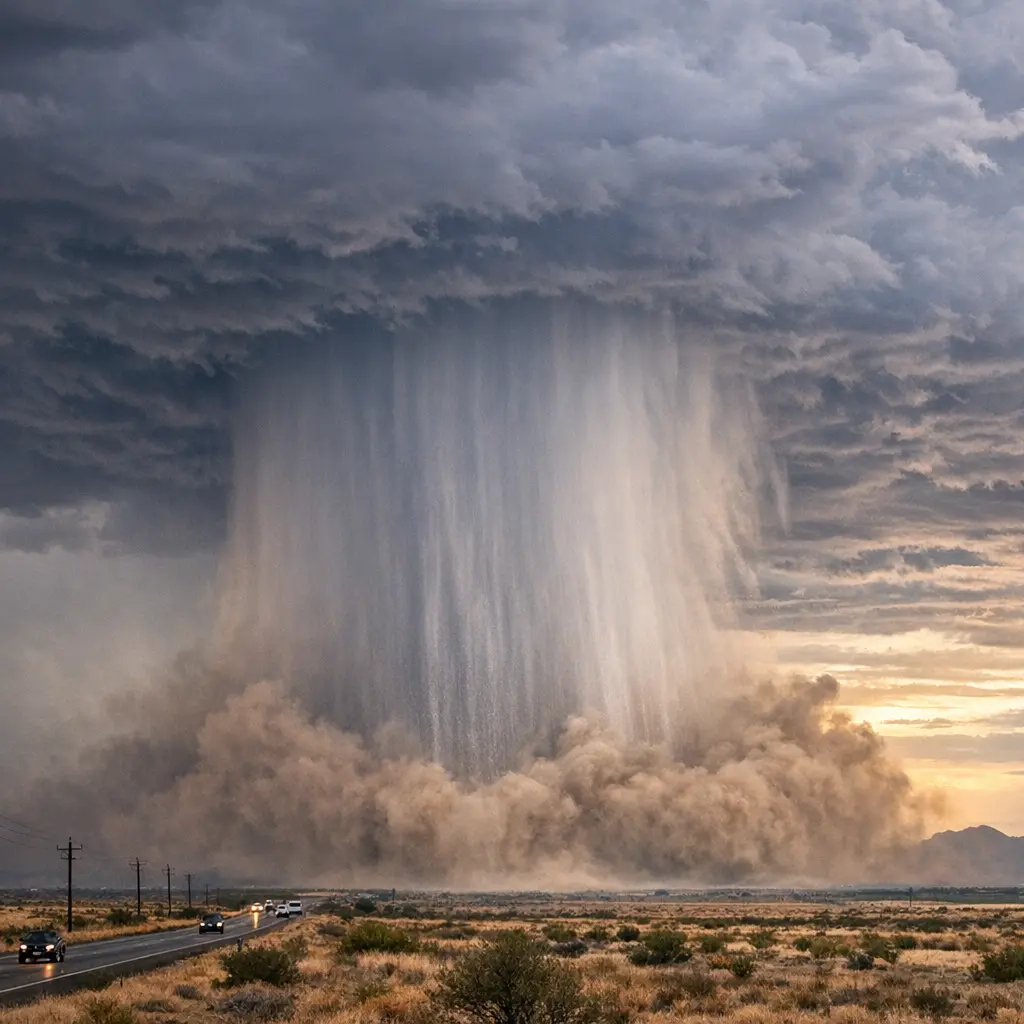
Wet vs dry microbursts?
Wet microbursts bring heavy rain to the ground, while dry microbursts have little ground rain but can still produce damaging winds.