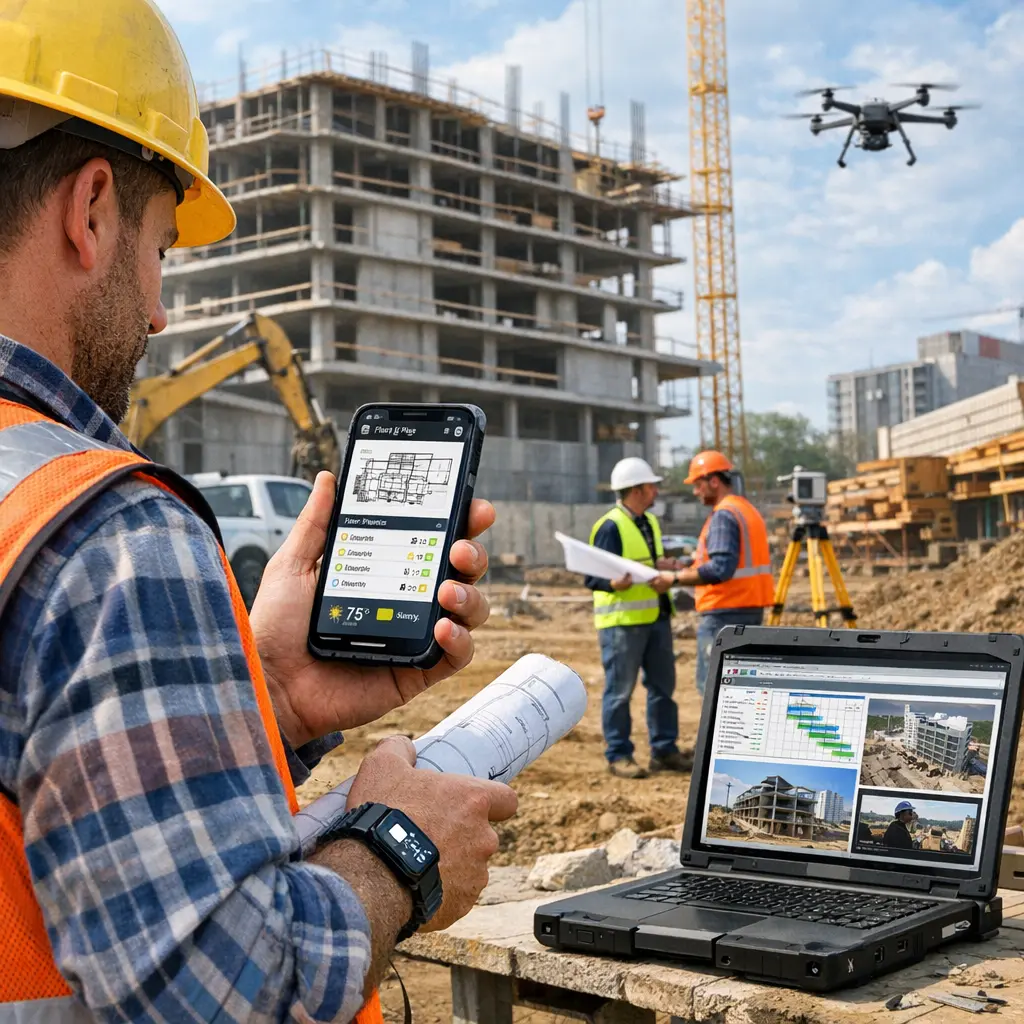
Mobile technology on construction sites refers to the use of smartphones, tablets, and specialized apps to access, share, and manage construction information in real time. Digital applications streamline processes such as project management, blueprint viewing, progress tracking, and communication among teams. This technology enhances efficiency, reduces paperwork, minimizes errors, and ensures that all stakeholders have up-to-date information, ultimately improving productivity and collaboration on construction projects.
Mobile Technology on Construction Sites+50
Mobile technology on construction sites refers to the use of smartphones, tablets, and specialized apps to access, share, and manage construction information in real time. Digital applications streamline processes such as project management, blueprint viewing, progress tracking, and communication among teams. This technology enhances efficiency, reduces paperwork, minimizes errors, and ensures that all stakeholders have up-to-date information, ultimately improving productivity and collaboration on construction projects.
💡 Key Takeaways
- Understand how mobile devices streamline on-site communication and task management.
- Identify common mobile tools used on construction sites, such as field apps, digital forms, and asset tracking.
- See how mobile technology supports safety, quality control, and real-time data capture.
- Explore best practices for device choice, offline access, data security, and integration with project management systems.
❓ Frequently Asked Questions
What is mobile technology on construction sites?
Tools and devices used on-site to collect data, communicate, and manage work, such as smartphones, tablets, rugged laptops, wearables, drones, and cloud-based apps.
What are common examples of mobile devices and apps used on construction sites?
Smartphones and tablets with field apps, rugged handhelds, wearable devices, drones for surveys, and BIM or progress-tracking apps that work offline and sync when connected.
What are the main benefits of mobile technology on construction projects?
Real-time communication and data capture, quicker issue resolution, improved safety, better progress tracking, and centralized document access.
What challenges should you plan for when using mobile tech on sites?
Limited connectivity, device durability, battery life, data security, training needs, and integration with existing systems.