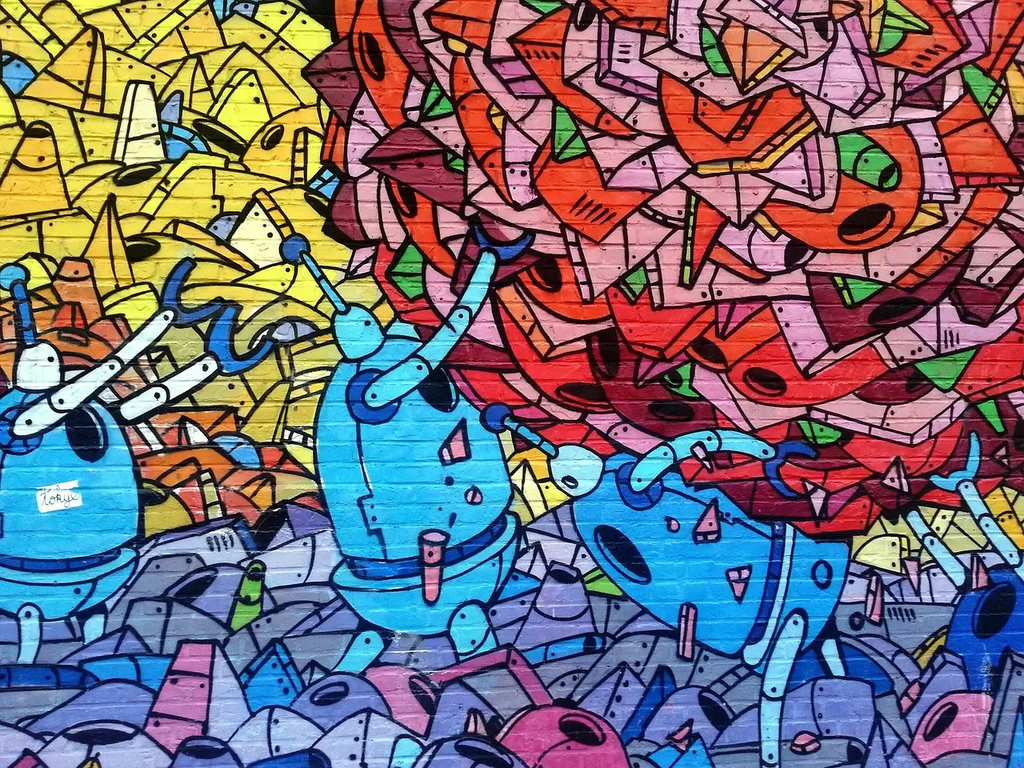
Murals and large-scale painting refer to artworks created directly on walls, ceilings, or expansive surfaces, often in public or communal spaces. These works are typically much larger than traditional paintings and can transform environments, convey cultural or social messages, and engage communities. Artists use various techniques and materials to create visually impactful scenes, narratives, or abstract designs, making murals a powerful form of artistic expression and public engagement.
Murals and Large‑Scale Painting
Murals and large-scale painting refer to artworks created directly on walls, ceilings, or expansive surfaces, often in public or communal spaces. These works are typically much larger than traditional paintings and can transform environments, convey cultural or social messages, and engage communities. Artists use various techniques and materials to create visually impactful scenes, narratives, or abstract designs, making murals a powerful form of artistic expression and public engagement.
💡 Key Takeaways
- Understand what murals and large-scale paintings are, and how they differ from traditional canvas works on walls and ceilings.
- Explore how scale, composition, and color transform spaces and viewer experience.
- Recognize the social and cultural roles of public murals and how they convey messages to communities.
- Identify essential steps for planning a mural project, including materials, collaboration, permits, and maintenance.
❓ Frequently Asked Questions
What is a mural?
A mural is a work of art painted or applied directly to a wall, ceiling, or other large surface, typically in public or community spaces.
How is mural art different from traditional paintings?
Murals are usually created on-site on large surfaces and interact with their architectural context, often spanning entire walls rather than a small canvas.
Who creates murals and where are they found?
Murals are made by artists or collectives, sometimes with community involvement, and are commonly found on buildings, schools, parks, and other public areas.
What purposes do murals serve?
They transform environments, reflect cultural or social themes, and engage communities by telling stories or conveying messages.
What materials and techniques are used in large-scale painting?
Artists use on-site brushes, rollers, or spray methods, along with weather-resistant paints and surface prep to ensure durability on walls and ceilings.