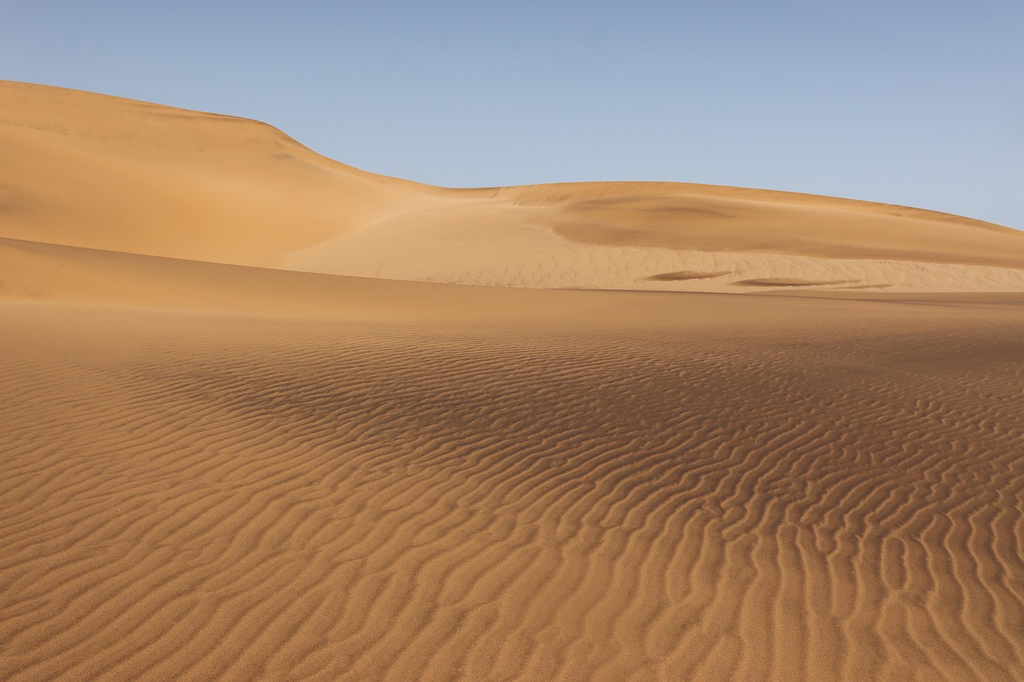
The Namib Desert, one of the world’s oldest deserts, stretches along the Atlantic coast of Namibia in southern Africa. Renowned for its towering red sand dunes, stark landscapes, and unique wildlife, it represents a natural wonder and iconic landmark. The desert’s surreal beauty includes sites like Sossusvlei and Deadvlei, attracting travelers and photographers. Its ancient, arid environment fosters rare adaptations among plants and animals, making the Namib a fascinating ecological marvel.
Namib Desert
The Namib Desert, one of the world’s oldest deserts, stretches along the Atlantic coast of Namibia in southern Africa. Renowned for its towering red sand dunes, stark landscapes, and unique wildlife, it represents a natural wonder and iconic landmark. The desert’s surreal beauty includes sites like Sossusvlei and Deadvlei, attracting travelers and photographers. Its ancient, arid environment fosters rare adaptations among plants and animals, making the Namib a fascinating ecological marvel.
💡 Key Takeaways
- Identify where the Namib Desert is located along the Namibian coast and its key geographic features.
- Understand why it is one of the oldest deserts and how coastal fog and scarce rainfall shape its climate.
- Explore iconic landscapes like the Sossusvlei dunes and Welwitschia, and how plants and animals adapt to extreme aridity.
- Learn how wind-driven dunes move over time and how this dynamic landscape affects life and tourism.
❓ Frequently Asked Questions
Where is the Namib Desert located?
A coastal desert along the Atlantic in southwestern Africa, mainly in Namibia, stretching from the Angola–Namibia border to the Orange River on the South Africa border.
Why is the Namib Desert considered one of the oldest deserts?
It is one of the world's oldest deserts, estimated to be about 55–80 million years old due to long-term climatic stability.
What makes the Namib Desert visually distinctive?
It features some of the world’s tallest red sand dunes (notably at Sossusvlei) and frequent coastal fog that provides essential moisture.
Which organisms are famous for surviving in the Namib Desert?
Adapted species like Welwitschia mirabilis (a unique plant) and animals such as the Namib beetle, oryx, lizards, and other desert dwellers.
What is Sossusvlei and why is it notable?
A salt-clay pan surrounded by towering red dunes, renowned as an iconic landscape of the Namib Desert.