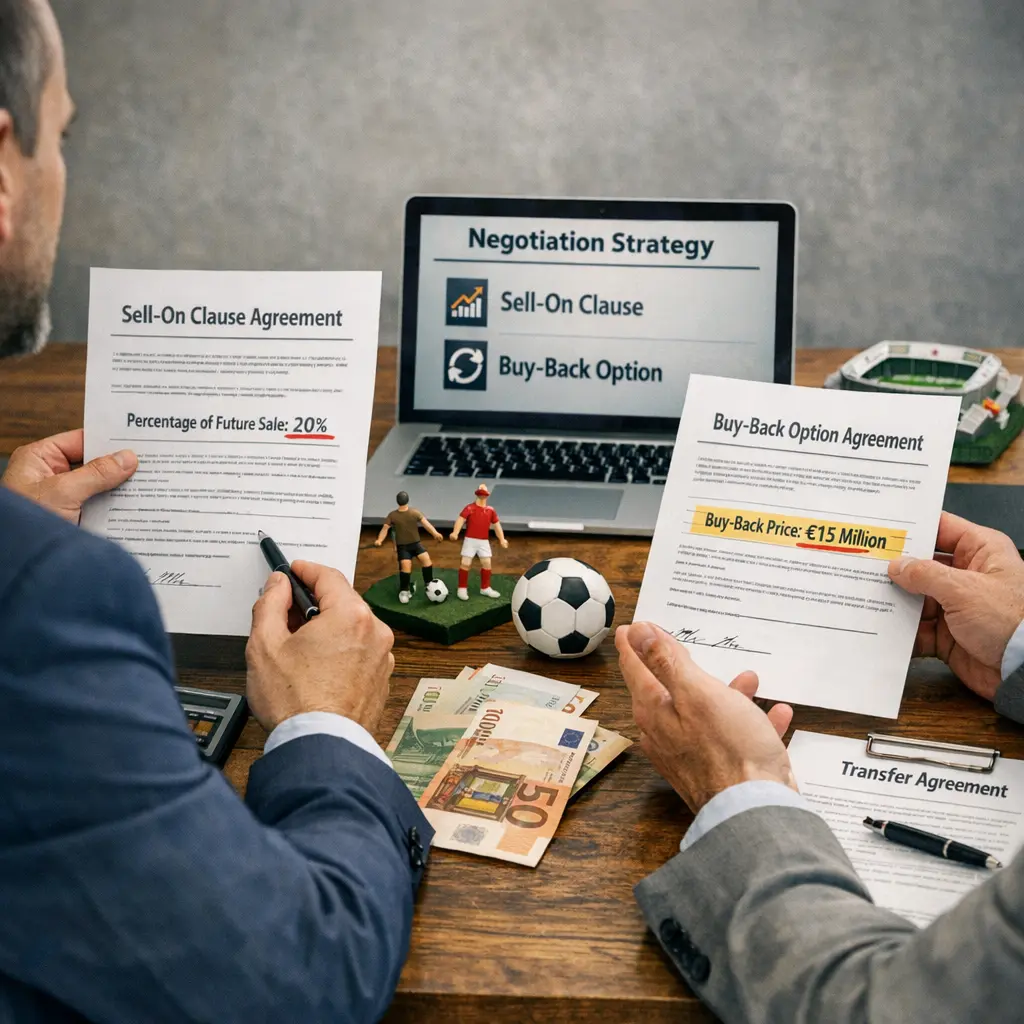
A negotiation strategy involving sell-on clauses and buy-backs, as used by Chelsea F.C., allows the club to retain a financial or strategic interest in players they sell. Sell-on clauses ensure Chelsea receives a percentage of future transfer fees if the player is sold again, while buy-back clauses give them the option to re-sign the player at a pre-agreed price, thus maintaining flexibility and potential future benefits in player transactions.
Negotiation Strategy: Sell-on Clauses and Buy-Backs
A negotiation strategy involving sell-on clauses and buy-backs, as used by Chelsea F.C., allows the club to retain a financial or strategic interest in players they sell. Sell-on clauses ensure Chelsea receives a percentage of future transfer fees if the player is sold again, while buy-back clauses give them the option to re-sign the player at a pre-agreed price, thus maintaining flexibility and potential future benefits in player transactions.
💡 Key Takeaways
- Understand what sell-on clauses are, how they work, and typical use cases
- Learn how buy-back clauses operate, including triggers, duration, and price/valuation mechanisms
- Develop negotiation tactics to balance upside and risk for buyers and sellers
- Identify common drafting pitfalls and enforceability considerations to ensure clear, actionable terms
❓ Frequently Asked Questions
What is a sell-on clause?
A contractual provision that gives the seller a share of future sale proceeds when the asset is sold again, usually as a percentage of the sale price; it helps the original owner capture upside.
How does a sell-on clause trigger and how is the payout calculated?
It triggers on a subsequent sale to a third party. The payout is a pre-agreed percentage of the sale price or a fixed amount, defined for timing, deductions, and who receives the share.
What is a buy-back clause?
A provision that gives the original owner the right to repurchase the asset under predefined terms (price, timeframe, and conditions), preserving a path to regain control.
When should you use sell-on or buy-back clauses in negotiations?
Use a sell-on clause to share future upside with the original owner; use a buy-back clause to retain optional control if the asset’s value or strategic value changes. Consider impact on price and risk.
What are common negotiation considerations and pitfalls?
Clarify triggers, calculation methods, asset scope, time limits, and tax implications; ensure clear definitions, dispute resolution, and alignment with overall deal timing and valuation to avoid ambiguity.