Optics: Interference & Diffraction
💡 Key Takeaways
- Understand how light waves interfere and diffract, and how these phenomena arise from wave superposition.
- Explain constructive and destructive interference and how interference patterns form in experiments such as double-slit or multi-slit setups.
- Analyze single-slit and double-slit diffraction patterns, including how wavelength, slit width, and geometry shape the intensity distribution and the locations of minima and maxima.
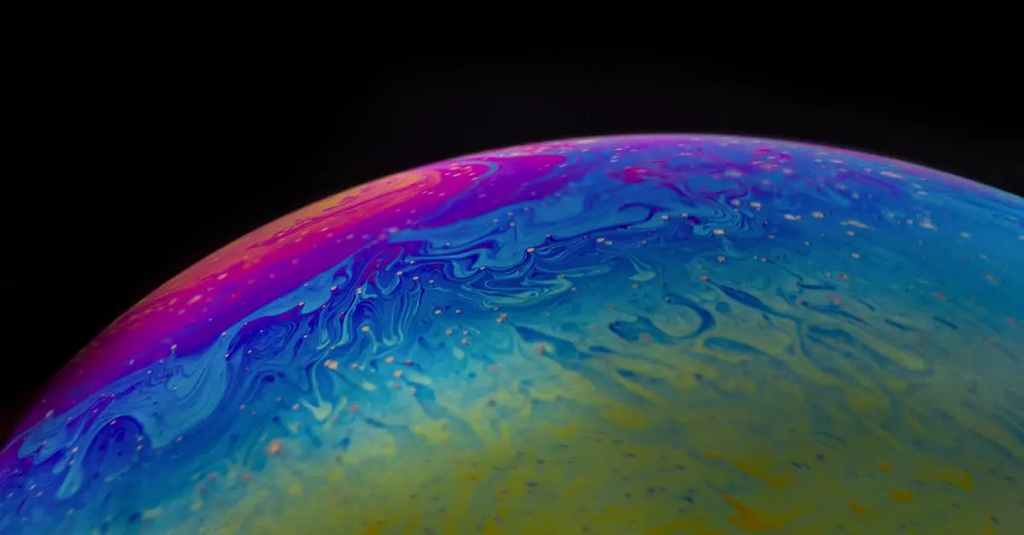
- Apply interference and diffraction concepts to real-world phenomena and devices (e.g., thin films, diffraction gratings, CDs, soap films, and optical instruments).
❓ Frequently Asked Questions
What is optical interference?
Interference is the superposition of two or more coherent light waves that meet and combine their amplitudes. Depending on their phase, they can reinforce each other (constructive) to produce bright regions or cancel (destructive) to produce dark regions.
How do you identify bright and dark fringes in a two-slit setup?
For slits separated by distance d and light of wavelength λ, bright fringes satisfy d sin θ = mλ and dark fringes satisfy d sin θ = (m + 1/2)λ, where m is an integer. On a screen at distance L, fringe spacing is approximately Lλ/d for small angles.
What causes diffraction and how does slit width affect the pattern?
Diffraction is the bending of waves at edges or openings. A single slit of width a produces a central maximum with intensity pattern proportional to sinc^2(π a sin θ / λ). Narrower slits (smaller a) spread the pattern wider; the first minimum occurs when sin θ = λ / a.
Why is coherence important for interference?
Coherence means a stable, fixed phase relationship between the waves. Temporal coherence (spectral purity) and spatial coherence are needed for clear fringes; incoherent or highly different wavelengths wash out interference.