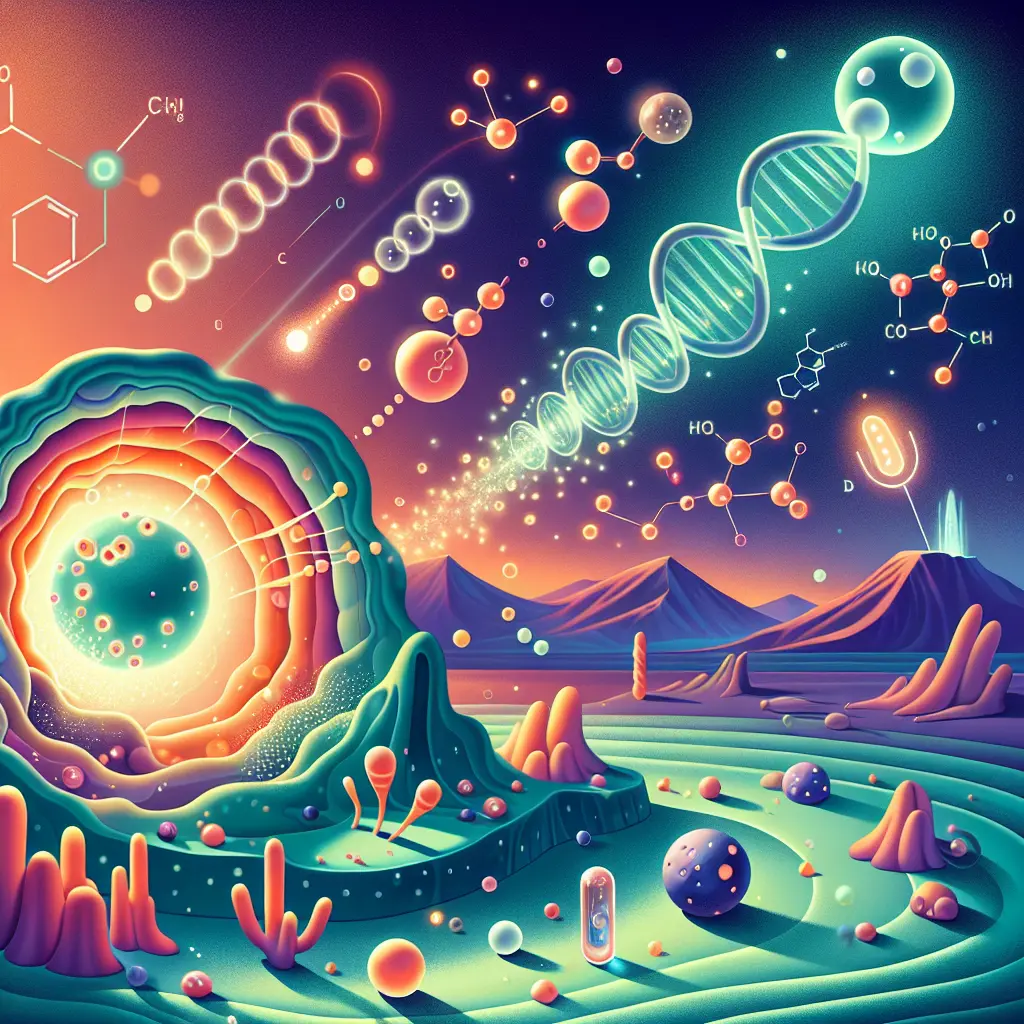
Organic chemistry basics involve the study of carbon-containing compounds, their structures, properties, and reactions. It covers fundamental concepts such as bonding, hybridization, functional groups, isomerism, and nomenclature. Understanding hydrocarbons—alkanes, alkenes, and alkynes—as well as the mechanisms of organic reactions, is essential. These basics form the foundation for exploring more complex molecules and reactions in biological systems, pharmaceuticals, and industrial chemistry.
Organic Chemistry Basics+50
Organic chemistry basics involve the study of carbon-containing compounds, their structures, properties, and reactions. It covers fundamental concepts such as bonding, hybridization, functional groups, isomerism, and nomenclature. Understanding hydrocarbons—alkanes, alkenes, and alkynes—as well as the mechanisms of organic reactions, is essential. These basics form the foundation for exploring more complex molecules and reactions in biological systems, pharmaceuticals, and industrial chemistry.
💡 Key Takeaways
- Identify and name hydrocarbons—alkanes, alkenes, and alkynes—and understand their basic properties.
- Explain bonding and hybridization (sp3, sp2, sp) and how this affects molecular geometry.
- Recognize common functional groups and predict general reactivity patterns.
- Understand isomerism and apply basic IUPAC rules to name simple organic compounds.
- Relate molecular structure to properties and typical reaction types (e.g., additions to alkenes, substitutions in alkanes).
❓ Frequently Asked Questions
What is organic chemistry?
The study of carbon-containing compounds, their structures, properties, and reactions; carbon's versatility yields many molecules.
What is hybridization and why is it important?
Hybridization describes mixing of atomic orbitals to form equal orbitals (sp3, sp2, sp). It explains molecular geometry and bond angles, e.g., sp3 for tetrahedral molecules and sp2 for planar double bonds.
What are functional groups?
Functional groups are specific atoms or groups that largely determine a molecule's reactivity and naming (examples: hydroxyl -OH, carbonyl C=O, carboxyl -COOH, amine -NH2).
What is isomerism?
Isomers share the same molecular formula but differ in structure or spatial arrangement. Structural isomers differ in connectivity; stereoisomers differ in 3D arrangement (cis/trans, enantiomers).
What are the main hydrocarbons and their general formulas?
Alkanes have only single bonds (saturated): CnH2n+2. Alkenes have at least one C=C double bond: CnH2n. Alkynes have at least one C≡C triple bond: CnH2n−2; alkanes undergo substitution, while alkenes and alkynes undergo addition reactions.