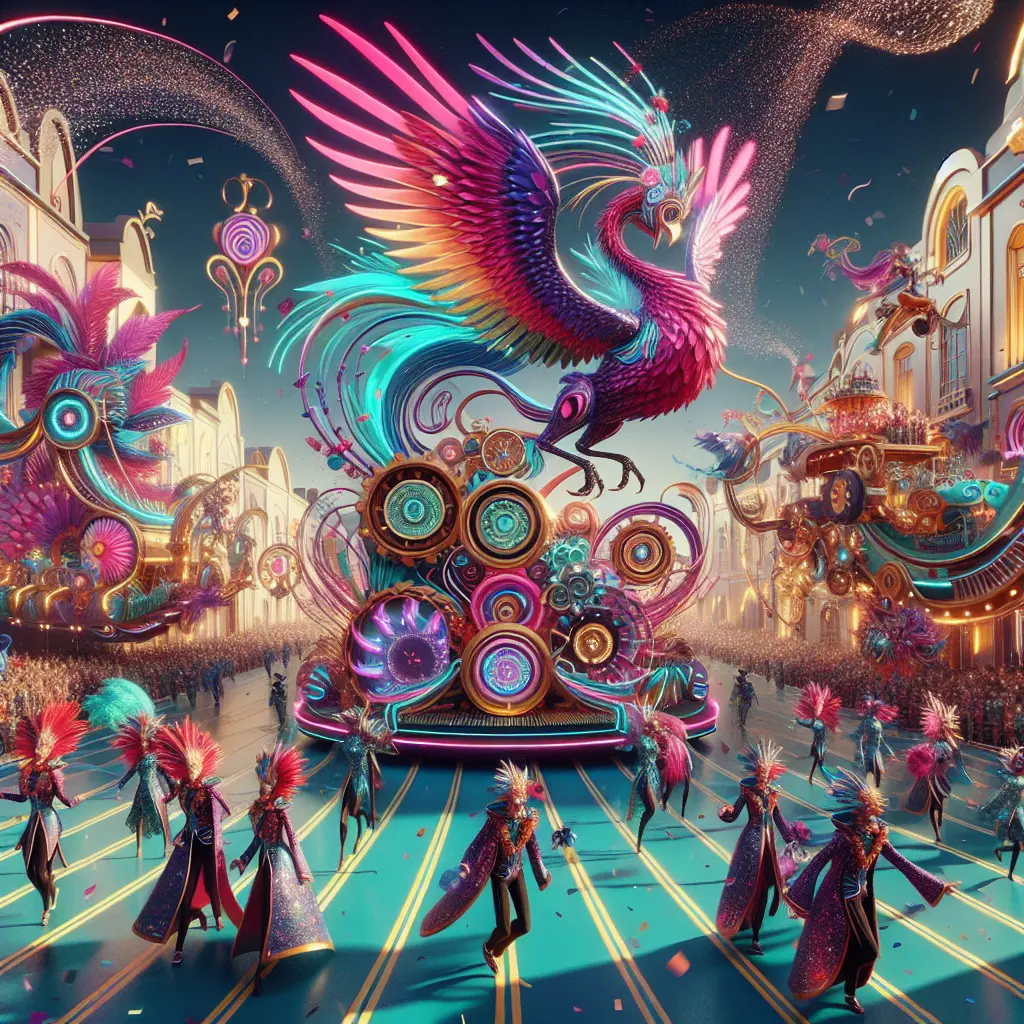
Parade design, floats, and costume arts involve the creative planning and construction of visually striking displays for public processions. This includes designing elaborate floats—decorated vehicles or platforms—and crafting imaginative costumes that align with a chosen theme or celebration. Artists and designers collaborate to blend color, form, and movement, transforming streets into vibrant spectacles that captivate audiences and celebrate cultural, festive, or promotional events.
Parade Design, Floats & Costume Arts
Parade design, floats, and costume arts involve the creative planning and construction of visually striking displays for public processions. This includes designing elaborate floats—decorated vehicles or platforms—and crafting imaginative costumes that align with a chosen theme or celebration. Artists and designers collaborate to blend color, form, and movement, transforming streets into vibrant spectacles that captivate audiences and celebrate cultural, festive, or promotional events.
💡 Key Takeaways
- Understand how parade themes inform float design, costume choices, and performance storytelling.
- Learn the basics of float construction, including platform building, safety, and lightweight materials.
- Explore color, texture, and fabric selection to create visually cohesive costumes and floats.
- Recognize planning steps such as budgeting, sourcing materials, and coordinating with performers and volunteers.
❓ Frequently Asked Questions
What is parade design?
Parade design is the planning of visual elements for a public procession, including themes, floats, costumes, music, and choreography, with attention to safety and logistics.
What is a parade float?
A parade float is a decorated vehicle or platform built to carry an art display along the parade route, usually tied to the overall theme.
How are parade themes chosen?
Themes are chosen to fit the event, audience, and cultural context, while considering practical constraints like size, budget, and route conditions.
What skills are involved in parade costume design?
Costume design involves concepting, fabric selection, patterning, sewing, and ensuring comfort, durability, and mobility for outdoor, moving environments.
What safety considerations matter for floats and costumes?
Safety factors include weight limits, secure attachments, flame-retardant fabrics, weatherproofing, electrical safety for lights, and safe interaction with crowds.