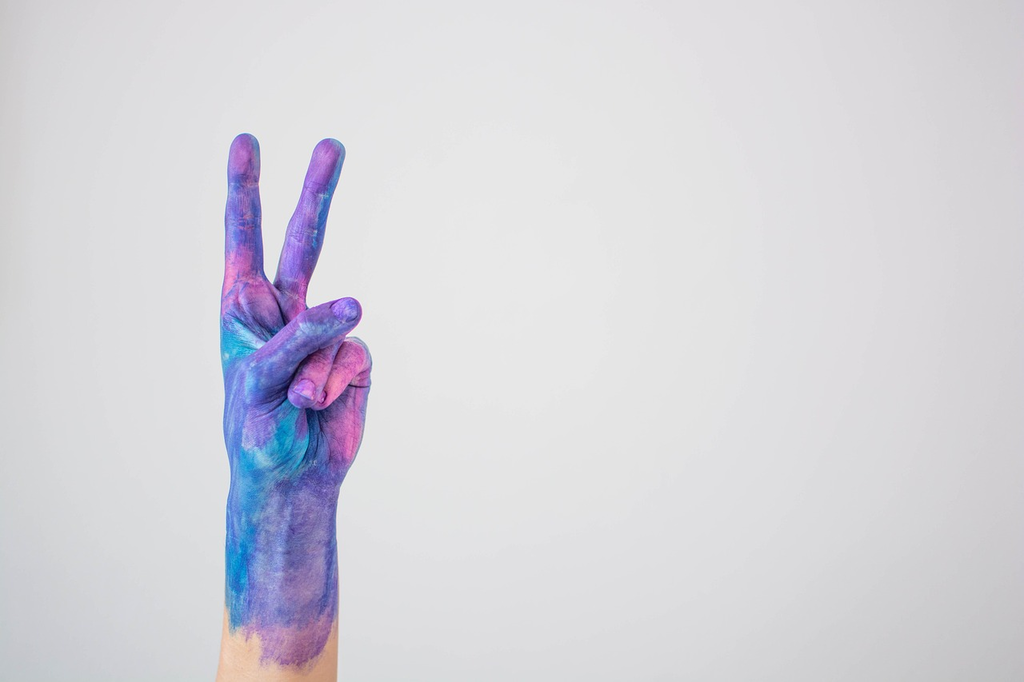
The peace sign gesture, formed by raising the index and middle fingers in a V-shape, originated during World War II as a symbol for "victory." In the 1960s, it was adopted by anti-war movements and reinterpreted as a symbol of peace. The thumbs-up gesture, often used to signal approval or agreement, also has ancient roots and is now universally recognized. Both gestures communicate positive intentions and have become iconic in global culture.
Peace Sign Origins
The peace sign gesture, formed by raising the index and middle fingers in a V-shape, originated during World War II as a symbol for "victory." In the 1960s, it was adopted by anti-war movements and reinterpreted as a symbol of peace. The thumbs-up gesture, often used to signal approval or agreement, also has ancient roots and is now universally recognized. Both gestures communicate positive intentions and have become iconic in global culture.
💡 Key Takeaways
- Learn who designed the peace sign and when it first appeared
- Understand the semaphore origins (N and D) for Nuclear Disarmament
- Explore how the symbol spread from the UK to global anti-war movements
- Identify common myths and misattributions about the peace sign
❓ Frequently Asked Questions
What is the peace sign symbol, and what does it stand for?
A circular emblem designed in 1958 by British designer Gerald Holtom for the Campaign for Nuclear Disarmament (CND). It merges the semaphore signals for N and D (Nuclear Disarmament) inside a circle, making it a universal symbol of peace.
Who created the peace sign, and for which movement?
Gerald Holtom created it for the Campaign for Nuclear Disarmament in the United Kingdom, debuting in 1958 as a graphic emblem for anti-nuclear protests.
How is the peace sign related to semaphore signaling?
The symbol is a stylized combination of semaphore letters N and D (for Nuclear Disarmament); semaphore uses two flags and the positions of the flags encode letters. Holtom merged the N and D positions inside a circle.
When did the peace sign become widely used?
It gained international recognition during the 1960s anti-war and civil rights movements, spreading through protests, posters, and fashion worldwide.