Perspective and proportion in drawing refer to techniques that create a sense of depth and accurate relationships between objects. Perspective uses lines and vanishing points to depict three-dimensional space on a flat surface, making objects appear closer or further away. Proportion ensures that the size and placement of elements are realistic and harmonious, maintaining correct relationships between parts of a subject. Together, they enhance realism and spatial coherence in artwork.
Perspective and Proportion in Drawing
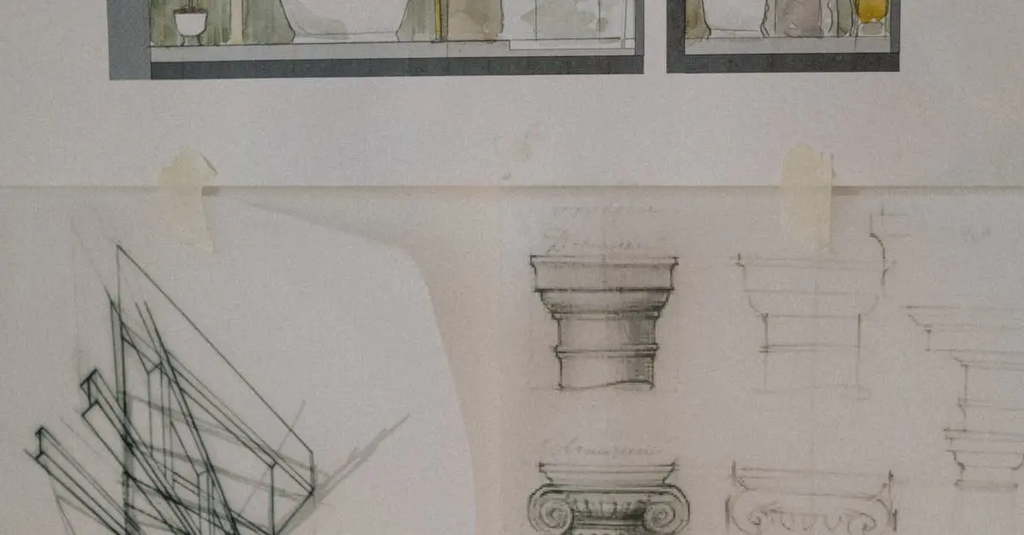
Perspective and proportion in drawing refer to techniques that create a sense of depth and accurate relationships between objects. Perspective uses lines and vanishing points to depict three-dimensional space on a flat surface, making objects appear closer or further away. Proportion ensures that the size and placement of elements are realistic and harmonious, maintaining correct relationships between parts of a subject. Together, they enhance realism and spatial coherence in artwork.
💡 Key Takeaways
- Understand how perspective uses lines, vanishing points, and a horizon line to create depth on a flat surface.
- Learn the differences between one-point, two-point, and multi-point perspective and when to use each.
- Master proportion basics to keep object sizes and relationships accurate relative to distance and viewpoint.
- Practice applying foreshortening and scale adjustments to maintain believable proportions in drawings.
❓ Frequently Asked Questions
What is perspective in drawing?
Perspective is the technique that creates depth on a flat surface by using converging lines toward vanishing points, making objects appear closer or farther away.
What is a vanishing point and how is it used?
A vanishing point is the point on the horizon where parallel lines appear to meet. It guides the receding lines to establish depth in a scene.
What are one point, two point, and three point perspective?
One point uses a single vanishing point for front-facing views, two point uses two vanishing points for corner views, and three point adds a vertical vanishing point for high or low angles.
What is proportion in drawing and why is it important?
Proportion is the relative size of parts within a subject. Correct proportions keep objects and features looking believable and in proper scale.
How can I practice improving perspective and proportion?
Practice with simple shapes, use grids, compare to references, measure by sight, and progressively tackle more complex scenes.