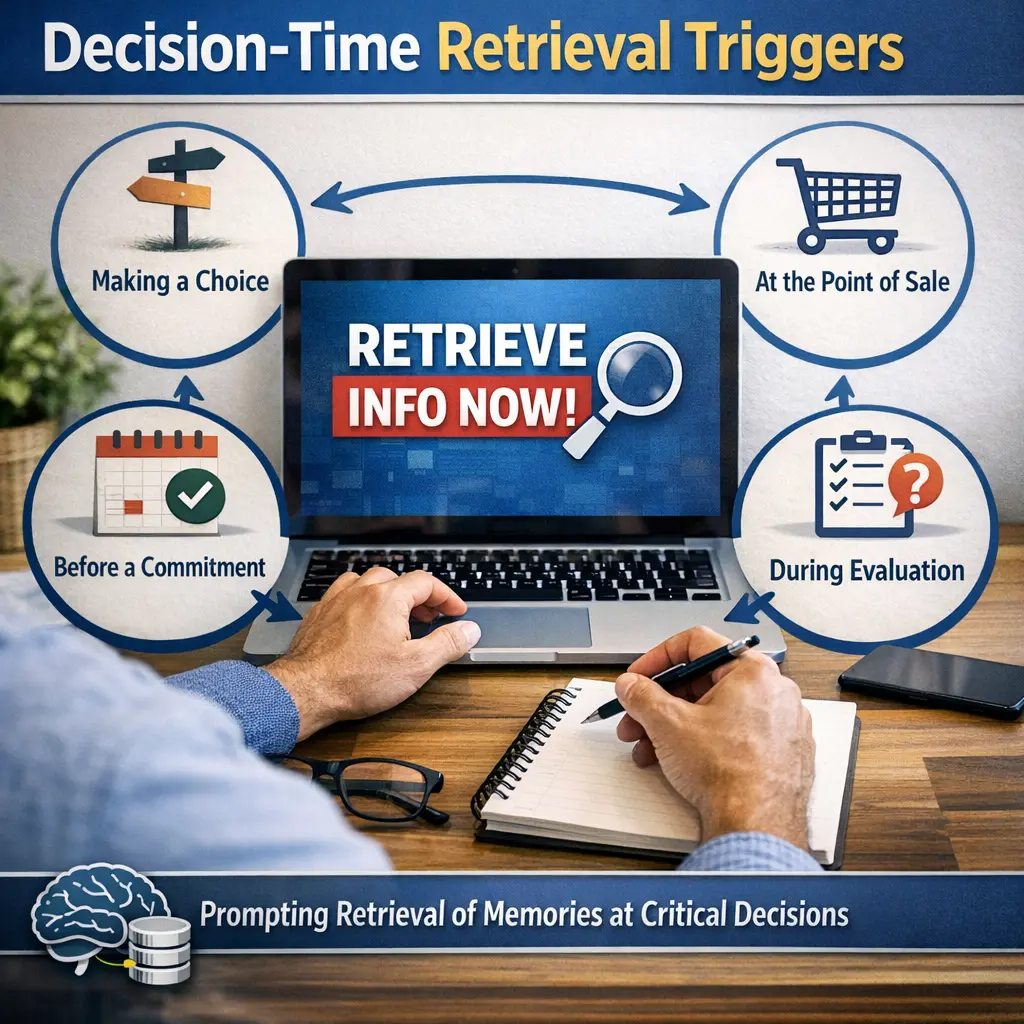
Policy-Guided Retrieval with ReAct-Style Agents refers to advanced Retrieval-Augmented Generation (RAG) methods where agents use explicit policies to guide their search and retrieval of information. ReAct-style agents combine reasoning and action, enabling dynamic decision-making during retrieval. By integrating policy-driven strategies, these agents can selectively query external knowledge sources, iteratively refine their search, and improve the relevance and accuracy of responses, resulting in more effective and context-aware information retrieval in complex tasks.
Policy-Guided Retrieval with ReAct-Style Agents
Policy-Guided Retrieval with ReAct-Style Agents refers to advanced Retrieval-Augmented Generation (RAG) methods where agents use explicit policies to guide their search and retrieval of information. ReAct-style agents combine reasoning and action, enabling dynamic decision-making during retrieval. By integrating policy-driven strategies, these agents can selectively query external knowledge sources, iteratively refine their search, and improve the relevance and accuracy of responses, resulting in more effective and context-aware information retrieval in complex tasks.

💡 Key Takeaways
- Understand policy-guided retrieval: how policies decide when and what information to fetch.
- Learn the basics of ReAct-style agents: how reasoning steps and actions are interleaved to solve tasks.
- Explain how retrieval-augmented approaches reduce hallucinations by grounding answers in fetched data.
- Identify practical design considerations for policy-guided retrieval with ReAct: tool selection, latency, and failure handling.
❓ Frequently Asked Questions
What is a ReAct-style agent?
A ReAct-style agent interleaves reasoning and actions: it uses reasoning steps to decide what to do next and then performs actions (such as querying tools or retrieving data). Observations from actions feed back into the next reasoning step. In deployed systems, internal reasoning is often kept private.
What does policy-guided retrieval mean?
Policy-guided retrieval means a policy (learned or rule-based) selects which documents or knowledge sources to fetch, based on the current task state, to provide relevant information that supports decision making.
How do these concepts work together?
The policy chooses relevant information to retrieve; the agent uses that information to reason and decide actions, then executes tools or fetches more data and updates its understanding in a loop until the task is solved.
What are common use cases?
Complex question answering, code or data analysis with tool use, planning and execution tasks, and scenarios requiring up-to-date or external knowledge.
What are potential challenges or pitfalls?
Latency and reliability of retrieval, data staleness, policy errors in selecting sources, over-reliance on retrieved data, and safety/privacy considerations when using external tools.