Politics and policy making involve the processes by which laws are created, implemented, and enforced within a society. This field encompasses the actions of government officials, lawmakers, and public servants who develop and execute policies to address public needs and societal issues. It includes the negotiation, debate, and compromise required to balance diverse interests, ensuring that legal frameworks and government actions serve the public good and uphold democratic principles.
Politics & Policy Making+50
Politics and policy making involve the processes by which laws are created, implemented, and enforced within a society. This field encompasses the actions of government officials, lawmakers, and public servants who develop and execute policies to address public needs and societal issues. It includes the negotiation, debate, and compromise required to balance diverse interests, ensuring that legal frameworks and government actions serve the public good and uphold democratic principles.
💡 Key Takeaways
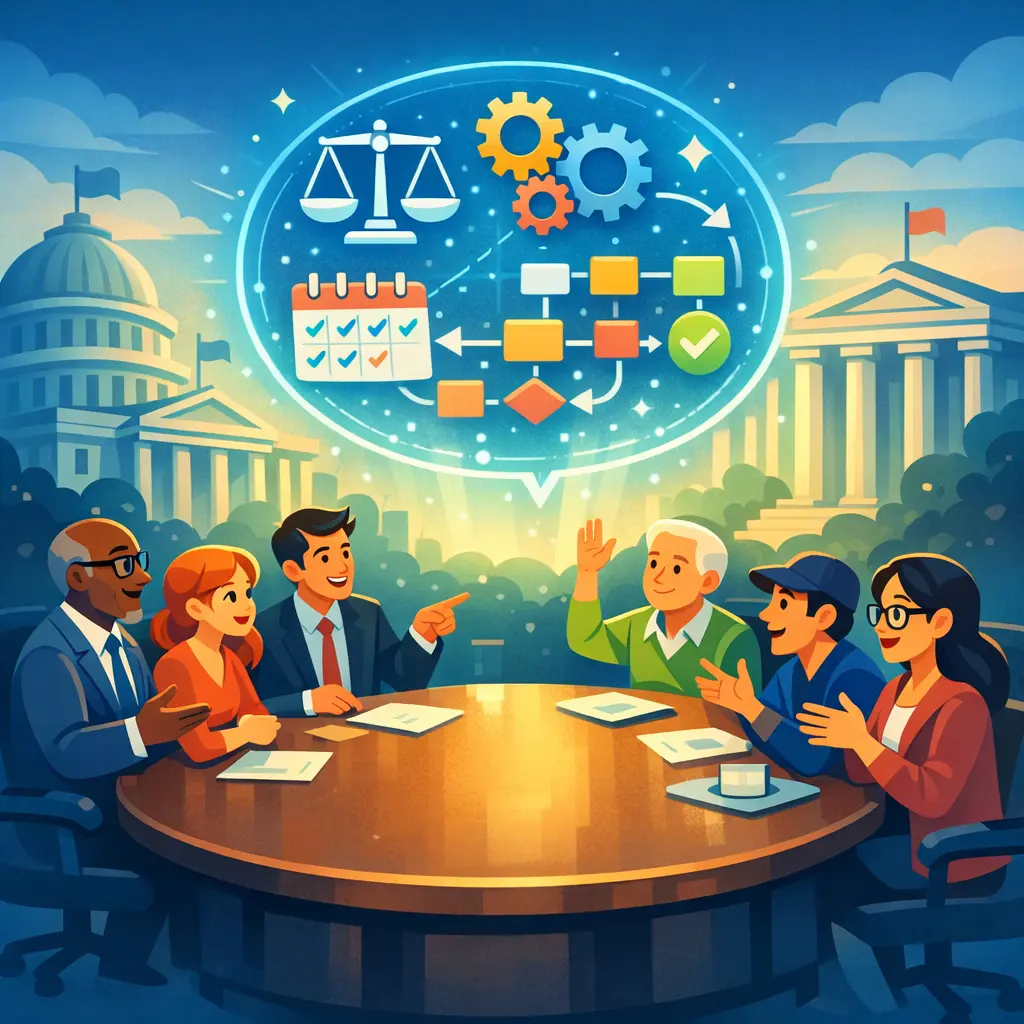
- Understand the key stages of the policy-making process, from agenda setting and formulation to adoption, implementation, and evaluation.
- Identify the main actors and institutions that shape policy decisions (legislature, executive, judiciary, agencies, interest groups, and the media).
- Explore common policy tools and instruments used to achieve public goals (regulation, funding, incentives, and information campaigns) and how they are evaluated.
- Recognize how political context—elections, ideology, and public opinion—influences policy choices and outcomes.
❓ Frequently Asked Questions
What is policy making in politics?
The process by which governments identify public problems, set priorities, design and choose policies, and implement and evaluate actions to address them.
What is agenda setting?
The stage where problems are recognized and placed on the political agenda, often shaped by media, advocacy, events, and public opinion.
What are policy instruments?
Tools governments use to achieve goals, such as regulations, subsidies, taxes or charges, information campaigns, and public provision.
What is policy implementation?
Carrying out adopted policies through agencies and programs, allocating resources, issuing rules, and ensuring compliance.
What is policy evaluation?
Assessing whether a policy achieved its goals, its impacts, costs, and unintended effects to inform future decisions.