Postcolonial and decolonial anthropology critically examine how colonial histories and power dynamics shape knowledge, identities, and cultural practices. They challenge Eurocentric perspectives, question the legacy of colonialism in anthropological research, and advocate for the inclusion of marginalized voices. These approaches seek to deconstruct dominant narratives, promote epistemic justice, and support collaborative, ethical research practices that recognize the agency and perspectives of formerly colonized peoples.
Postcolonial & Decolonial Anthropology
Postcolonial and decolonial anthropology critically examine how colonial histories and power dynamics shape knowledge, identities, and cultural practices. They challenge Eurocentric perspectives, question the legacy of colonialism in anthropological research, and advocate for the inclusion of marginalized voices. These approaches seek to deconstruct dominant narratives, promote epistemic justice, and support collaborative, ethical research practices that recognize the agency and perspectives of formerly colonized peoples.
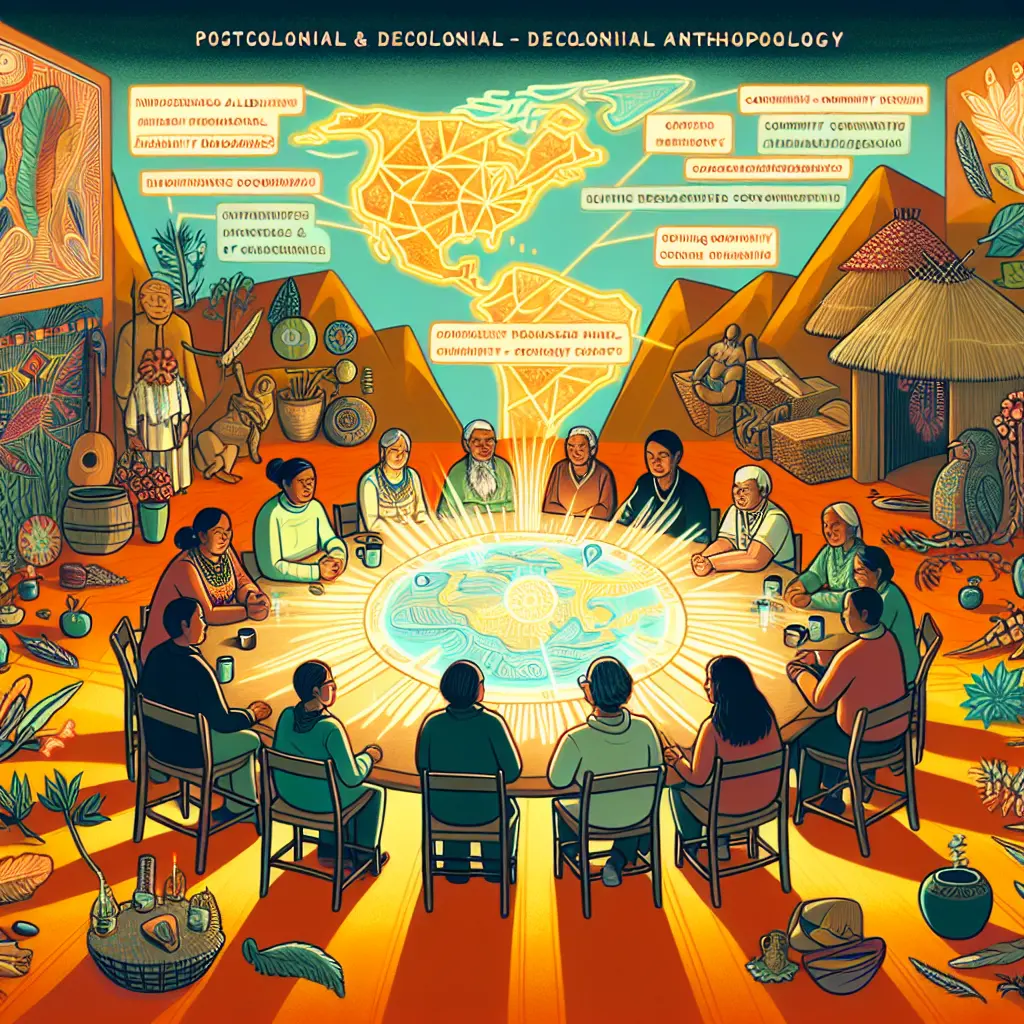
💡 Key Takeaways
- Identify how colonial histories shape the knowledge and methods of anthropology.
- Contrast Eurocentric frameworks with decolonial and Indigenous approaches.
- Explore reflexive, collaborative research and center marginalized voices and knowledges.
- Examine the ethical and political dimensions of decolonizing anthropological research and representation.
❓ Frequently Asked Questions
What is postcolonial anthropology?
A critical field that examines how colonial histories and power relations shape knowledge about people and cultures, challenges Eurocentric theories, and seeks to include voices from marginalized communities in the study of culture.
What is decolonial anthropology?
An approach that addresses the ongoing coloniality of power in knowledge, institutions, and research practices; it centers indigenous and other marginalized knowledges and co-produces understanding with communities rather than treating them as mere subjects.
How do postcolonial and decolonial approaches affect research methods?
They emphasize reflexivity, community collaboration, consent and benefit-sharing, use of local languages and oral histories, and co-designed methodologies that prioritize the perspectives of those studied, while resisting extractive fieldwork.
Why do these approaches challenge Eurocentrism and colonial legacies?
To avoid universalizing Western norms, to reveal diverse ways of knowing, and to address power imbalances in research by giving margin communities a say in how they are represented and studied.