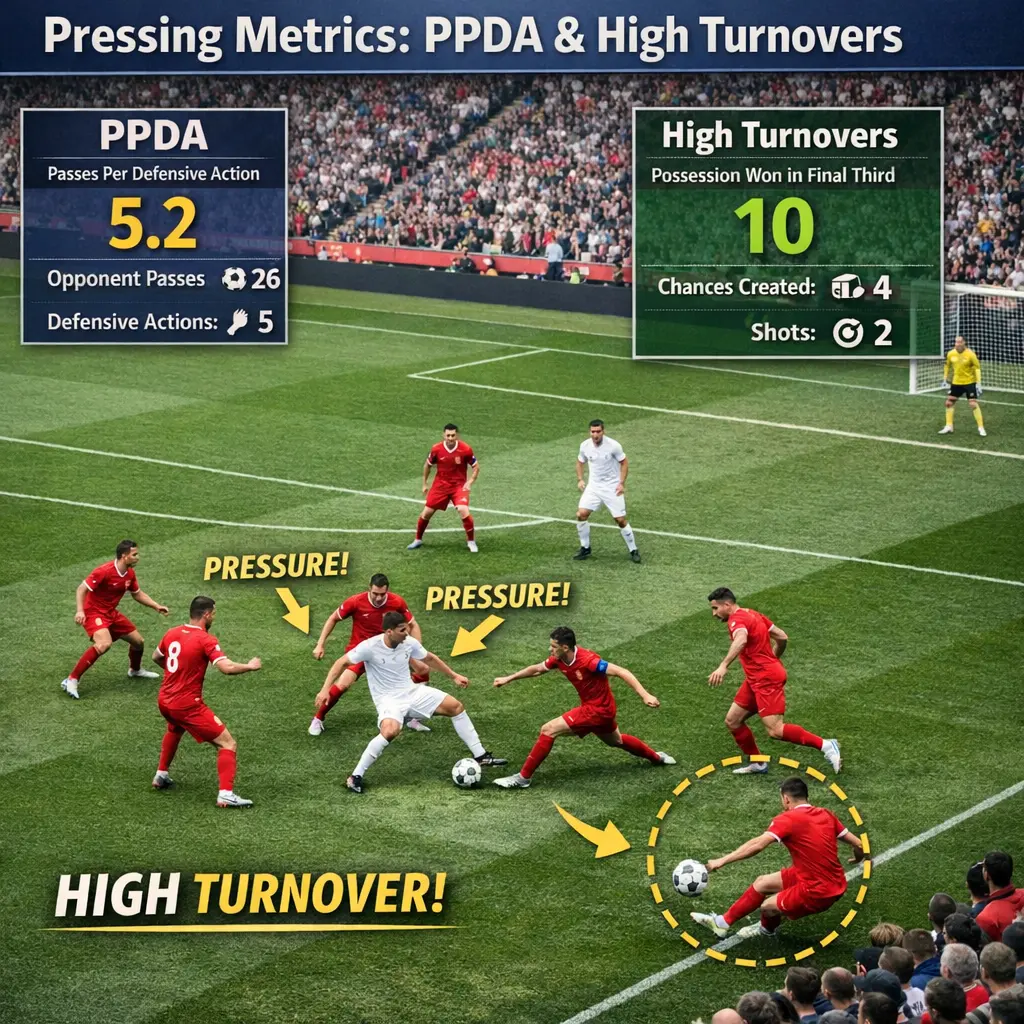
Pressing metrics like PPDA (Passes Per Defensive Action) and high turnovers are key indicators of Chelsea F.C.’s aggressive defensive strategy. A low PPDA suggests Chelsea allows opponents few passes before attempting to win the ball back, reflecting intense pressing. High turnovers measure how often Chelsea regains possession in advanced areas, enabling quick attacks. Together, these metrics highlight Chelsea’s focus on disrupting opponents’ play and creating scoring opportunities through proactive defense.
Pressing Metrics: PPDA and High Turnovers
Pressing metrics like PPDA (Passes Per Defensive Action) and high turnovers are key indicators of Chelsea F.C.’s aggressive defensive strategy. A low PPDA suggests Chelsea allows opponents few passes before attempting to win the ball back, reflecting intense pressing. High turnovers measure how often Chelsea regains possession in advanced areas, enabling quick attacks. Together, these metrics highlight Chelsea’s focus on disrupting opponents’ play and creating scoring opportunities through proactive defense.
💡 Key Takeaways
- Define PPDA (Passes Allowed Per Defensive Action) and how it is measured in match data.
- Explain how a higher PPDA indicates more aggressive pressing and the associated risk and reward.
- Describe how high turnovers can result from successful presses and how to distinguish forced turnovers from unforced ones.
- Identify practical ways to interpret PPDA and turnover data, including the influence of phase, opponent, and game state.
❓ Frequently Asked Questions
What is PPDA?
PPDA stands for Passes Per Defensive Action. It measures pressing intensity by counting how many passes the opposition completes before your team applies a defensive action (pressure, tackle, interception, or block). A lower value means stronger pressing.
How is PPDA calculated?
PPDA = (total passes by the opposing team) ÷ (defensive actions by your team, such as pressures, tackles, interceptions, or blocks) during the same period.
What does a low PPDA vs. a high PPDA indicate?
Low PPDA indicates more aggressive pressing (fewer passes allowed before a defensive action). High PPDA indicates looser pressing (opponents can pass more before your team defends).
What are 'turnovers' in this context?
Turnovers are moments when your team loses possession to the opponent, often due to forced errors, interceptions, or poor passes. Pressing can create turnovers but may also risk giving up counterattacks.
How should PPDA and turnover data be read together?
Together, they show pressing intensity and its effectiveness. Low PPDA with few turnovers suggests controlled, effective pressing; low PPDA with many turnovers suggests aggressive pressure with more mistakes; high PPDA with high turnovers may indicate riskier pressing or ineffective pressure.