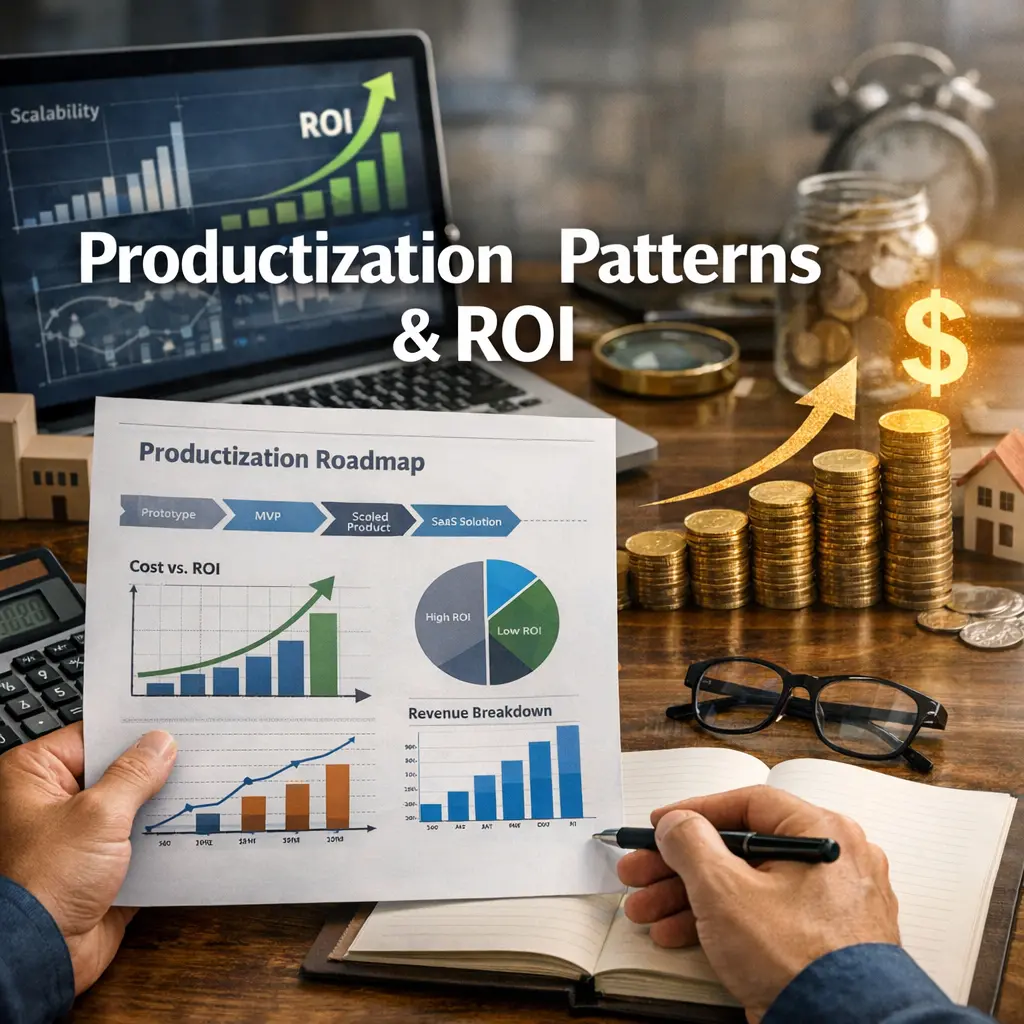
Productization Patterns & ROI (Agent Architecture) refers to standardized methods and frameworks for transforming agent-based solutions—such as AI or software agents—into market-ready products. These patterns streamline development, deployment, and scalability, ensuring consistent quality and performance. By applying these structures, organizations can better measure and optimize the return on investment (ROI), as they enable efficient resource allocation, faster time-to-market, and improved adaptability to changing business requirements.
Productization Patterns & ROI
Productization Patterns & ROI (Agent Architecture) refers to standardized methods and frameworks for transforming agent-based solutions—such as AI or software agents—into market-ready products. These patterns streamline development, deployment, and scalability, ensuring consistent quality and performance. By applying these structures, organizations can better measure and optimize the return on investment (ROI), as they enable efficient resource allocation, faster time-to-market, and improved adaptability to changing business requirements.
💡 Key Takeaways
- Define productization and its impact on scalability and profitability.
- Identify common productization patterns: bundles, fixed scope, automation.
- Calculate ROI for productized offerings: costs, pricing, savings, revenue lift.
- Track key metrics (ROI, payback period, CAC, LTV) to gauge success.
- Apply practical steps to productize: pilot, pricing, governance, and feedback loops.
❓ Frequently Asked Questions
What is productization in a services business?
Turning custom work into repeatable, packaged offerings with defined scope, price, and delivery to enable scalable delivery and predictable margins.
What are common productization patterns?
Fixed-scope packaged services, productized consulting, playbooks/templates, subscriptions for ongoing access, and standardized managed services.
How can productization improve ROI?
By increasing scalability, reducing delivery time, improving resource utilization, and creating recurring revenue with higher margins.
How do you measure ROI of productization?
Compare incremental profit from the productized offering to baseline, using metrics like gross margin, time-to-value, utilization, churn, and customer lifetime value minus acquisition cost.