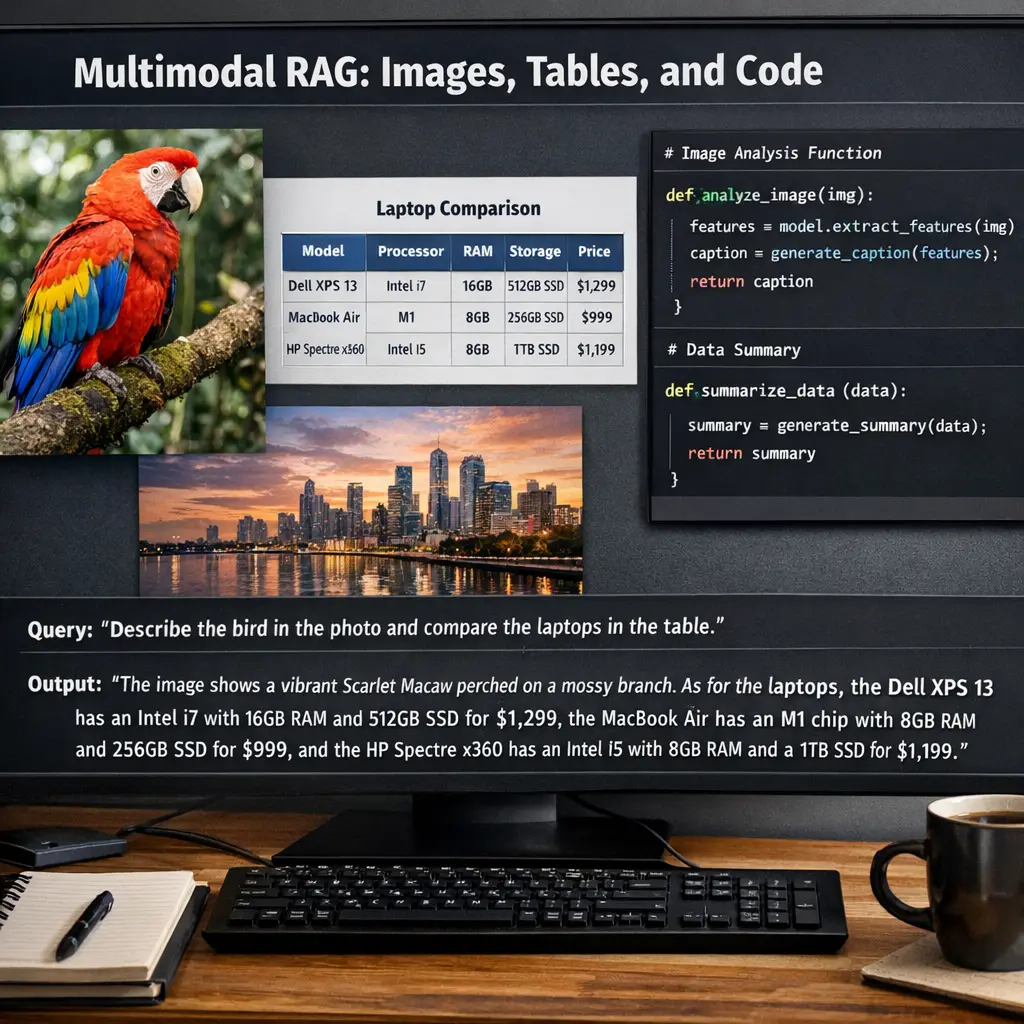
Prompt templates for Retrieval-Augmented Generation (Advanced RAG Techniques) are structured input formats designed to guide language models in effectively utilizing retrieved external information. These templates optimize how queries are framed and how retrieved documents are integrated, ensuring relevant context is included in model responses. Advanced RAG techniques use these templates to improve answer accuracy, coherence, and relevance, especially in complex tasks requiring synthesis of information from multiple sources.
Prompt Templates for Retrieval-Augmented Generation+50
Prompt templates for Retrieval-Augmented Generation (Advanced RAG Techniques) are structured input formats designed to guide language models in effectively utilizing retrieved external information. These templates optimize how queries are framed and how retrieved documents are integrated, ensuring relevant context is included in model responses. Advanced RAG techniques use these templates to improve answer accuracy, coherence, and relevance, especially in complex tasks requiring synthesis of information from multiple sources.

💡 Key Takeaways
- Understand how Retrieval-Augmented Generation combines retrieval with generation to improve factual grounding.
- Design prompt templates that control what to retrieve and how retrieved content is used in the final answer.
- Specify context length, source constraints, and citation style within prompts to guide grounding and provenance.
- Apply templates to common RAG tasks (fact-checking, summarization, multi-document synthesis) and learn how to evaluate outputs for accuracy and provenance.
❓ Frequently Asked Questions
What is retrieval-augmented generation (RAG)?
RAG combines a retriever that fetches relevant documents with a generator that uses those documents to produce answers, improving accuracy for fact-based tasks.
What are prompt templates in the context of RAG?
Prompt templates standardize how queries are formed, what sources to retrieve from, and how retrieved content is presented to the model to guide the final output.
How do you design an effective prompt template for RAG?
Define the user goal, specify retrieval rules and source constraints, provide clear example formats, and include guidance on handling conflicting or missing information; test and refine.
What are common pitfalls when using RAG prompts?
Too-long prompts hitting token limits, ignoring source provenance, failing to instruct on citing sources, and not accounting for retrieval quality or potential hallucinations.