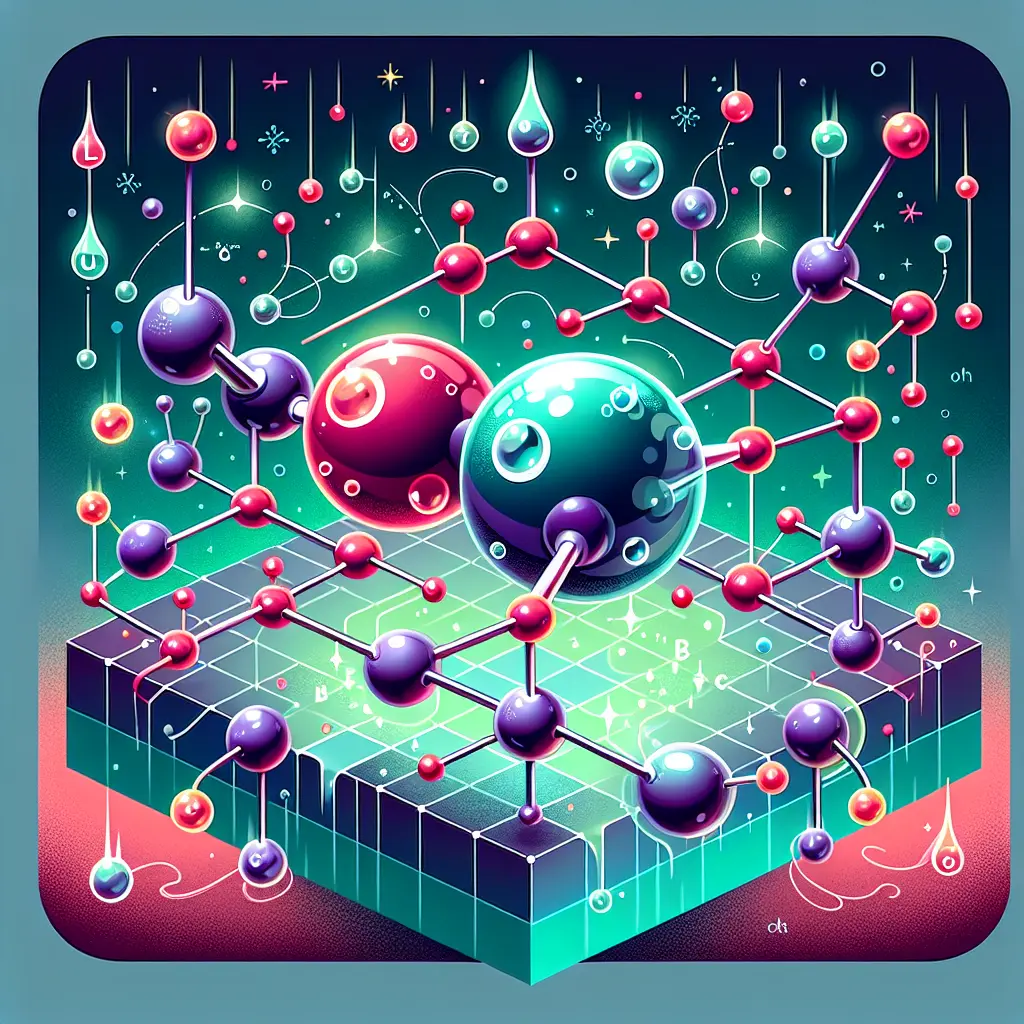
Quantum Field Theory intuition refers to an instinctive understanding of how particles and forces interact at the most fundamental level, where fields, rather than individual particles, are the primary entities. It involves visualizing particles as excitations or ripples in underlying fields and grasping concepts like virtual particles, field interactions, and symmetry. Developing this intuition helps physicists predict and conceptualize complex quantum phenomena beyond formal mathematics, making the abstract principles more tangible and relatable.
Quantum Field Theory Intuition
Quantum Field Theory intuition refers to an instinctive understanding of how particles and forces interact at the most fundamental level, where fields, rather than individual particles, are the primary entities. It involves visualizing particles as excitations or ripples in underlying fields and grasping concepts like virtual particles, field interactions, and symmetry. Developing this intuition helps physicists predict and conceptualize complex quantum phenomena beyond formal mathematics, making the abstract principles more tangible and relatable.
💡 Key Takeaways
- Understand that fields are the fundamental entities and particles are excitations of those fields.
- Visualize particles as ripples in underlying fields and how these excitations propagate.
- Grasp how forces arise from field interactions and the exchange of quanta (force carrier particles).
- Develop intuition for quantum fluctuations leading to particle creation and annihilation within fields.
❓ Frequently Asked Questions
What is the central idea of quantum field theory (QFT) intuition?
In QFT, fields are the fundamental entities. Particles are localized excitations (quanta) of these fields, and forces arise from field interactions via exchange of quanta (e.g., photons for electromagnetism).
How should I visualize a particle in QFT?
As a localized ripple or quantum excitation of a field. A particle corresponds to one or more quanta in a field, not a tiny billiard ball.
How do forces arise in QFT?
Forces come from the exchange of field quanta between interacting fields; particles emit or absorb quanta, transmitting the interaction.
What is the QFT vacuum like?
The vacuum is the lowest-energy state with no real particles, but it is full of fluctuations and virtual particles that briefly appear and vanish, influencing observable effects.