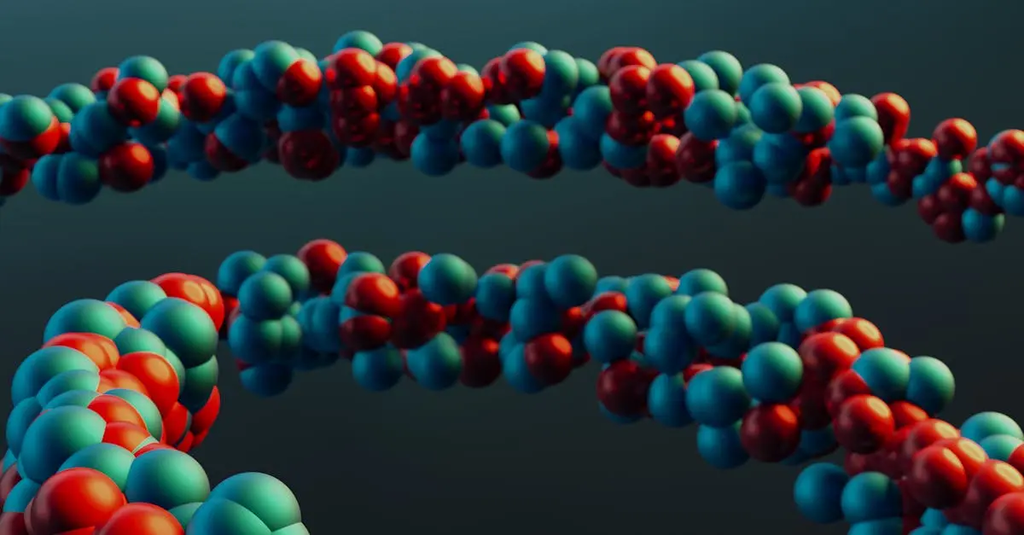
Quantum Information Science for Physical Chemists explores how quantum computing and quantum information principles can be applied to problems in physical chemistry. It involves using quantum algorithms to simulate molecular systems, analyze chemical reactions, and process complex data at the quantum level. This interdisciplinary field aims to enhance understanding of molecular behavior and reaction dynamics, offering new computational tools that surpass classical methods in accuracy and efficiency for chemical research.
Quantum Information Science for Physical Chemists
Quantum Information Science for Physical Chemists explores how quantum computing and quantum information principles can be applied to problems in physical chemistry. It involves using quantum algorithms to simulate molecular systems, analyze chemical reactions, and process complex data at the quantum level. This interdisciplinary field aims to enhance understanding of molecular behavior and reaction dynamics, offering new computational tools that surpass classical methods in accuracy and efficiency for chemical research.

💡 Key Takeaways
- Understand how quantum computing can model molecular systems and properties relevant to physical chemistry.
- Describe quantum algorithms used for simulating molecules (e.g., VQE, QPE) and their applicability to chemistry problems.
- Explain how quantum information concepts can be used to analyze reaction mechanisms and kinetics at the quantum level.
- Identify practical challenges and limitations of quantum simulations in chemistry, including error, noise, and resource requirements.
- Recognize potential advantages in processing and interpreting complex chemical data using quantum information techniques.
❓ Frequently Asked Questions
What is Quantum Information Science and why is it useful for physical chemistry?
Quantum Information Science (QIS) studies how quantum systems store and process information. For physical chemistry, QIS enables simulating molecular electronic structure and reaction dynamics with quantum algorithms that can scale beyond classical limits.
What are the main quantum algorithms used to study molecules?
Variational Quantum Eigensolver (VQE) estimates ground-state energies on near-term devices; Quantum Phase Estimation (QPE) targets highly accurate energies; and Hamiltonian simulation methods model molecular systems on quantum hardware.
What is a qubit and why is it important for chemistry simulations?
A qubit is a two-level quantum system that can be in a superposition of 0 and 1. In chemistry, qubits encode electronic states and molecular Hamiltonians, enabling quantum computers to simulate quantum behavior of molecules.
What are the main challenges in applying quantum information to physical chemistry?
Hardware noise and decoherence, limited qubit counts, and the overhead of mapping fermionic chemistry problems to qubits. Error correction and achieving chemical accuracy remain major hurdles.