Redox reactions, or oxidation-reduction reactions, involve the transfer of electrons between substances, resulting in changes to their oxidation states. Electrochemistry studies these reactions and their relationship with electricity, focusing on how chemical energy is converted to electrical energy and vice versa. This field encompasses processes like galvanic cells, where spontaneous redox reactions generate electricity, and electrolytic cells, where electrical energy drives non-spontaneous chemical changes, playing a crucial role in batteries and electroplating.
Redox Reactions & Electrochemistry
Redox reactions, or oxidation-reduction reactions, involve the transfer of electrons between substances, resulting in changes to their oxidation states. Electrochemistry studies these reactions and their relationship with electricity, focusing on how chemical energy is converted to electrical energy and vice versa. This field encompasses processes like galvanic cells, where spontaneous redox reactions generate electricity, and electrolytic cells, where electrical energy drives non-spontaneous chemical changes, playing a crucial role in batteries and electroplating.
💡 Key Takeaways
- Define oxidation states and trace electron transfers in redox reactions.
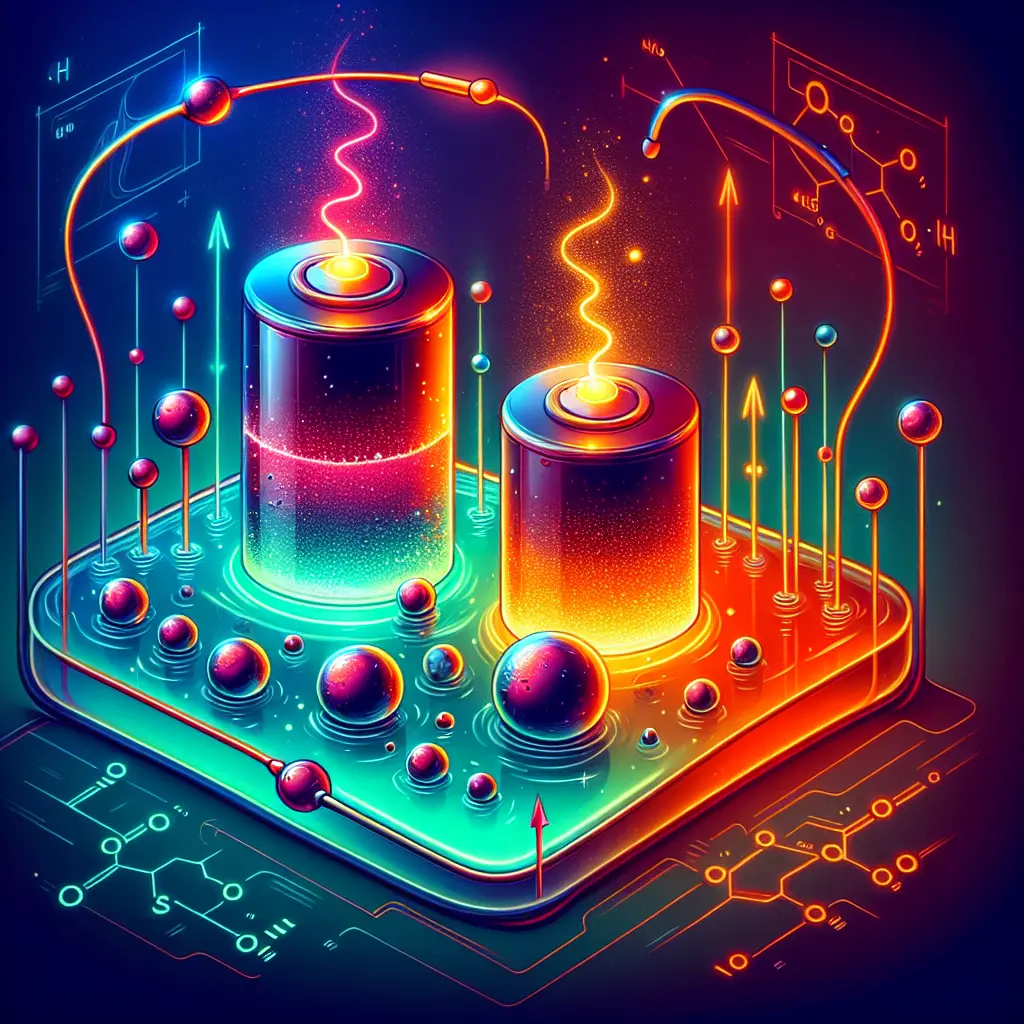
- Describe the setup and function of electrochemical cells, including electrodes and electrolytes, and how they generate electricity.
- Relate cell potential to the energy output and spontaneity of galvanic (voltaic) cells.
- Balance redox equations (in acidic/basic media) and identify oxidizing and reducing agents.
- Explore real-world electrochemistry applications such as batteries, corrosion, and electroplating.
❓ Frequently Asked Questions
What is a redox reaction?
A reaction in which electrons are transferred between substances, causing changes in oxidation states. Oxidation is the loss of electrons; reduction is the gain.
How do you determine oxidation states and identify what is oxidized or reduced?
Use oxidation-number rules (elements: 0; ions: equal to charge; sum of oxidation states equals the overall charge). Track which species increases in oxidation state (oxidized) and which decreases (reduced).
What is electrochemistry and how does it connect chemical energy to electrical energy?
Electrochemistry studies reactions involving electron transfer and the relationship between chemical energy and electricity. In cells, chemical energy is converted to electrical energy; in electrolysis, electrical energy drives chemical changes.
What is a galvanic/voltaic cell and its basic components?
A device that spontaneously converts chemical energy into electrical energy. It has an anode (oxidation), a cathode (reduction), an external circuit for electron flow, and a salt bridge or separator to balance charge.