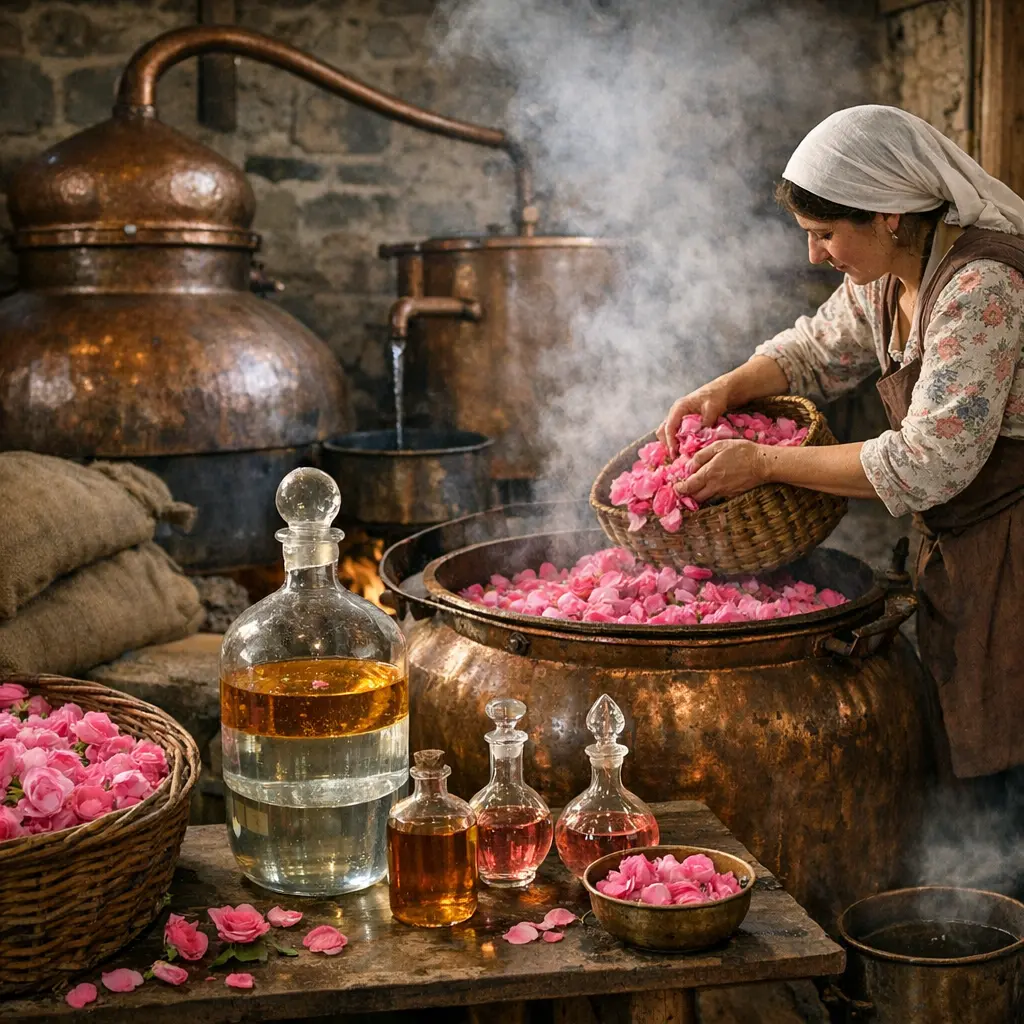
Rose oil extraction involves obtaining essential oils from the delicate petals of flowers, primarily roses and sometimes lotuses. The process typically uses steam distillation or solvent extraction to capture the aromatic compounds present in the blooms. This results in a highly fragrant oil prized for its use in perfumes, cosmetics, and aromatherapy. The extraction requires a large quantity of petals, making rose oil one of the most precious and expensive essential oils.
Rose Oil Extraction
Rose oil extraction involves obtaining essential oils from the delicate petals of flowers, primarily roses and sometimes lotuses. The process typically uses steam distillation or solvent extraction to capture the aromatic compounds present in the blooms. This results in a highly fragrant oil prized for its use in perfumes, cosmetics, and aromatherapy. The extraction requires a large quantity of petals, making rose oil one of the most precious and expensive essential oils.
💡 Key Takeaways
- Learn the main rose oil extraction methods (steam distillation, solvent extraction, and CO2) and how they differ.
- Discover factors that affect yield and quality, such as rose variety, harvest timing, and processing duration.
- Understand common equipment and safety practices used in rose oil extraction.
- Explore how rose oil is used in perfumery, cosmetics, and aromatherapy, and how to assess purity and aroma notes.
❓ Frequently Asked Questions
What is rose oil and what is it used for?
Rose oil (rose essential oil) is distilled from rose petals (typically Rosa damascena or Rosa centifolia). It’s valued for its floral fragrance and is used in perfumery, cosmetics, and aromatherapy; it should be diluted for topical use and is not meant for internal use.
What are the main methods to extract rose oil?
The main methods are steam distillation (the most common for essential oil), solvent extraction (produces rose absolute), and CO2 extraction (a different concentrate). Enfleurage is an older, less common method.
What is the difference between rose essential oil and rose absolute?
Rose essential oil is obtained by steam distillation and is lighter and more volatile. Rose absolute comes from solvent extraction and is richer, more resinous, and may contain trace solvents, with a deeper scent.
How can I tell if rose oil is genuine and how should I store it?
Genuine rose oil is typically pricey and comes from reputable suppliers. Know the rose species (e.g., damascena vs. centifolia). Store in dark glass, away from light and heat, tightly closed, and dilute before topical use.