Scaling quantum tech involves expanding production capabilities to move from lab prototypes to mass-manufactured devices, addressing challenges in precision and quality. It also requires developing a skilled workforce trained in quantum physics, engineering, and software, bridging the current talent gap. Establishing industry-wide standards is essential to ensure interoperability, reliability, and safety, fostering collaboration and accelerating the adoption of quantum technologies across sectors.
Scaling quantum tech: manufacturing, talent, and standards
Scaling quantum tech involves expanding production capabilities to move from lab prototypes to mass-manufactured devices, addressing challenges in precision and quality. It also requires developing a skilled workforce trained in quantum physics, engineering, and software, bridging the current talent gap. Establishing industry-wide standards is essential to ensure interoperability, reliability, and safety, fostering collaboration and accelerating the adoption of quantum technologies across sectors.
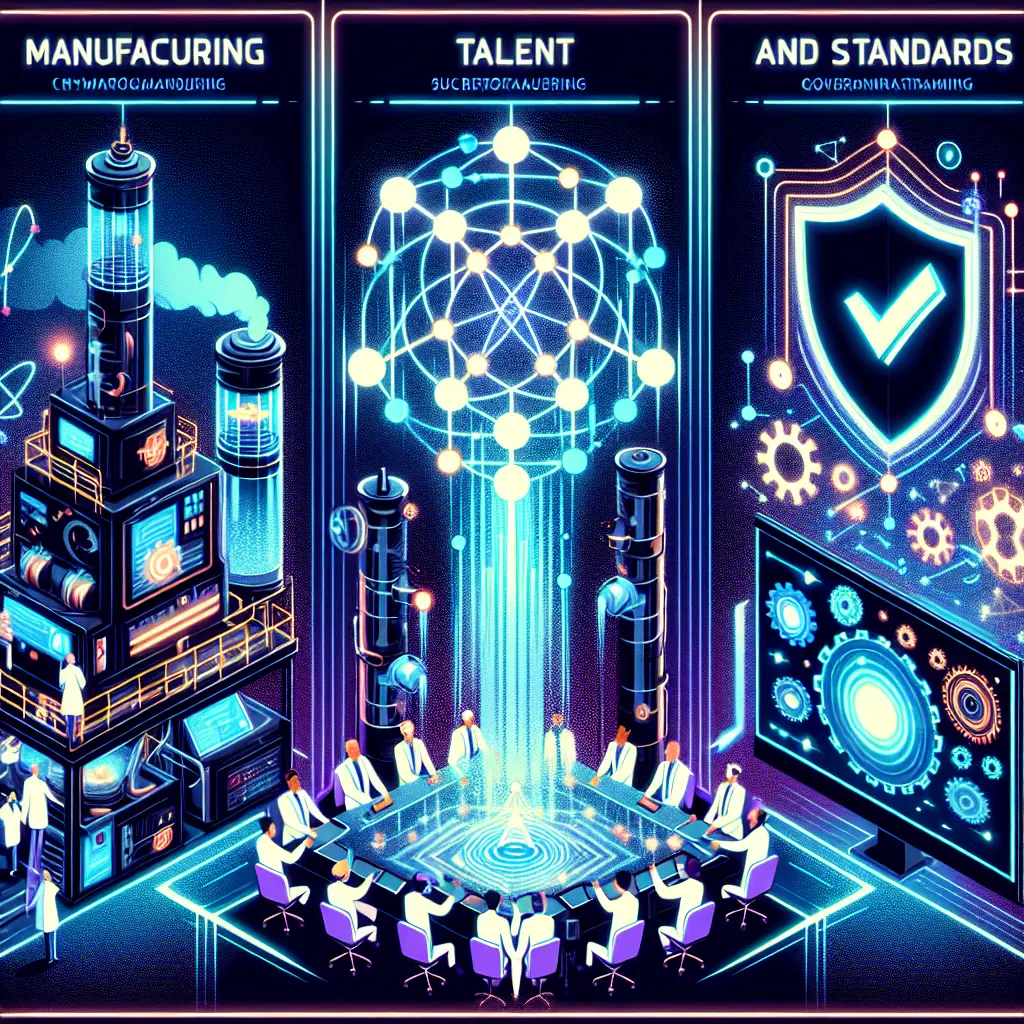
💡 Key Takeaways
- Learn how moving from lab prototypes to mass-produced quantum devices requires repeatable processes, automation, and rigorous quality control.
- Understand the precision and reliability challenges when scaling up quantum devices and the strategies to minimize variability in components.
- Explore how standards, certification, and interoperability enable scalable, cross-sector adoption of quantum technologies.
- See how to build a multidisciplinary workforce trained in quantum physics, engineering, and software to support scaling.
- Review the UK's approach to scaling quantum tech, including policy support, funding, and academia and industry collaboration.
❓ Frequently Asked Questions
What does scaling quantum tech mean in practice?
Scaling means moving from lab prototypes to devices produced at higher volumes with consistent performance, higher yield, and reliability in real-world applications.
What are the main manufacturing challenges when scaling quantum devices?
Main challenges include achieving ultra-high fabrication precision, maintaining controlled environments (like cryogenics or shielding), ensuring device uniformity, reliable packaging, and reducing defects that lower yield.
Why are standards and quality assurance important for scaling quantum tech?
Standards provide common testing, measurement, and quality criteria, helping to create interoperable, safe, and trustworthy products as production ramps up in the UK and beyond.
What kinds of skills are needed to scale quantum tech?
A multidisciplinary mix of quantum physics, electrical and mechanical engineering, cryogenics and nanofabrication, software for control and data analysis, and systems engineering for integration.
How can the workforce be prepared to bridge the talent gap in the UK?
Strengthen university–industry collaboration, expand apprenticeships and targeted programs, fund upskilling in quantum science and engineering, and create paths from academia to manufacturing and software roles.