Set-piece strategies involve planned routines during dead-ball situations like corners and free-kicks. For Chelsea F.C., recent offensive trends include creative short corners, crowding the six-yard box, and utilizing tall defenders for aerial threats. Defensively, Chelsea focuses on zonal marking, quick organization, and deploying agile players to clear rebounds. These evolving tactics aim to maximize scoring opportunities while minimizing the risk of conceding from set-pieces, reflecting the club’s adaptive approach to modern football.
Set-Piece Strategies: Offensive and Defensive Trends
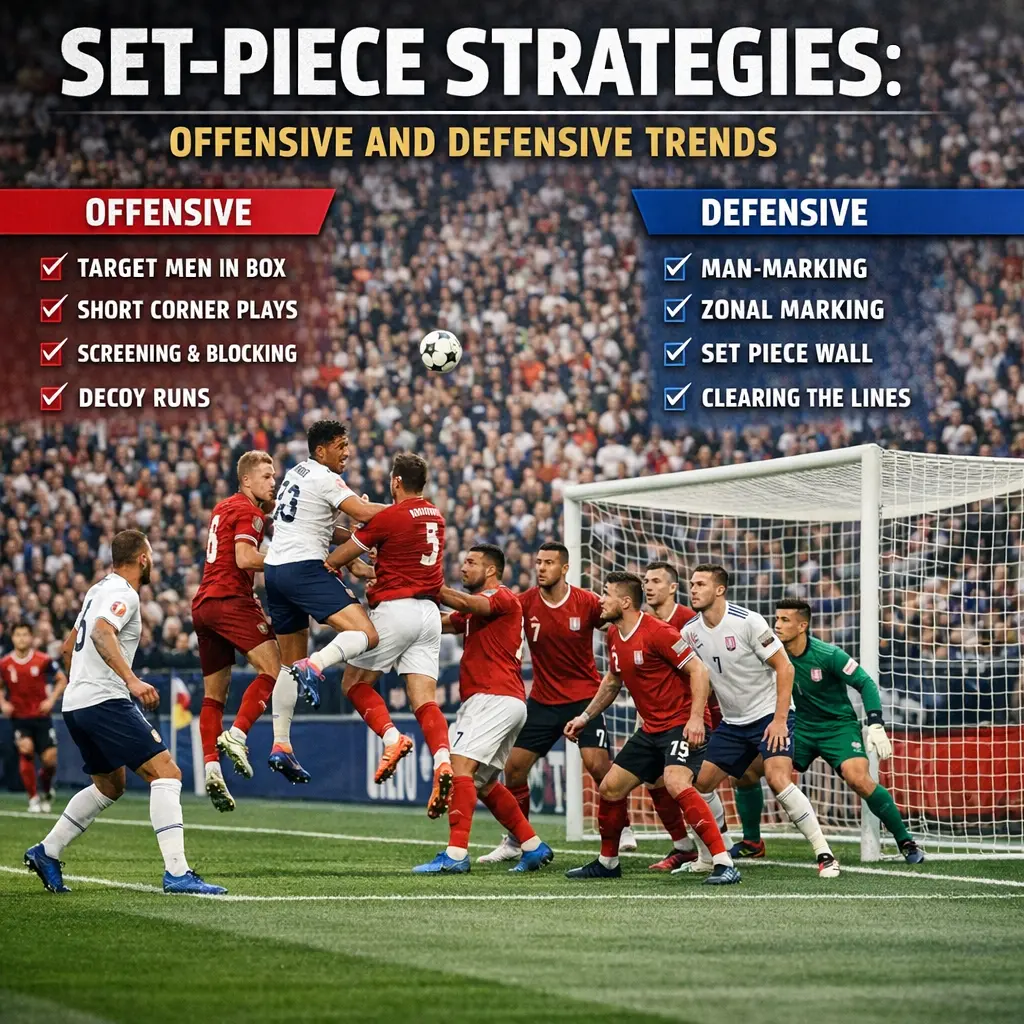
Set-piece strategies involve planned routines during dead-ball situations like corners and free-kicks. For Chelsea F.C., recent offensive trends include creative short corners, crowding the six-yard box, and utilizing tall defenders for aerial threats. Defensively, Chelsea focuses on zonal marking, quick organization, and deploying agile players to clear rebounds. These evolving tactics aim to maximize scoring opportunities while minimizing the risk of conceding from set-pieces, reflecting the club’s adaptive approach to modern football.
💡 Key Takeaways
- Understand common offensive set-piece routines (corners and free-kicks) and how runs, targets, and decoys create scoring chances.
- Learn defensive organization for set-pieces, including marking schemes, zone vs man marking, and goalkeeper communication.
- Recognize recent trends in set-piece design (short corners, near-post vs far-post plays) and how to adapt to opponents.
- Identify key roles in set-pieces (taker, target, runners, decoys) and how to execute effective variations.
❓ Frequently Asked Questions
What is a set piece in football?
A dead-ball restart from a fixed position (e.g., free kick, corner, or penalty) used to create a scoring chance or organize the defense.
What are common offensive set-piece options to score?
Direct or indirect free kicks, corners, and penalties; variations include short corners, deliveries to near/far posts, and decoy runs.
What are key defensive strategies against set pieces?
Marking or zonal coverage, organized positioning, winning aerial duels, and rehearsed rotations to track runners and clear deliveries.
How do teams adapt set-piece tactics to opponents or formations?
They adjust delivery type, runner patterns, and assignments based on opponent weaknesses, height, and expected threats, often practicing routines to surprise defenses.