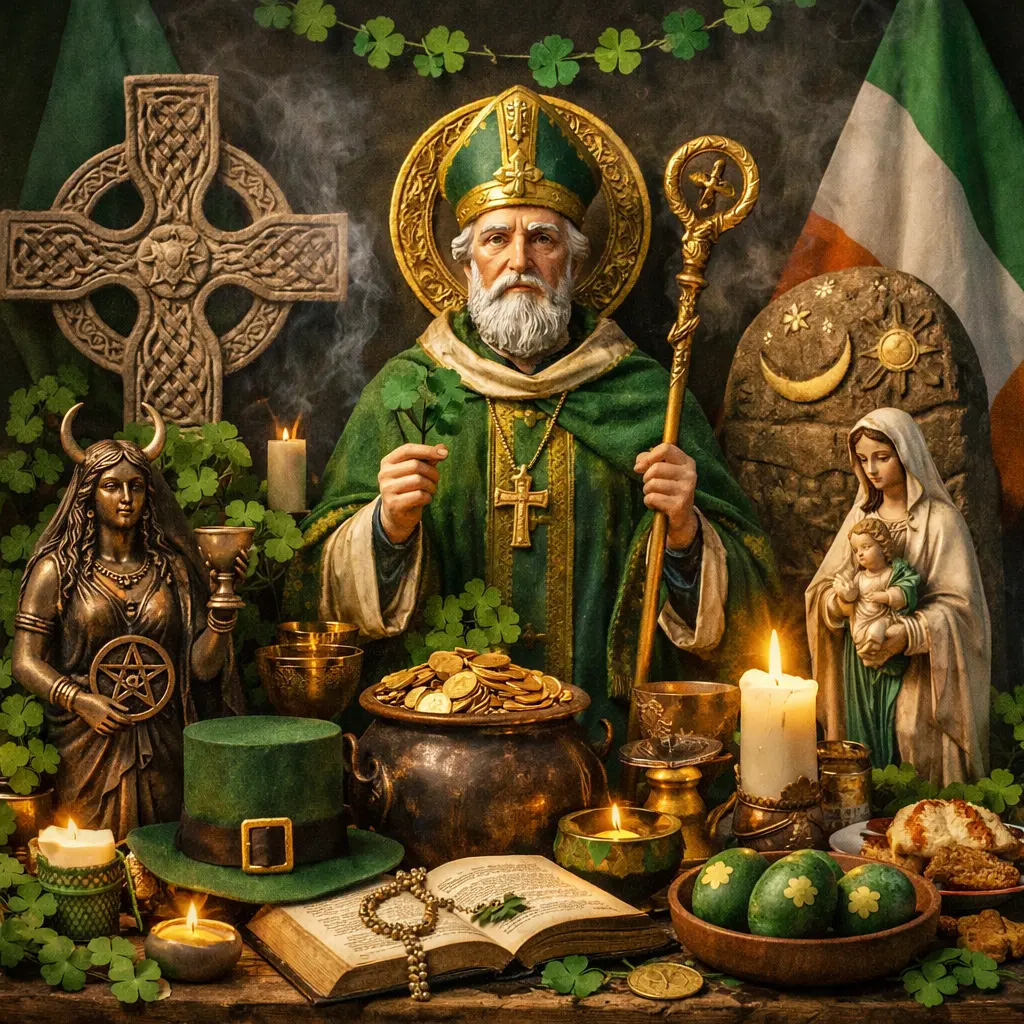
St. Patrick's Day and religious syncretism refer to how the holiday blends Christian and pre-Christian Irish traditions. Originally honoring St. Patrick, who brought Christianity to Ireland, the celebration incorporated older Celtic customs, such as feasting and symbols like the shamrock. Over time, St. Patrick’s Day evolved into a secular and global festival, highlighting how religious observances can merge with local cultural practices, resulting in a unique, hybrid celebration.
St. Patrick's Day and Religious Syncretism
St. Patrick's Day and religious syncretism refer to how the holiday blends Christian and pre-Christian Irish traditions. Originally honoring St. Patrick, who brought Christianity to Ireland, the celebration incorporated older Celtic customs, such as feasting and symbols like the shamrock. Over time, St. Patrick’s Day evolved into a secular and global festival, highlighting how religious observances can merge with local cultural practices, resulting in a unique, hybrid celebration.
💡 Key Takeaways
- Define religious syncretism and how it appears in St. Patrick’s Day celebrations.
- Explain how St. Patrick’s Day blends Christian observance with Irish pre-Christian (pagan) traditions.
- Describe common symbols (shamrock, green color, holy wells) and the legends behind them (e.g., shamrock as a Trinity) and their meanings.
- Discuss the historical shift from a religious feast day to secular, global celebrations and what that means for contemporary practice.
❓ Frequently Asked Questions
What is religious syncretism?
Religious syncretism is the blending or borrowing of beliefs, rituals, and symbols from different religious traditions into a single practice or worldview.
How does St. Patrick's Day show religious syncretism?
It began as a Catholic feast day for St. Patrick, but many customs (green imagery, shamrock symbolism, parades) also reflect Irish folk traditions and secular culture, illustrating a blend of faith and culture.
What do the shamrock and the color green symbolize on St. Patrick's Day?
The shamrock is linked to St. Patrick's Christian explanation of the Trinity, while green is tied to Irish identity; both have been embraced in broader, sometimes secular celebrations.
Is St. Patrick's Day a religious or a secular holiday today?
It remains a religious feast day for many Christians, but in many places it is celebrated primarily as a secular festival of Irish culture with public events.