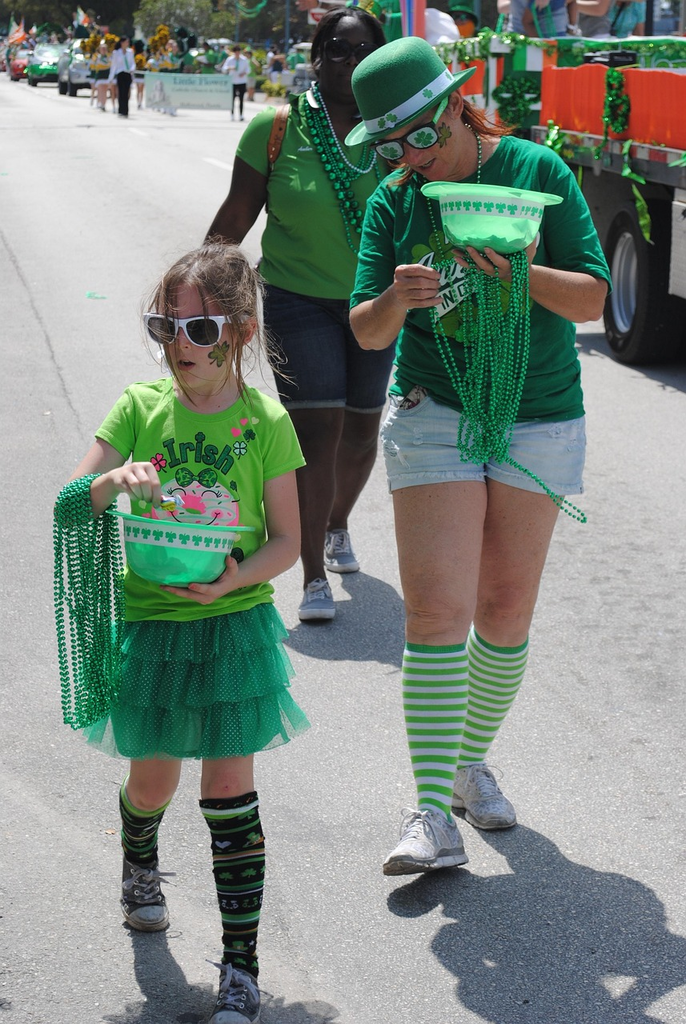
The St. Patrick's Day Parade is a festive procession held annually on March 17th to celebrate St. Patrick, the patron saint of Ireland. Featuring vibrant floats, marching bands, dancers, and participants dressed in green, the parade honors Irish culture and heritage. Communities worldwide join in, creating a joyful atmosphere filled with music, laughter, and traditional symbols like shamrocks and leprechauns, making it a beloved tradition for both Irish descendants and others.
St. Patrick's Day Parade+50
The St. Patrick's Day Parade is a festive procession held annually on March 17th to celebrate St. Patrick, the patron saint of Ireland. Featuring vibrant floats, marching bands, dancers, and participants dressed in green, the parade honors Irish culture and heritage. Communities worldwide join in, creating a joyful atmosphere filled with music, laughter, and traditional symbols like shamrocks and leprechauns, making it a beloved tradition for both Irish descendants and others.
💡 Key Takeaways
- Understand the purpose and history of St. Patrick's Day parades and how they have evolved.
- Identify common symbols and colors (green, shamrocks, leprechauns) and their meanings.
- Recognize typical parade elements such as floats, bagpipes, and Irish music.
- Explore how parades celebrate Irish culture and community across different cities.
❓ Frequently Asked Questions
What is the purpose of a St. Patrick's Day parade?
To celebrate Irish heritage and culture with music, floats, and performances.
Where did St. Patrick's Day parades originate?
Parades began in the 18th century among Irish communities in North America; the first recorded parade was in New York City in 1762.
When are St. Patrick's Day parades typically held?
On or around March 17, the feast day of St. Patrick.
Why is the color green associated with St. Patrick's Day parades?
Green links to Ireland (the Emerald Isle) and to shamrocks, symbols of Irish pride.