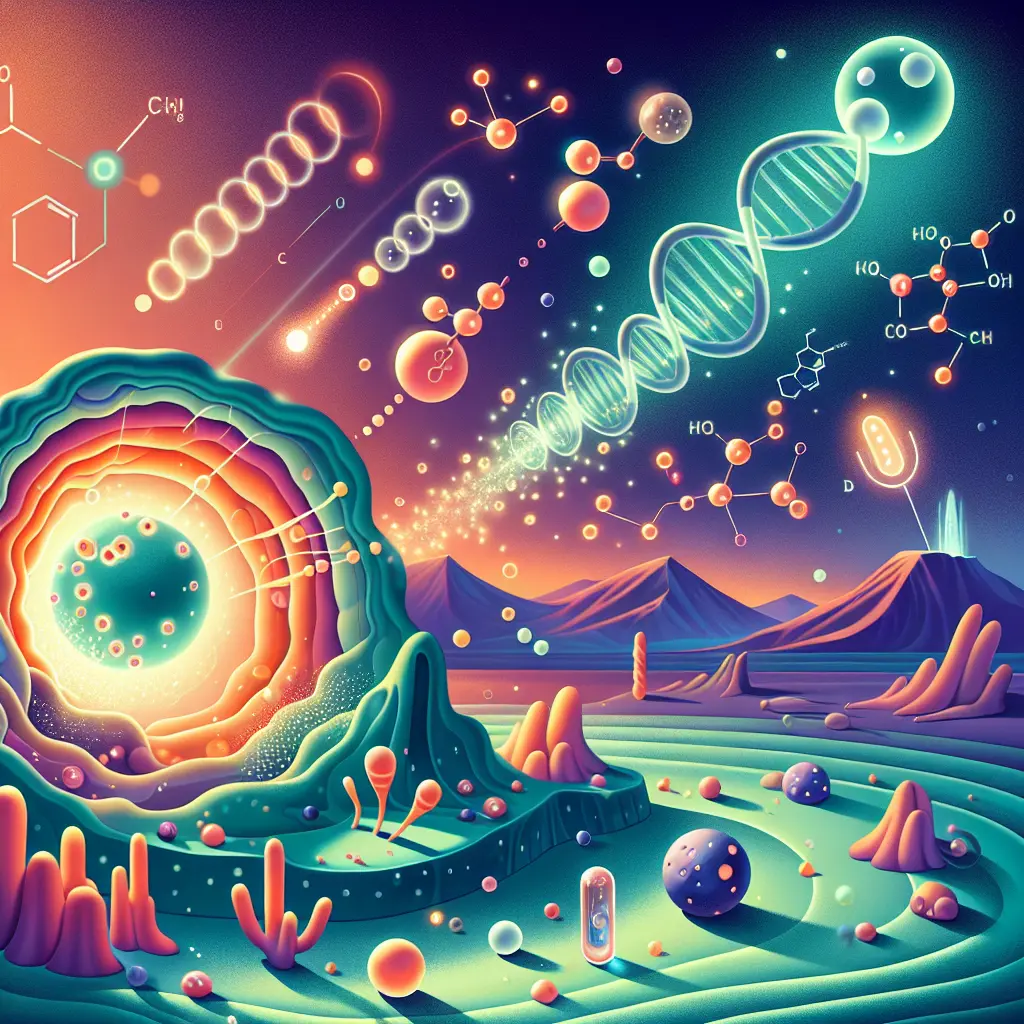
Statistical Mechanics and Thermodynamics are branches of physics that study the behavior of systems with many particles. Thermodynamics focuses on macroscopic properties like temperature, energy, and entropy, describing how energy is transferred and transformed. Statistical Mechanics connects these macroscopic properties to microscopic particle behavior, using probability theory to predict system properties based on the collective motion and interactions of individual atoms or molecules, providing a deeper understanding of thermodynamic laws.
Statistical Mechanics & Thermodynamics
Statistical Mechanics and Thermodynamics are branches of physics that study the behavior of systems with many particles. Thermodynamics focuses on macroscopic properties like temperature, energy, and entropy, describing how energy is transferred and transformed. Statistical Mechanics connects these macroscopic properties to microscopic particle behavior, using probability theory to predict system properties based on the collective motion and interactions of individual atoms or molecules, providing a deeper understanding of thermodynamic laws.
💡 Key Takeaways
- Understand how thermodynamics explains energy transfer, work, heat, and entropy in systems with many particles.
- Learn the key thermodynamic quantities—temperature, pressure, volume, energy—and how they relate via equations of state.
- Grasp how statistical mechanics connects microscopic states and probabilities to macroscopic properties like temperature and entropy.
- Apply the basic laws of thermodynamics to analyze simple processes, including isothermal and adiabatic changes.
- Distinguish between equilibrium and non-equilibrium behavior to predict how systems evolve over time.
❓ Frequently Asked Questions
What is thermodynamics?
Thermodynamics studies macroscopic properties like temperature, energy, and entropy, and how energy transfers occur as heat and work, guided by fundamental laws.
What is statistical mechanics?
Statistical mechanics explains macroscopic behavior by averaging over microscopic particle states using probability, linking variables like temperature, pressure, and energy to underlying microstates.
How are heat, work, and internal energy related?
Internal energy changes when a system gains heat or performs/receives work. The first law is often written as ΔU = Q − W (heat into the system, work done by the system).
What is entropy?
Entropy measures the number of accessible microstates (disorder) for a macrostate. In isolated systems, entropy tends to increase, in line with the Second Law.