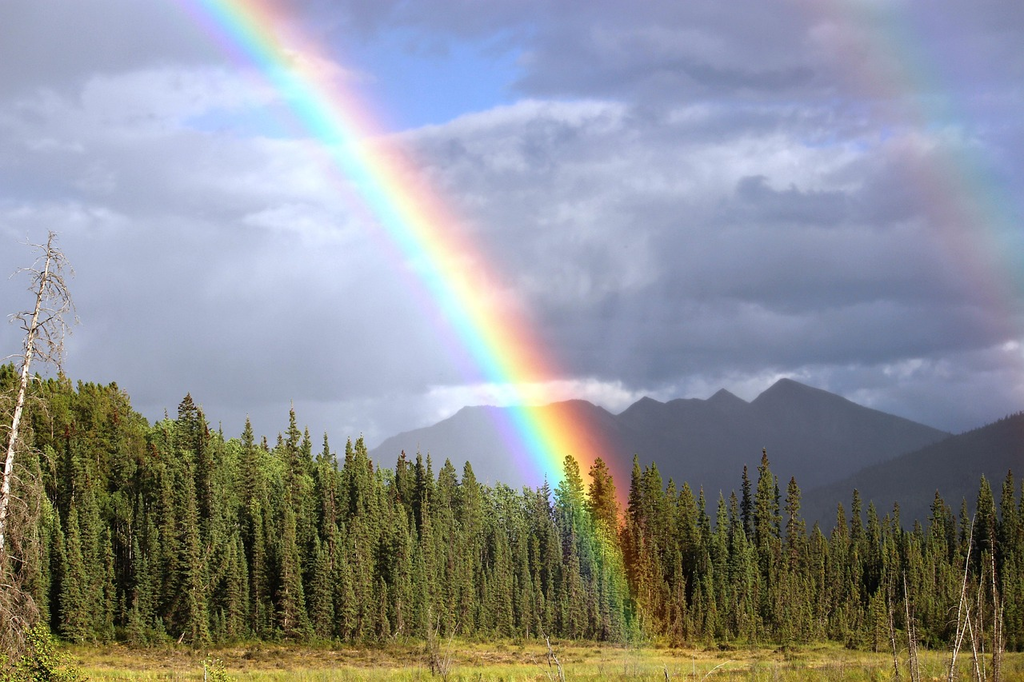
"Sunlight and Rainbows" refers to the natural phenomenon where sunlight interacts with water droplets in the atmosphere, creating vibrant arcs of color known as rainbows. This beautiful display is a sky sign, often appearing after rain when sunlight breaks through clouds. Rainbows symbolize hope and wonder, while stars, another sky sign, represent distant suns twinkling in the night sky, inspiring curiosity about the universe. Both evoke awe and connect us to nature’s mysteries.
Sunlight and Rainbows+50
"Sunlight and Rainbows" refers to the natural phenomenon where sunlight interacts with water droplets in the atmosphere, creating vibrant arcs of color known as rainbows. This beautiful display is a sky sign, often appearing after rain when sunlight breaks through clouds. Rainbows symbolize hope and wonder, while stars, another sky sign, represent distant suns twinkling in the night sky, inspiring curiosity about the universe. Both evoke awe and connect us to nature’s mysteries.

💡 Key Takeaways
- Sunlight is white light made of a color spectrum that becomes a rainbow when it hits water droplets.
- Rainbows form through refraction, reflection, and dispersion of light inside droplets, splitting colors red to violet.
- The primary rainbow appears when the sun is behind you and droplets are in front, at about a 42° angle.
- A secondary rainbow can appear with reversed color order due to a second internal reflection.
- You can observe rainbows with simple at-home experiments (spray bottle, glass of water, or prism) and basic safety tips.
❓ Frequently Asked Questions
What causes a rainbow to form?
Sunlight enters raindrops, is refracted, reflected inside the drop, and refracted again, splitting into colors.
Why do rainbows show a spectrum of colors?
White sunlight is made of many wavelengths; refraction disperses these colors as they pass through water droplets.
What is the typical angle of a primary rainbow?
About 42° from the direction opposite the sun.
How is a secondary rainbow different from the primary?
It is fainter and has reversed colors because light reflects twice inside the droplets.
When is the best time to see a rainbow?
When the sun is low in the sky and rain is present with small droplets.