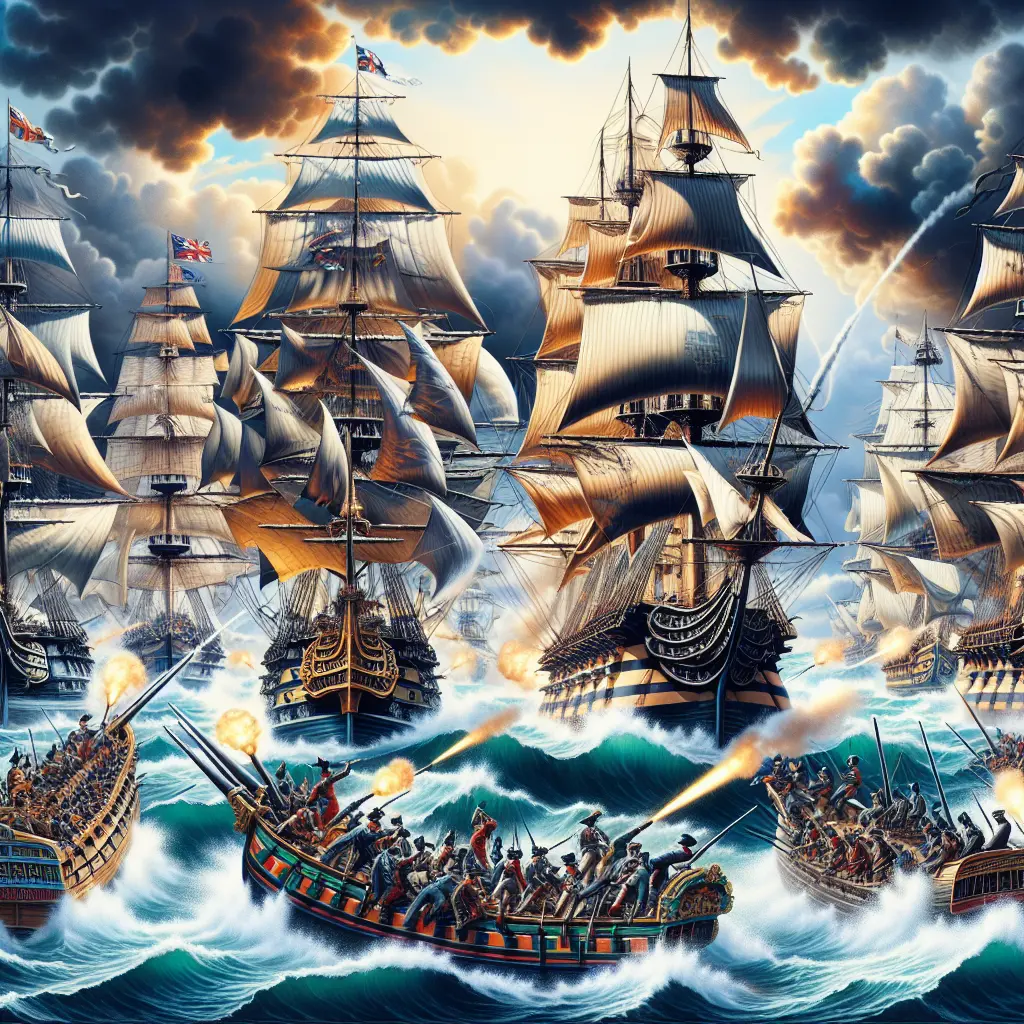
The Battle of Trafalgar was a significant naval engagement fought on October 21, 1805, between the British Royal Navy and the combined fleets of France and Spain during the Napoleonic Wars. Commanded by Admiral Lord Nelson, the British fleet achieved a decisive victory, destroying much of the enemy fleet without losing a single ship. This triumph confirmed British naval supremacy, thwarted Napoleon’s plans to invade Britain, and established Nelson as one of history’s greatest naval commanders.
The Battle of Trafalgar
The Battle of Trafalgar was a significant naval engagement fought on October 21, 1805, between the British Royal Navy and the combined fleets of France and Spain during the Napoleonic Wars. Commanded by Admiral Lord Nelson, the British fleet achieved a decisive victory, destroying much of the enemy fleet without losing a single ship. This triumph confirmed British naval supremacy, thwarted Napoleon’s plans to invade Britain, and established Nelson as one of history’s greatest naval commanders.
💡 Key Takeaways
- Identify the date, belligerents, and outcome of the Battle of Trafalgar (1805).
- Describe Admiral Lord Nelson's leadership and the tactics used to break the enemy line.
- Explain how Trafalgar secured British naval dominance during the Napoleonic Wars.
- Recognize Nelson's death in the battle and its lasting impact on British memory and naval tradition.
❓ Frequently Asked Questions
When and where did the Battle of Trafalgar take place?
October 21, 1805, off Cape Trafalgar near Cádiz, Spain, during the Napoleonic Wars.
Who led the British at Trafalgar and what was the outcome?
Admiral Lord Nelson commanded the British fleet and secured a decisive victory; Nelson was killed in the battle.
Which fleets did Britain defeat at Trafalgar?
The combined fleets of France and Spain.
Why was Trafalgar significant for British history?
It established British naval supremacy for the rest of the century and thwarted Napoleon’s invasion plans.