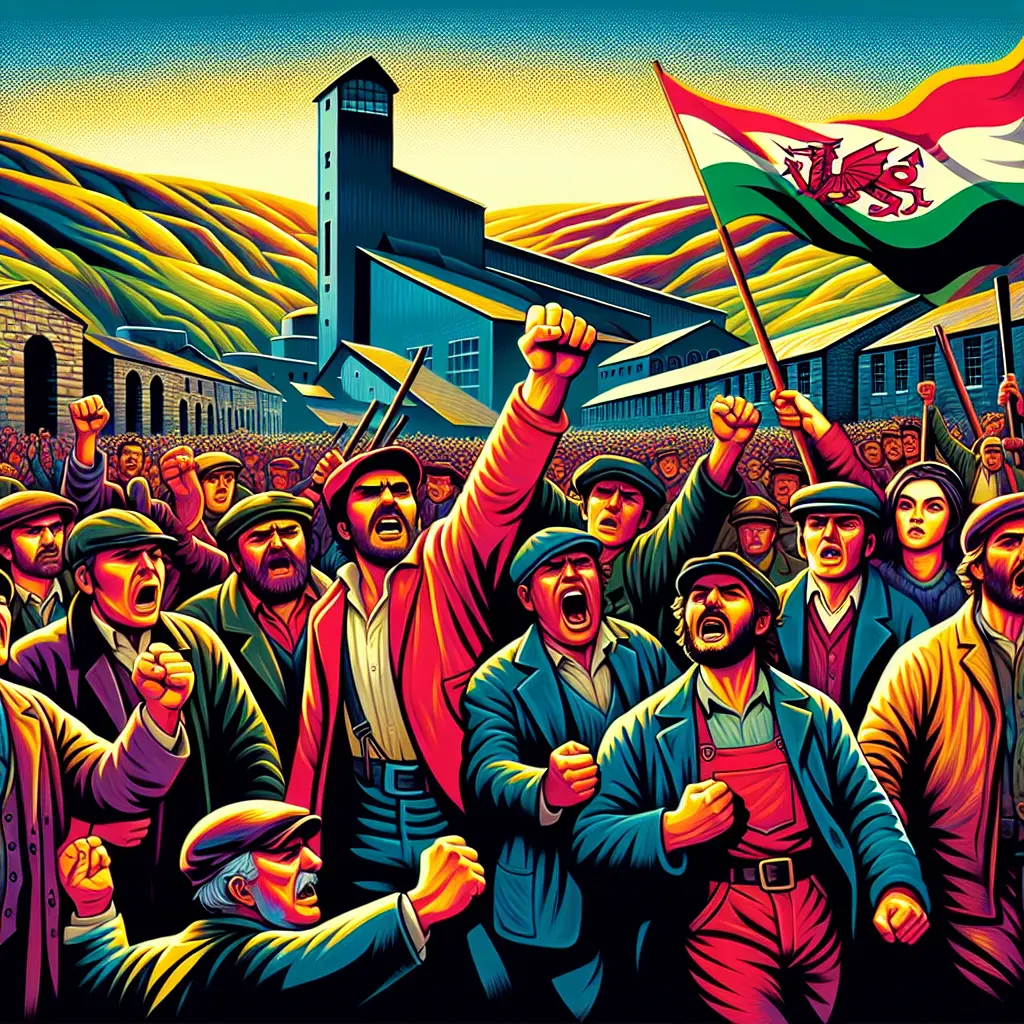
The Merthyr Rising was a significant workers’ revolt that took place in Merthyr Tydfil, Wales, in June 1831. Sparked by harsh working conditions, wage cuts, and unemployment during the Industrial Revolution, thousands of ironworkers and coal miners protested against their employers and local authorities. The uprising saw violent clashes, the red flag’s first appearance as a protest symbol in Britain, and ended with military intervention and harsh reprisals, including executions and imprisonments.
The Merthyr Rising
The Merthyr Rising was a significant workers’ revolt that took place in Merthyr Tydfil, Wales, in June 1831. Sparked by harsh working conditions, wage cuts, and unemployment during the Industrial Revolution, thousands of ironworkers and coal miners protested against their employers and local authorities. The uprising saw violent clashes, the red flag’s first appearance as a protest symbol in Britain, and ended with military intervention and harsh reprisals, including executions and imprisonments.
💡 Key Takeaways
- Understand the Merthyr Rising as a major 1831 workers' revolt in Merthyr Tydfil sparked by harsh conditions, wage cuts, and unemployment.
- See how thousands of ironworkers and coal miners mobilized to protest employers and local authorities, showing early mass labor resistance.
- Examine the authorities' response and the immediate consequences for participants.
- Consider the event's long-term impact on labor reform debates and workers' rights in Wales and Britain.
❓ Frequently Asked Questions
What was the Merthyr Rising?
A major workers’ revolt in Merthyr Tydfil, Wales, in June 1831, sparked by harsh conditions, wage cuts, and unemployment during the Industrial Revolution.
Where and when did it take place?
In Merthyr Tydfil, Glamorgan, Wales, during June 1831.
Who participated and why did they protest?
Ironworkers and coal miners protested against low wages, long hours, and job insecurity caused by industrial reforms and economic hardship.
What were the consequences of the rising?
The uprising was suppressed by authorities with troops; thousands were arrested and tried. It did not achieve its immediate aims but helped shape later British labor reform and is remembered as a key moment in Welsh working-class history.