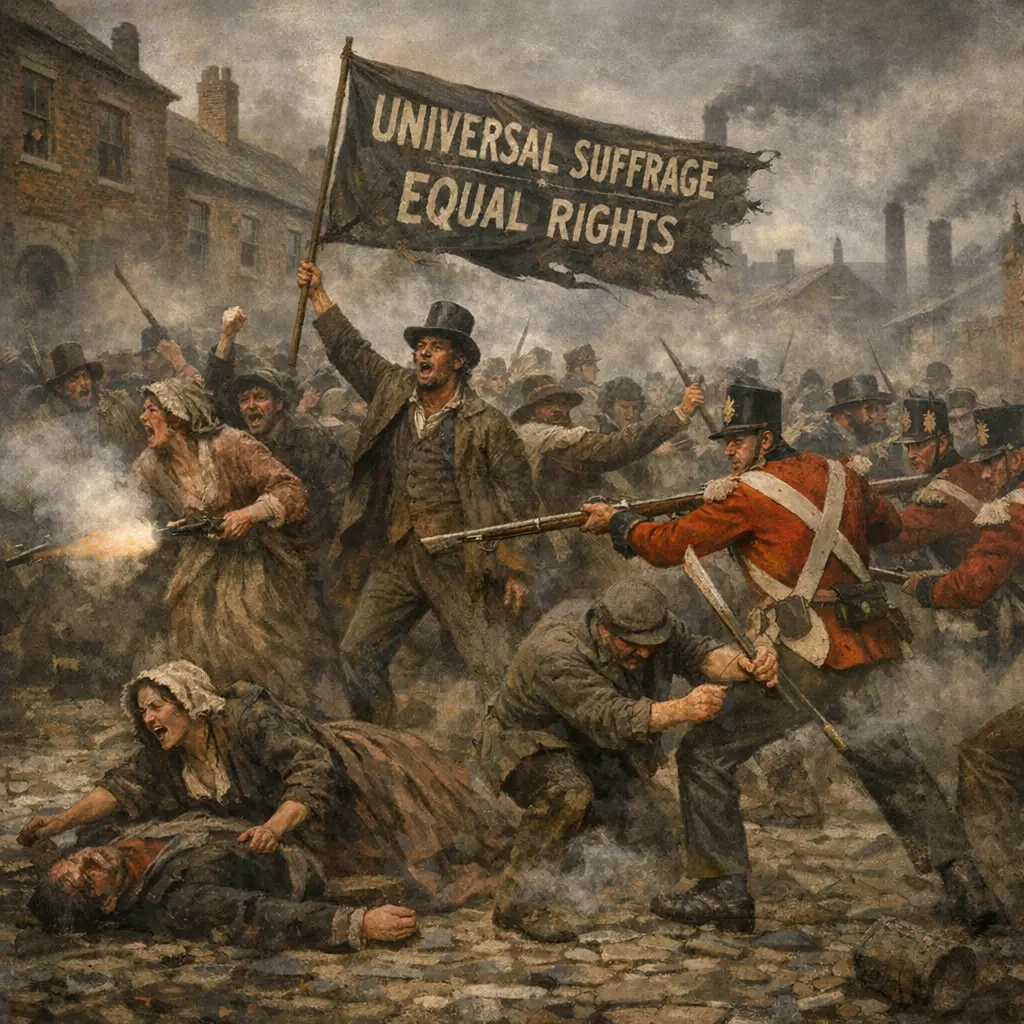
The Peasants' Revolt was a major uprising in England in 1381, triggered by economic hardship, high taxes, and social inequality following the Black Death. Led by figures like Wat Tyler and John Ball, thousands of peasants marched on London, demanding reforms such as the abolition of serfdom and fairer laws. Although the revolt was ultimately suppressed, it marked a significant challenge to the feudal system and highlighted growing unrest among the lower classes.
The Peasants' Revolt
The Peasants' Revolt was a major uprising in England in 1381, triggered by economic hardship, high taxes, and social inequality following the Black Death. Led by figures like Wat Tyler and John Ball, thousands of peasants marched on London, demanding reforms such as the abolition of serfdom and fairer laws. Although the revolt was ultimately suppressed, it marked a significant challenge to the feudal system and highlighted growing unrest among the lower classes.

💡 Key Takeaways
- Understand the economic and social conditions that fueled the 1381 Peasants' Revolt, including post-Black Death inequality and heavy taxation.
- Identify the revolt's leaders and participants, such as Wat Tyler and John Ball, and note that thousands of peasants marched on London.
- Learn the rebels' key demands, notably the abolition of serfdom and fair taxation, and the methods used to press these reforms.
- Assess the short-term outcomes and long-term significance of the revolt for English law and society, and its legacy in medieval history.
❓ Frequently Asked Questions
What triggered the Peasants' Revolt of 1381?
The immediate trigger was the poll tax of 1381, imposed to fund the crown and war, amid ongoing economic hardship after the Black Death and widespread feudal burdens.
Who led the revolt and what did they demand?
Led by Wat Tyler and John Ball, the rebels demanded the abolition of serfdom, fair rents and taxes, and other feudal reforms to reduce peasant oppression.
What happened when the rebels reached London, and what was the outcome?
The rebels briefly advanced on London and sought reform, but the revolt was ultimately suppressed; Wat Tyler was killed during negotiations with King Richard II, and many leaders were executed, with promises of reform not lasting.
Why is the Peasants' Revolt significant in British history?
It was one of the first large-scale popular uprisings in England over taxation and social inequality, influencing later attitudes toward labor rights and royal authority and contributing to the gradual decline of serfdom.