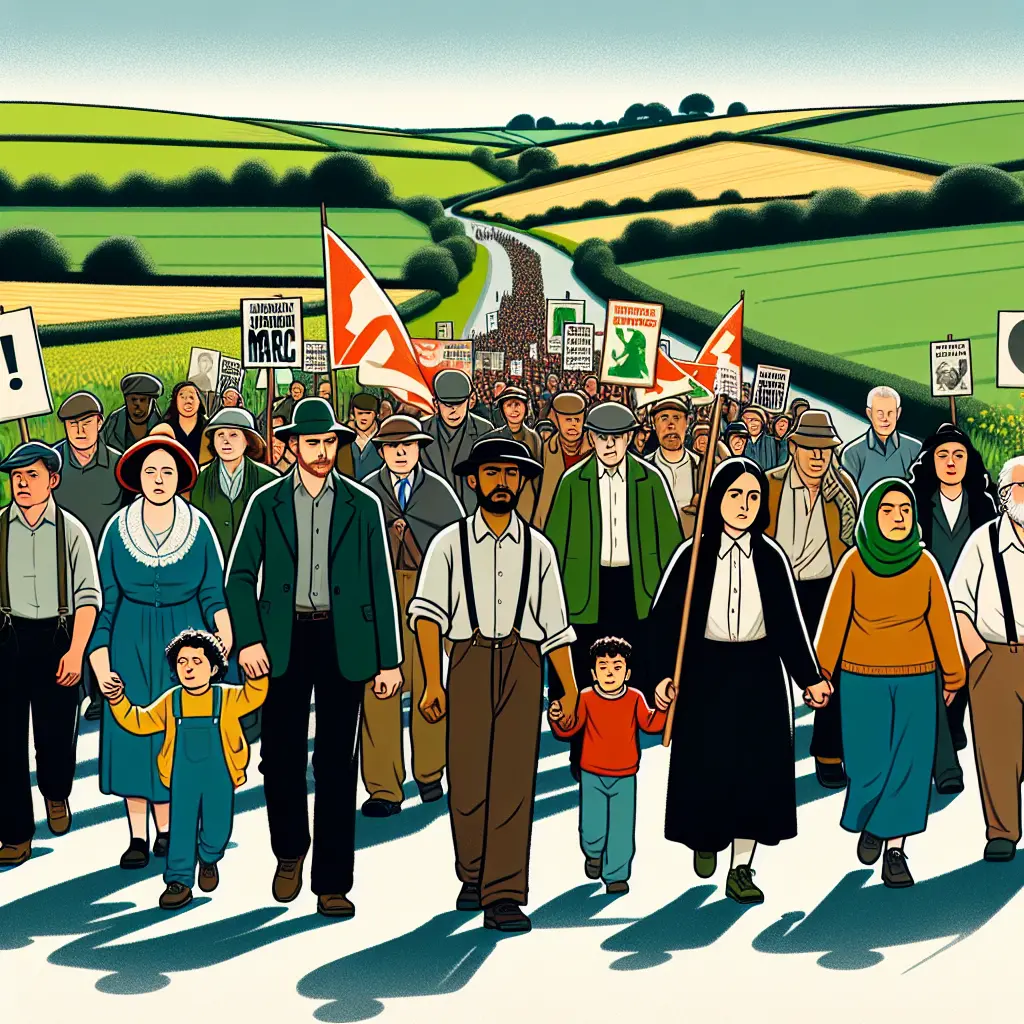
The Pilgrims' Revolt refers to a popular uprising in northern England in 1536, also known as the Pilgrimage of Grace. It was led by commoners, clergy, and some nobles who opposed King Henry VIII's dissolution of monasteries and religious reforms. The movement sought to restore traditional Catholic practices and protect local religious institutions. Although initially large and influential, the revolt was ultimately suppressed by the king’s forces, resulting in executions and harsh reprisals.
The Pilgrims' Revolt
The Pilgrims' Revolt refers to a popular uprising in northern England in 1536, also known as the Pilgrimage of Grace. It was led by commoners, clergy, and some nobles who opposed King Henry VIII's dissolution of monasteries and religious reforms. The movement sought to restore traditional Catholic practices and protect local religious institutions. Although initially large and influential, the revolt was ultimately suppressed by the king’s forces, resulting in executions and harsh reprisals.

💡 Key Takeaways
- Identify the Pilgrims' Revolt (Pilgrimage of Grace) as a 1536 uprising in northern England against Henry VIII's religious reforms.
- Note the diverse participants: commoners, clergy, and some nobles.
- Grasp the main grievance: opposition to the dissolution of monasteries.
- Recognize the movement's aim to restore traditional Catholic practices.
❓ Frequently Asked Questions
What was the Pilgrimage of Grace?
A major 1536 uprising in northern England against Henry VIII's dissolution of monasteries and religious reforms, also known as the Pilgrims' Revolt; it aimed to restore traditional Catholic practices.
Who led the revolt and who joined in?
Led by Robert Aske, the movement drew in commoners, clergy, and some nobles who opposed the king's policies.
Why did the rebellion occur?
Opposition to Henry VIII's break with Rome, the dissolution of monasteries, and the broader religious reforms that threatened traditional church rights and property.
What happened as a result of the revolt?
The uprising was crushed, its leaders were executed, and the monastic reforms continued; it underscored popular resistance but failed to halt the King's policies.
Where did the Pilgrimage of Grace take place?
In northern England, with strong activity around York and surrounding counties.