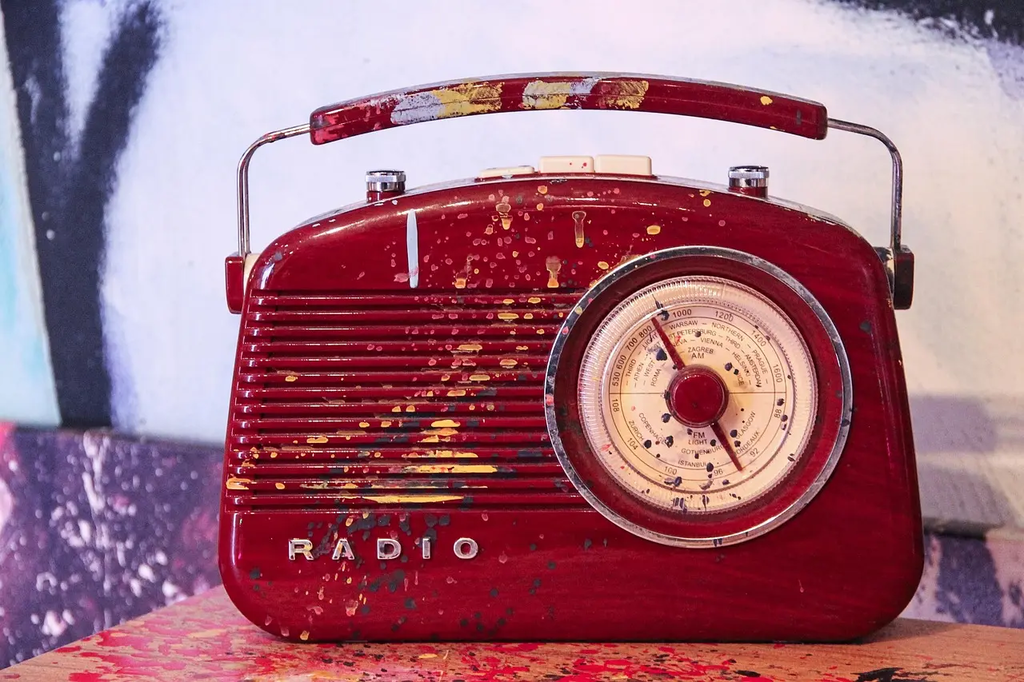
The radio, an iconic invention, revolutionized communication by enabling the wireless transmission of sound across long distances. Invented in the late 19th century, it became a vital medium for news, entertainment, and education, connecting people globally. Radios influenced culture, shaped public opinion, and played crucial roles during wars and emergencies. Its enduring legacy continues to impact modern communication technologies, making it a cornerstone in the history of human innovation.
The Radio
The radio, an iconic invention, revolutionized communication by enabling the wireless transmission of sound across long distances. Invented in the late 19th century, it became a vital medium for news, entertainment, and education, connecting people globally. Radios influenced culture, shaped public opinion, and played crucial roles during wars and emergencies. Its enduring legacy continues to impact modern communication technologies, making it a cornerstone in the history of human innovation.
💡 Key Takeaways
- Understand how radio waves carry sound and information from transmitter to receiver
- Learn the difference between AM and FM broadcasting and how each affects quality and range
- Explore the basics of tuning, antennas, and receivers that enable radio listening
- Get a quick tour of radio history and key milestones that shaped modern wireless communication
❓ Frequently Asked Questions
What is radio in simple terms?
Radio uses electromagnetic waves to wirelessly send information (like voice or music) from a transmitter to a receiver.
What is the difference between AM and FM radio?
AM varies the signal's amplitude; FM varies the carrier frequency. FM usually provides better sound quality and noise resistance, while AM can travel farther under certain conditions.
How does a radio receiver work?
An antenna collects radio waves, a tuner selects a specific frequency, the circuit demodulates the signal, and the audio is sent to your speaker.
What is modulation and why is it used?
Modulation encodes information onto a carrier wave so it can be transmitted over distance and shared across stations; common types are AM and FM.
What does bandwidth mean in radio?
Bandwidth is the range of frequencies a signal uses; larger bandwidth means higher fidelity or data rate but requires more of the spectrum.