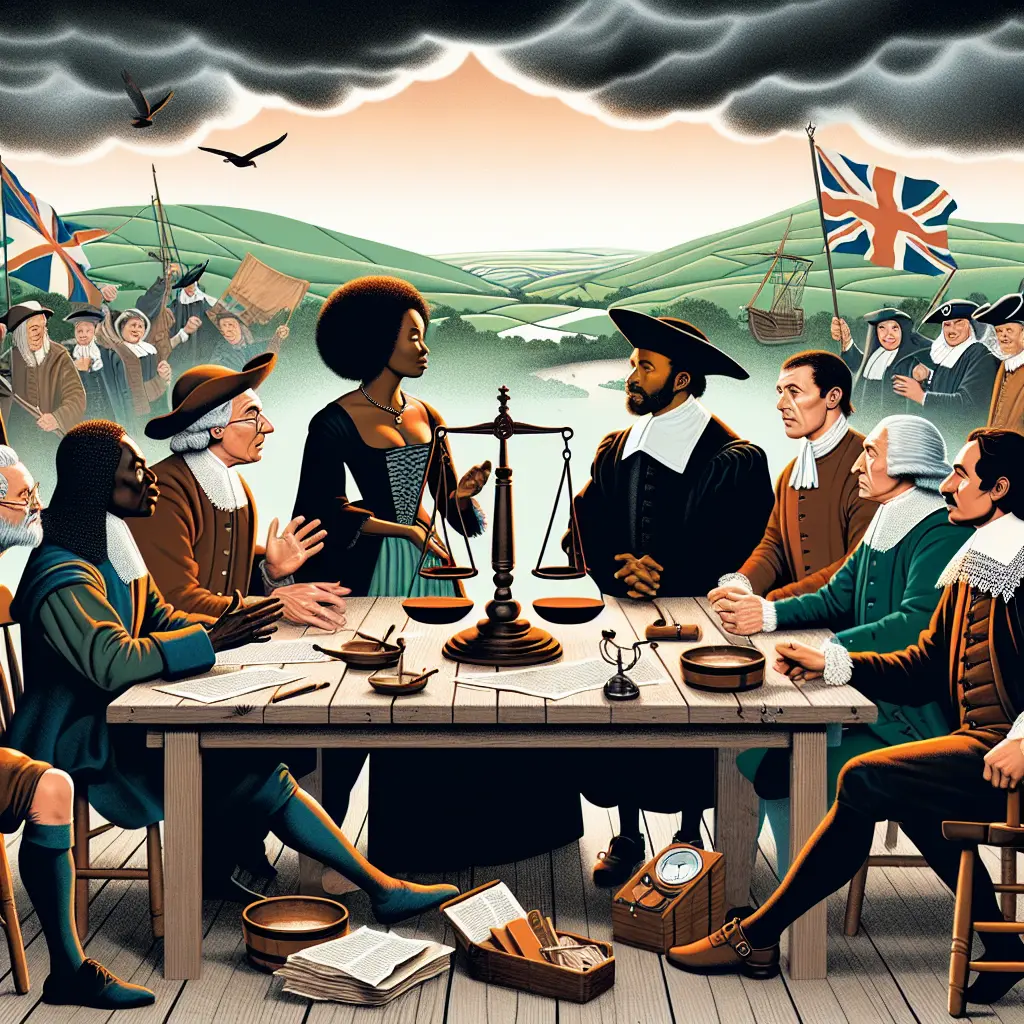
The Treaty of Ripon was an agreement signed in October 1640 between King Charles I of England and the Scottish Covenanters after the Second Bishops’ War. The treaty allowed the Scottish army to occupy parts of northern England and required Charles to pay them daily expenses until a final settlement was reached. This treaty weakened the king’s authority and forced him to recall the English Parliament, setting the stage for the English Civil War.
The Treaty of Ripon
The Treaty of Ripon was an agreement signed in October 1640 between King Charles I of England and the Scottish Covenanters after the Second Bishops’ War. The treaty allowed the Scottish army to occupy parts of northern England and required Charles to pay them daily expenses until a final settlement was reached. This treaty weakened the king’s authority and forced him to recall the English Parliament, setting the stage for the English Civil War.

💡 Key Takeaways
- Understand the causes and outcomes of the Second Bishops' War that led to the Treaty of Ripon.
- Learn the treaty's key terms: the Scottish forces could occupy parts of northern England and Charles I would pay their daily expenses until a final settlement.
- Explore how the treaty temporarily shifted political leverage to the Scottish Covenanters and compelled Parliament to take part in handling the crisis.
- Assess the treaty's significance as a precursor to the English Civil War and its role in intensifying constitutional tensions between the monarchy and Parliament.
❓ Frequently Asked Questions
What was the Treaty of Ripon?
An October 1640 agreement between King Charles I and the Scottish Covenanters after the Second Bishops’ War. It allowed the Scottish army to occupy parts of northern England and required Charles to pay their daily expenses until a final settlement.
Who were the Scottish Covenanters?
A Presbyterian alliance in Scotland that opposed Charles I’s religious policies; they negotiated with him after the Bishops’ War and led the Scottish forces involved in the treaty.
When was the treaty signed and which conflict did it follow?
Signed in October 1640, following the Second Bishops’ War (1639–1640) between Royalist England and the Covenanters.
What were the immediate terms of the treaty?
The Scottish army could occupy parts of northern England, and Charles I agreed to pay their daily expenses until a final settlement.