Tides and waves are dynamic movements of ocean water influenced by gravitational forces and wind. Tides result from the gravitational pull of the moon and sun, causing water levels to rise and fall regularly along coastlines. Waves, on the other hand, are created primarily by wind blowing across the ocean’s surface, generating rhythmic motions. Both tides and waves shape coastal environments and play essential roles in marine ecosystems on Planet Earth.
Tides and Waves+50
Tides and waves are dynamic movements of ocean water influenced by gravitational forces and wind. Tides result from the gravitational pull of the moon and sun, causing water levels to rise and fall regularly along coastlines. Waves, on the other hand, are created primarily by wind blowing across the ocean’s surface, generating rhythmic motions. Both tides and waves shape coastal environments and play essential roles in marine ecosystems on Planet Earth.
💡 Key Takeaways
- Understand how tides are generated by gravity from the Moon and Sun and how their alignment affects tidal range.
- Learn the difference between tides and waves, and how wind and depth influence wave size and speed.
- Explore key wave properties (amplitude, wavelength, period) and how they change near shores.
- Identify common tidal patterns (diurnal, semidiurnal, mixed) and how tides impact coastal environments and navigation.
❓ Frequently Asked Questions
What is the difference between tides and waves?
Tides are long-period changes in sea level caused by the gravitational pull of the Moon and Sun. Waves are energy disturbances that travel across the surface, usually driven by wind.
What causes spring tides and neap tides?
Spring tides occur when the Sun, Moon, and Earth align (full or new moon), producing higher high tides and lower low tides. Neap tides occur when the Sun and Moon are at right angles to Earth, reducing the tidal range.
What are semidiurnal, diurnal, and mixed tides?
Semidiurnal: two roughly equal high tides and two low tides each day. Diurnal: one high and one low per day. Mixed tides have two highs and two lows that differ in height.
How do wind-generated waves form and behave with depth?
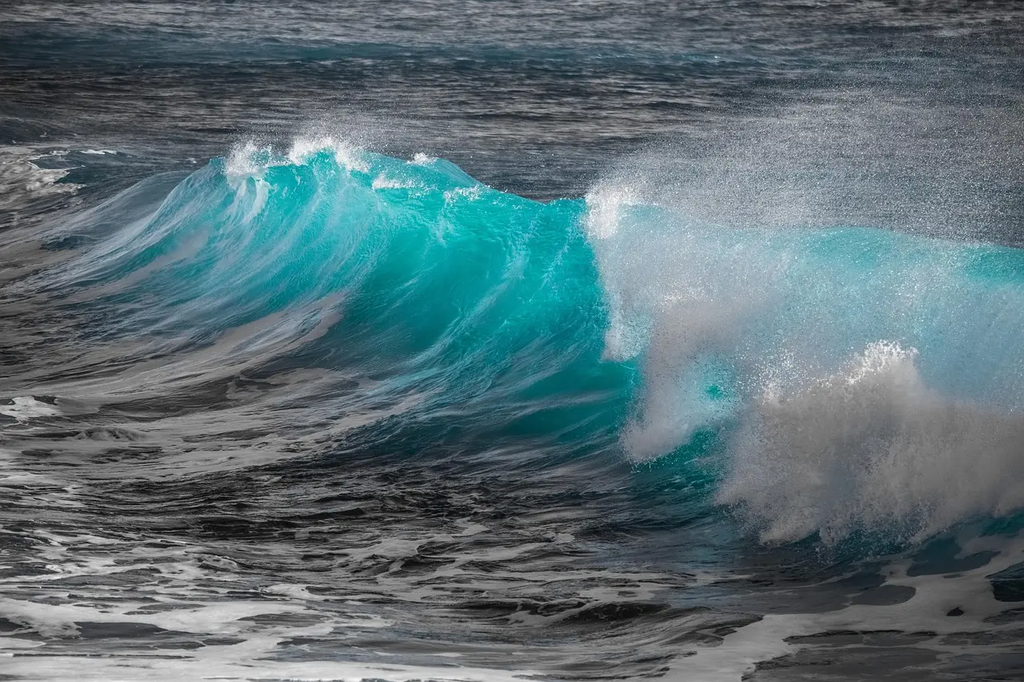
Waves form when wind transfers energy to the water surface. Water moves in circular orbits that decrease with depth; in deep water, little vertical movement occurs, while in shallow water waves slow, grow taller, and may break.
What is a tsunami and how is it different from regular ocean waves?
Tsunamis are long-wavelength, high-energy waves produced by undersea earthquakes, landslides, or volcanic activity. They travel fast in deep water and become much taller and more destructive near coastlines compared to typical wind-generated waves.