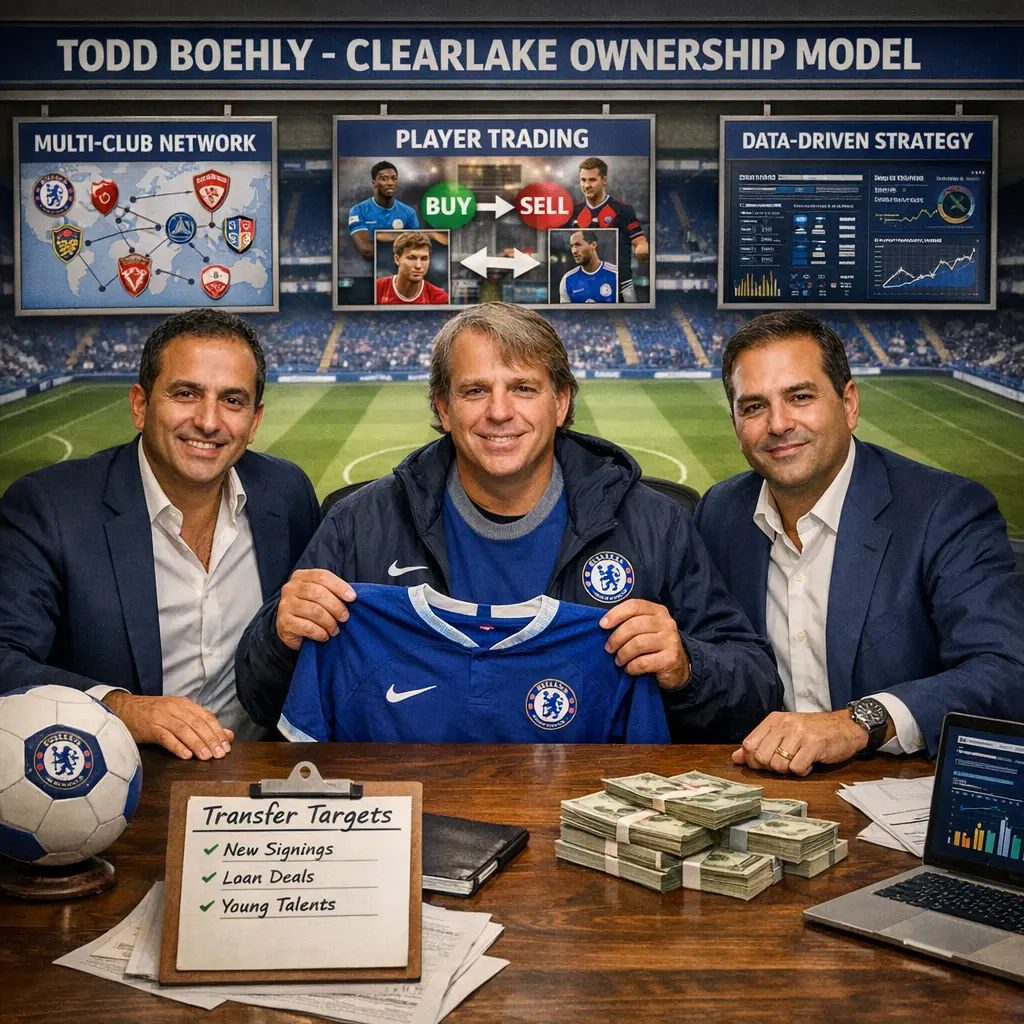
The Todd Boehly-Clearlake Ownership Model at Chelsea F.C. refers to the consortium led by American businessman Todd Boehly and private equity firm Clearlake Capital, which acquired the club in 2022. Their model emphasizes a data-driven approach, long-term squad building, and significant investment in young talent. The ownership seeks to modernize club operations, increase commercial revenues, and maintain Chelsea’s competitiveness domestically and in Europe, while promoting financial sustainability and global brand growth.
Todd Boehly-Clearlake Ownership Model
The Todd Boehly-Clearlake Ownership Model at Chelsea F.C. refers to the consortium led by American businessman Todd Boehly and private equity firm Clearlake Capital, which acquired the club in 2022. Their model emphasizes a data-driven approach, long-term squad building, and significant investment in young talent. The ownership seeks to modernize club operations, increase commercial revenues, and maintain Chelsea’s competitiveness domestically and in Europe, while promoting financial sustainability and global brand growth.
💡 Key Takeaways
- Understand the basic structure of the Boehly-Clearlake ownership model and who is involved.
- Learn how the buy-and-build strategy operates under this model to create value.
- Identify how governance and incentives align investors and management (board roles, performance metrics, ownership stakes).
- Consider potential benefits and criticisms, including speed of decision-making, leverage, and integration risk.
❓ Frequently Asked Questions
What is the Todd Boehly-Clearlake Ownership Model?
An ownership approach used by Todd Boehly and Clearlake Capital that combines private‑equity style investment with active, hands‑on management of sports teams and related businesses, leveraging cross‑portfolio resources to drive growth and value.
Who are the key players and what is Clearlake's role?
Todd Boehly is an investor and entrepreneur; Clearlake Capital is a private‑equity firm. Together they assemble and manage ownership groups, provide capital and operational expertise, and apply a shared, operator‑led strategy across portfolio companies.
What are the defining features of this ownership model?
Private equity backing, active management by owner‑operators, cross‑portfolio collaboration (sharing talent, data, and marketing resources), a focus on brand growth and commercial opportunities, and a data‑driven approach to performance.
How does this model affect clubs and fans? What are the benefits and risks?
Benefits can include greater capital, professional management, and enhanced marketing reach. Risks include potential emphasis on financial metrics, governance complexity, and cultural changes within a club.
How does it differ from traditional ownership?
It relies on a broader investor base and hands‑on, operator‑style management with cross‑portfolio synergies, aiming for rapid growth and monetization, unlike traditional single‑owner or family‑led models that may rely less on external capital or cross‑portfolio coordination.