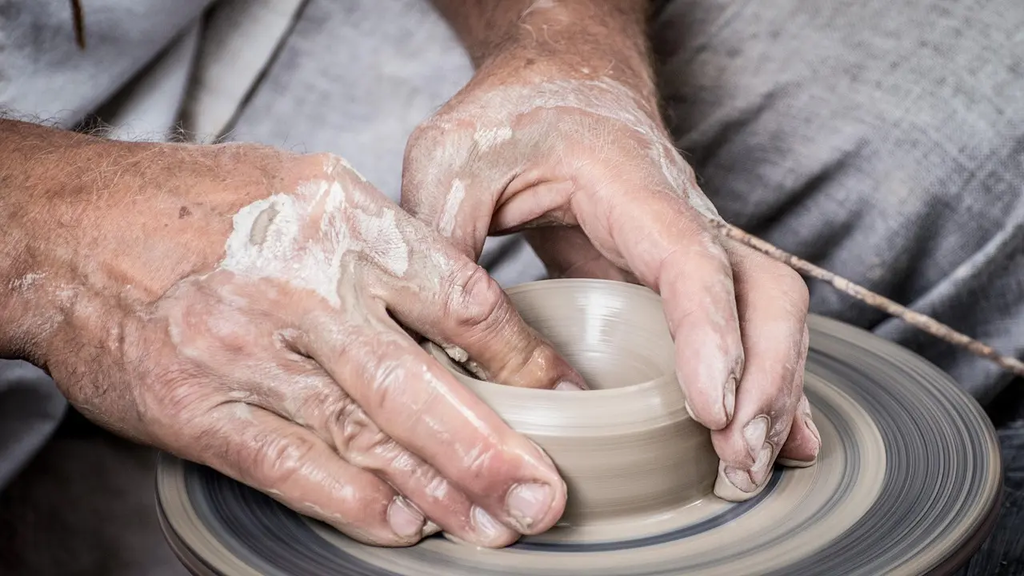
Wheel-Throwing Fundamentals refers to the essential skills and techniques required to shape clay on a potter’s wheel. This process involves centering clay, opening it, pulling up the walls, and forming various pottery shapes. Mastery of these basics allows artists to create bowls, cups, and other vessels with precision. Understanding wheel speed, hand positioning, and moisture control are key components, making these fundamentals crucial for both beginners and experienced potters.
Wheel‑Throwing Fundamentals
Wheel-Throwing Fundamentals refers to the essential skills and techniques required to shape clay on a potter’s wheel. This process involves centering clay, opening it, pulling up the walls, and forming various pottery shapes. Mastery of these basics allows artists to create bowls, cups, and other vessels with precision. Understanding wheel speed, hand positioning, and moisture control are key components, making these fundamentals crucial for both beginners and experienced potters.
💡 Key Takeaways
- Center clay on the wheel with proper speed and hand pressure to achieve a stable starting point.
- Open the clay and establish an even base, then gradually pull up the walls to form consistent shapes.
- Control wall thickness and symmetry through successive pulls to shape bowls, cups, and other vessels.
- Develop finishing skills for wheel-thrown pieces, including trimming, smoothing, and preparing for glazing.
❓ Frequently Asked Questions
What is wheel throwing?
Wheel throwing is shaping clay on a potter’s wheel by centering the clay, opening it to form a hollow, and pulling up the walls to create bowls, cups, and other shapes.
What are the core steps in wheel throwing?
Center the clay on the wheel, open to form a hollow, pull up the walls to shape, and then refine the form and rim with even wall thickness.
Why is centering important in wheel throwing?
Centering aligns the clay with the wheel’s axis, balances it on the spindle, and enables symmetrical, well-controlled forms.
What basic tools and setup do I need?
A pottery wheel, splash pan, sponges, water, and shaping tools such as ribs and a needle; bats or a board to lift finished pieces.
What are common beginner challenges and quick fixes?
Wobble, wall collapse, or thin rims often come from uneven pressure or moisture. Fixes include steady hand pressure, keeping clay at the right moisture, and slowing or stabilizing the wheel.