World Cup History (Pre-1998 Deep Dive) refers to an in-depth exploration of the FIFA World Cup tournaments held before 1998. This includes the origins of the competition in 1930, legendary teams and players, notable matches, and the evolution of tournament formats. It highlights historical milestones, controversies, and the cultural impact of the World Cup as it grew into a global sporting phenomenon before the major changes introduced in the 1998 edition.
World Cup History (Pre-1998 Deep Dive)
World Cup History (Pre-1998 Deep Dive) refers to an in-depth exploration of the FIFA World Cup tournaments held before 1998. This includes the origins of the competition in 1930, legendary teams and players, notable matches, and the evolution of tournament formats. It highlights historical milestones, controversies, and the cultural impact of the World Cup as it grew into a global sporting phenomenon before the major changes introduced in the 1998 edition.
💡 Key Takeaways
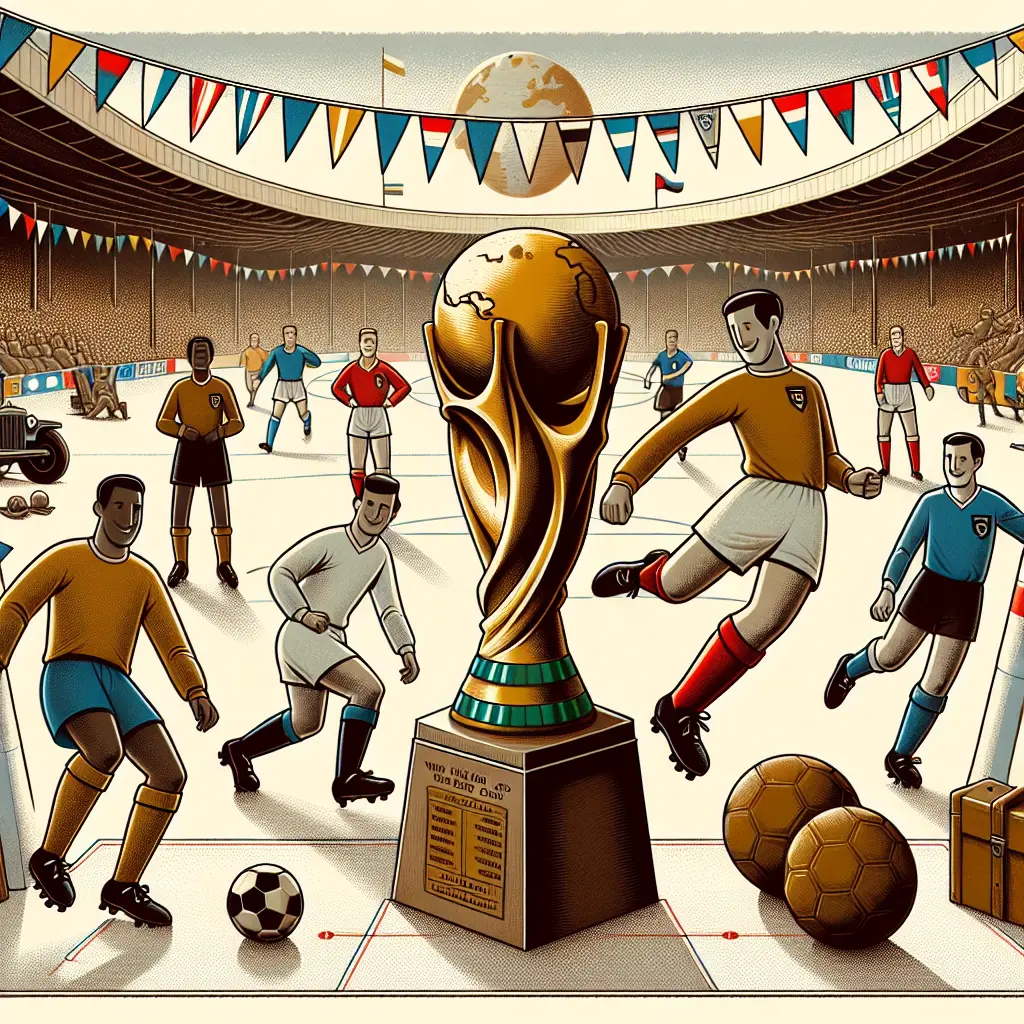
- Trace the World Cup’s origins from 1930 and how early editions reflected global travel and regional rivalries, including Uruguay’s landmark triumph.
- Identify legendary teams and players that defined the pre-1998 era—Pelé’s Brazil, Maradona’s Argentina, Cruyff’s Netherlands, and Beckenbauer’s Germany—and their iconic World Cup runs.
- Explore how formats evolved across decades—from early knockout and final-round formats to the 24-team era of the 1980s–1990s and the move toward group stages and larger tournaments pre-1998.
- Highlight key milestones and memorable matches that shaped pre-1998 history, such as the 1950 Maracanazo, the 1966 final controversy, Pelé’s 1958 breakthrough, and Brazil’s 1970 title run.
❓ Frequently Asked Questions
What is the World Cup and when did it begin?
The FIFA World Cup is football's global national-team championship, launched in 1930 in Uruguay; it has been held roughly every four years (with gaps during World War II) and features group stages followed by knockout rounds.
How did World Cup formats evolve before 1998?
Early editions used varying formats, with knockout rounds or a final group determining the champion. From 1950 onward most tournaments used a group stage followed by knockout rounds, and the number of teams grew from a handful to 24 by the 1982–1994 editions, before expanding to 32 in 1998.
Which teams and players left a lasting mark on pre-1998 World Cups?
Powerhouses like Brazil, Argentina, Germany, Italy, and Uruguay, with legendary players such as Pelé, Diego Maradona, Johan Cruyff, Garrincha, Zico, and Romário.
What are some notable milestones or moments from World Cups before 1998?
1930: first World Cup in Uruguay; 1950: Uruguay’s final-round upset of Brazil (Maracanazo); 1966: England hosts and wins; 1970: Brazil earns its third title; 1982–1994: expansion to 24 teams and growing global reach.