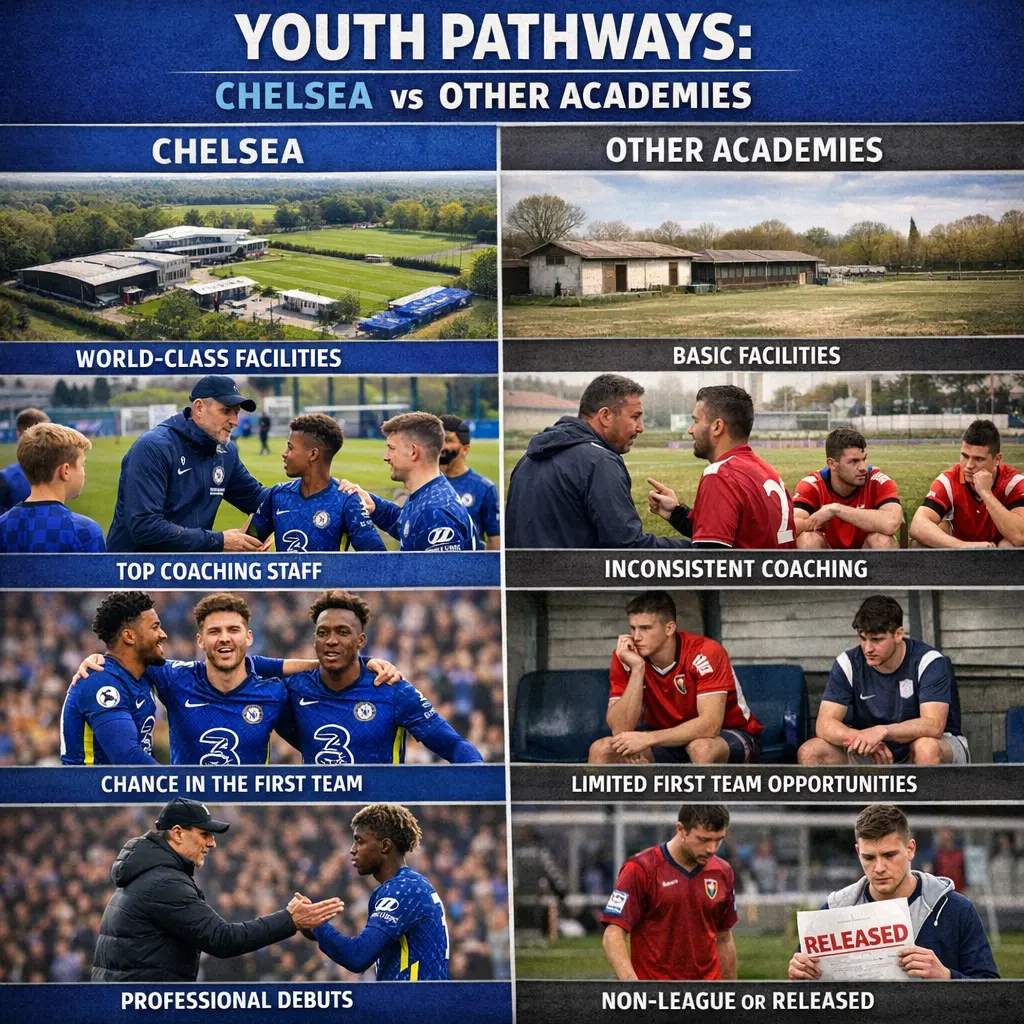
“Youth Pathways: Chelsea vs Other Academies” refers to comparing Chelsea F.C.’s approach to developing young football talent with that of other football academies. It examines how Chelsea nurtures, trains, and transitions youth players into professional football, highlighting differences in coaching methods, opportunities for first-team integration, loan strategies, and overall success rates compared to rival clubs’ academies, ultimately assessing which system better supports young players’ progression to elite levels.
Youth Pathways: Chelsea vs Other Academies
“Youth Pathways: Chelsea vs Other Academies” refers to comparing Chelsea F.C.’s approach to developing young football talent with that of other football academies. It examines how Chelsea nurtures, trains, and transitions youth players into professional football, highlighting differences in coaching methods, opportunities for first-team integration, loan strategies, and overall success rates compared to rival clubs’ academies, ultimately assessing which system better supports young players’ progression to elite levels.
💡 Key Takeaways
- Compare Chelsea's youth development pathway with other academies in terms of structure, coaching, and progression opportunities.
- Identify the typical milestones from academy intake to professional contracts and first-team debut across clubs.
- Understand how loans, education, and player welfare fit into progression in Chelsea's pathway versus others.
- Evaluate key factors that influence academy success, including facilities, coaching quality, competition level, and scouting networks.
❓ Frequently Asked Questions
What is a typical youth pathway at Chelsea and other football academies?
Players join age-group squads (roughly from ages 8–9) and train regularly, compete in youth leagues, and are assessed for progression to higher levels, with potential professional contracts or loan moves if ready.
How might Chelsea's academy approach differ from other clubs' academies?
All top academies focus on development, but differences can include coaching style, facilities, match opportunities, and loan pathways. Chelsea may emphasize certain development routes and resources that vary from other clubs.
What is the role of loans in a youth player’s development?
Loans give real-match experience against senior players, help players adapt to different leagues and styles, and showcase readiness for higher levels while remaining tied to the parent club.
What educational and welfare support do academies provide?
Academies typically offer schooling or study time, tutoring, mentoring, and welfare services to support both education and overall wellbeing alongside football training.
What factors determine if a youth player signs a professional contract?
Talent, consistent performance, attitude and work rate, injury history, coaching feedback, and the club’s first-team needs all influence contract decisions.