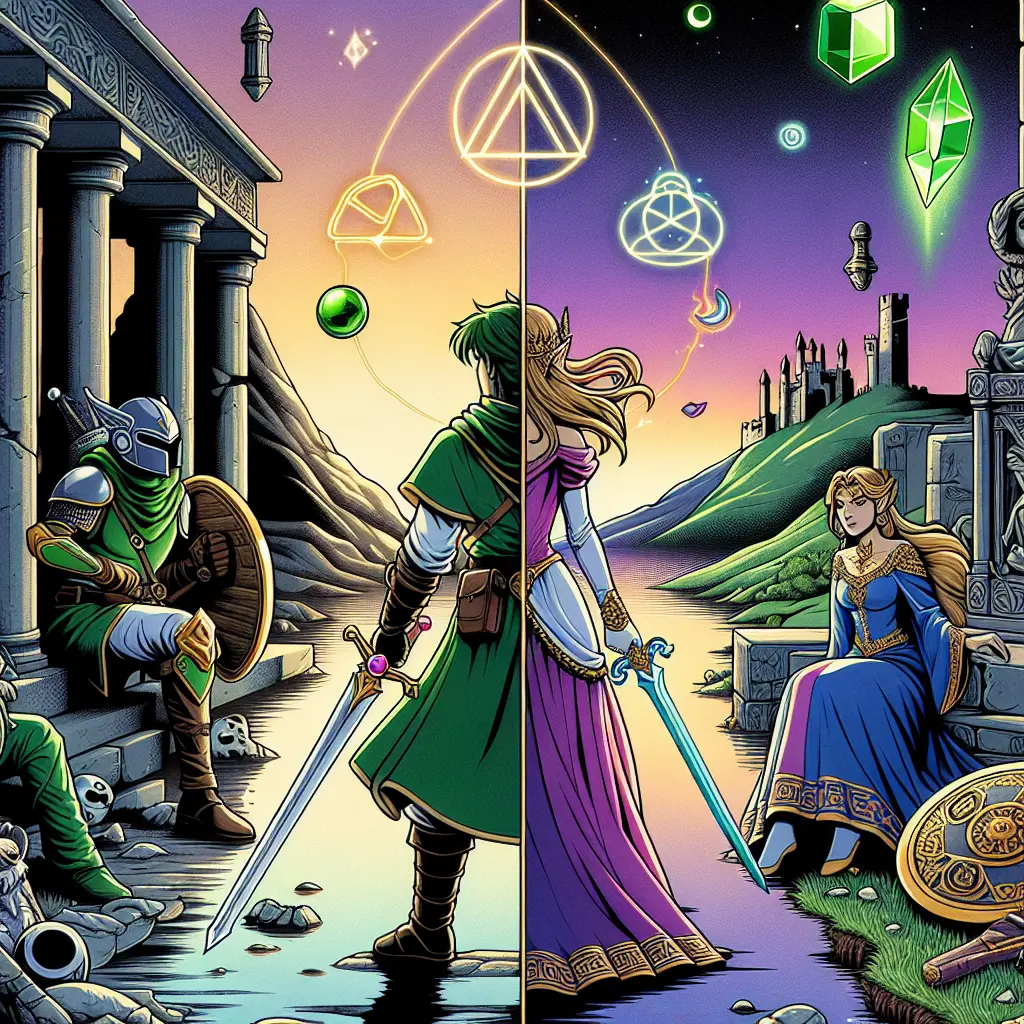
"Zelda Lore Canon vs Non-Canon" refers to the distinction between officially recognized storylines, characters, and events in The Legend of Zelda series (canon) and those that are unofficial or outside the main continuity (non-canon). Canon includes games and narratives confirmed by Nintendo as part of the official timeline, while non-canon encompasses spin-offs, fan theories, adaptations, or alternate interpretations not acknowledged in the primary Zelda universe.
Zelda Lore Canon vs Non-Canon
"Zelda Lore Canon vs Non-Canon" refers to the distinction between officially recognized storylines, characters, and events in The Legend of Zelda series (canon) and those that are unofficial or outside the main continuity (non-canon). Canon includes games and narratives confirmed by Nintendo as part of the official timeline, while non-canon encompasses spin-offs, fan theories, adaptations, or alternate interpretations not acknowledged in the primary Zelda universe.
💡 Key Takeaways
- Differentiate canonical Zelda lore from fan-made or unofficial interpretations.
- Identify Nintendo-confirmed elements that are officially part of Zelda’s continuity.
- Explore how crossovers, mods, and fan content in Fortnite, Minecraft, and gaming culture shape notions of canon.
- Develop quick criteria to evaluate whether a Zelda lore claim is canonical and how to stay updated with official guidance.
❓ Frequently Asked Questions
What does canon mean in Zelda lore?
Canon refers to story elements officially recognized by Nintendo as part of The Legend of Zelda's official history, including mainline games and Nintendo-approved materials.
What counts as Zelda canon vs non-canon?
Canon includes Nintendo-confirmed games and official licensed media. Non-canon covers fan fiction, fan-made games, mods, or unofficial crossovers that Nintendo does not endorse.
Are crossovers with Fortnite or Minecraft considered Zelda canon?
No. These are licensed crossovers or fan works that exist alongside Zelda but are not part of the official lore.
How can I tell if something is canon?
Look for official confirmation from Nintendo, publisher credits, or Nintendo-approved adaptations. If it's not officially sanctioned, it's non-canon.