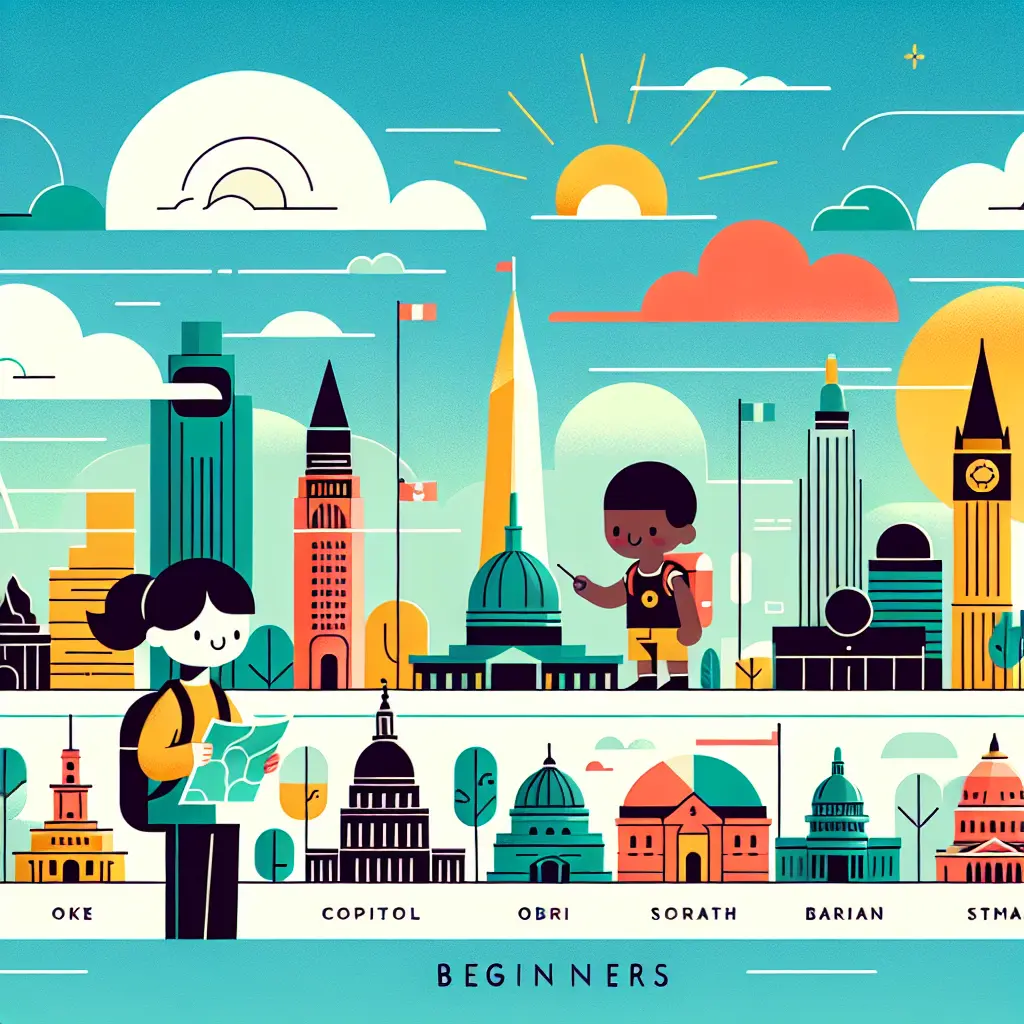
"Capital Cities of the Americas: Beginners" refers to an introductory exploration of the main cities that serve as administrative and political centers across North, Central, and South America, as well as the Caribbean. This phrase suggests a basic guide or educational resource designed for those new to geography, providing foundational knowledge about each country’s capital city, their locations, and their significance within the Americas.
Capital Cities of the Americas: Beginners
"Capital Cities of the Americas: Beginners" refers to an introductory exploration of the main cities that serve as administrative and political centers across North, Central, and South America, as well as the Caribbean. This phrase suggests a basic guide or educational resource designed for those new to geography, providing foundational knowledge about each country’s capital city, their locations, and their significance within the Americas.
💡 Key Takeaways
- Identify the capital cities of major countries across North, Central, and South America and the Caribbean.
- Understand the difference between a country's capital and its largest city.
- Locate these capitals on a map and recognize their geographic distribution across the Americas.
❓ Frequently Asked Questions
What is a capital city?
The political and administrative center of a country, where the government operates and national institutions are based.
Which regions are included in the Americas for this guide?
North, Central, and South America, plus the Caribbean islands.
Are capitals always the largest city?
No. Capitals can be chosen for political or historical reasons and may not be the biggest city. For example, Brasília is the capital of Brazil but not its largest city.
Do all countries in the Americas have a single capital city?
Most do, but some have multiple capitals or distinct capitals for different functions (e.g., Bolivia has Sucre as the constitutional capital and La Paz as the seat of government).
How can I prepare effectively for the quiz?
Study with a map, learn a few capitals per region, use quick-recall flashcards, and practice asking yourself small, regional questions.