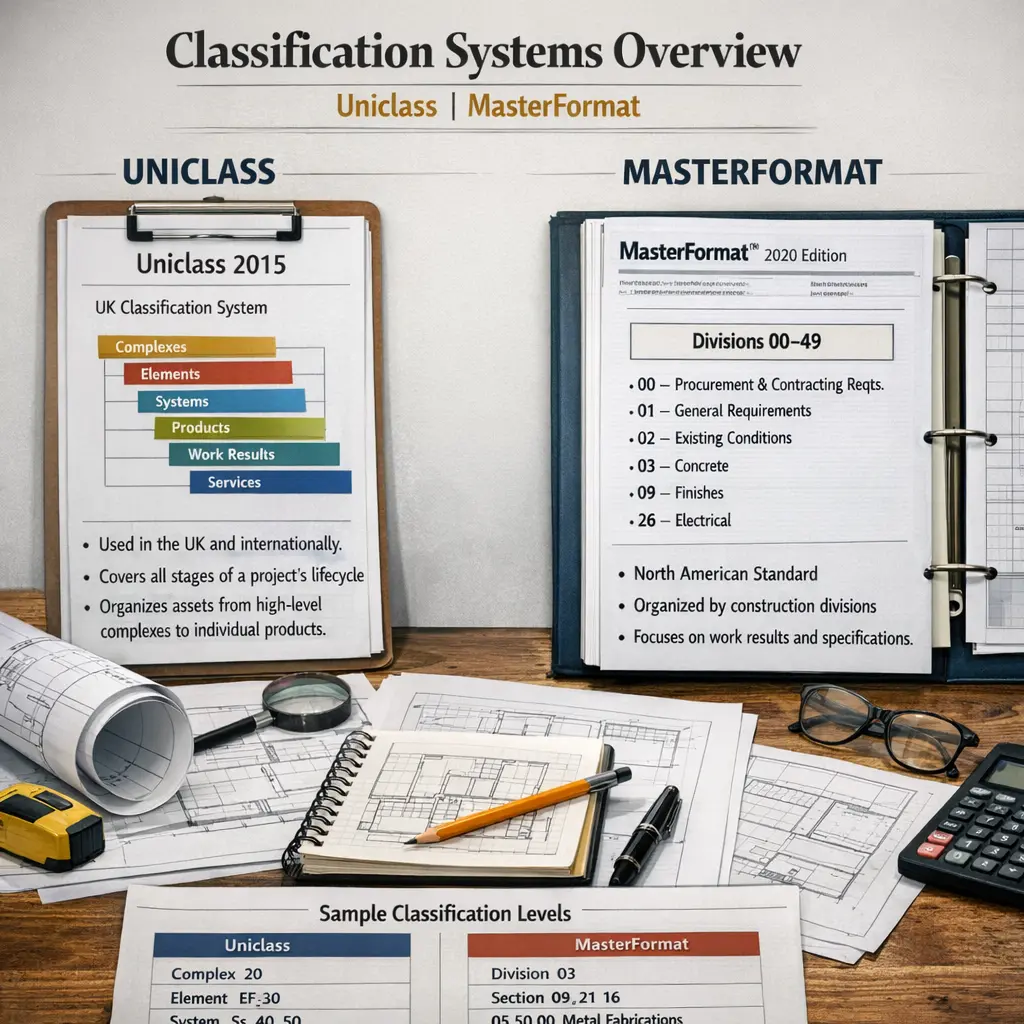
Classification systems like Uniclass and MasterFormat organize construction information into structured categories, enabling efficient communication, documentation, and management throughout a project’s lifecycle. Uniclass is widely used in the UK, providing a unified structure for all construction sectors, while MasterFormat is prevalent in North America, focusing on specifications and work results. Digital applications leverage these systems to streamline data exchange, enhance collaboration, and support Building Information Modeling (BIM) in construction projects.
Classification Systems Overview (Uniclass, MasterFormat)
Classification systems like Uniclass and MasterFormat organize construction information into structured categories, enabling efficient communication, documentation, and management throughout a project’s lifecycle. Uniclass is widely used in the UK, providing a unified structure for all construction sectors, while MasterFormat is prevalent in North America, focusing on specifications and work results. Digital applications leverage these systems to streamline data exchange, enhance collaboration, and support Building Information Modeling (BIM) in construction projects.
💡 Key Takeaways
- Understand the purpose of classification systems in organizing construction project data and documentation.
- Learn the key differences between Uniclass and MasterFormat in scope, structure, and coding conventions.
- Identify how each system categorizes elements (spaces, products, and work results) to support BIM, specifications, and procurement.
- Recognize the benefits and limitations of standardized classifications and when cross-walks between systems are useful.
❓ Frequently Asked Questions
What is Uniclass and what is it used for?
Uniclass is a UK construction classification system that groups project information into a standardized hierarchy to improve data consistency across design, procurement, and facilities management.
What is MasterFormat and where is it used?
MasterFormat is a North American classification system that organizes construction information by work results and material groups, widely used for project manuals, specifications, and cost estimates.
How do Uniclass and MasterFormat differ in scope and structure?
Uniclass focuses on UK practices and the project lifecycle with a multi-level hierarchical structure, while MasterFormat concentrates on US/Canada procurement and specifications organized by work results and materials.
Why use a classification system in construction projects or quizzes?
They provide a common vocabulary, enable quick lookup, support data exchange between teams, and improve consistency across documents and phases.