Clinical Genomics Counseling & Variant Interpretation involves guiding patients and healthcare providers in understanding genetic test results, particularly DNA variants that may affect health. Professionals in this field analyze genetic data to interpret the significance of specific variants, assess disease risk, and recommend medical management or preventive strategies. They also provide counseling to patients and families, explaining complex genomic information and supporting informed decision-making in healthcare and medicine.
Clinical Genomics Counseling & Variant Interpretation
Clinical Genomics Counseling & Variant Interpretation involves guiding patients and healthcare providers in understanding genetic test results, particularly DNA variants that may affect health. Professionals in this field analyze genetic data to interpret the significance of specific variants, assess disease risk, and recommend medical management or preventive strategies. They also provide counseling to patients and families, explaining complex genomic information and supporting informed decision-making in healthcare and medicine.
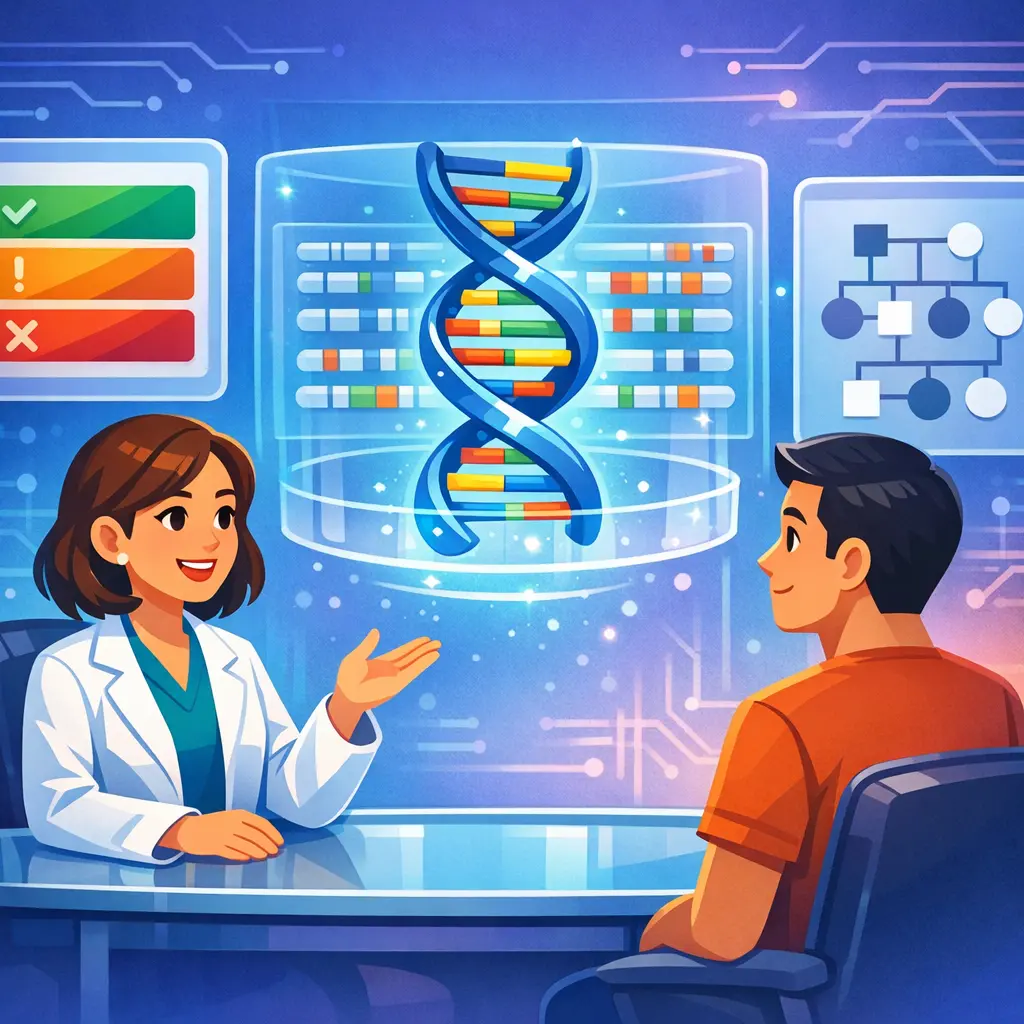
💡 Key Takeaways
- Understand the role of clinical genomics counseling in guiding genetic testing and communicating results
- Learn how variant interpretation uses established guidelines, population data, computational predictions, and functional evidence
- Identify how variant classifications (pathogenic, likely pathogenic, VUS, benign) influence patient care, surveillance, and family testing
- Recognize ethical, consent, privacy, and communication considerations when conveying results and uncertainty to patients
❓ Frequently Asked Questions
What is clinical genomics counseling?
A professional service that explains genetic test options, interprets results, and guides medical and family decisions based on genomic information.
What does variant interpretation involve?
Assessing a gene variant to determine its medical significance (pathogenic, likely pathogenic, uncertain significance, or benign) using research, databases, and family data.
What is a Variant of Uncertain Significance (VUS)?
A DNA change whose impact on disease risk is not yet known; may require additional data and periodic re-evaluation.
How can genomic test results influence care and family planning?
Results can guide monitoring, prevention, tailored treatments, and cascade testing for relatives, while acknowledging uncertainties and discussing options.