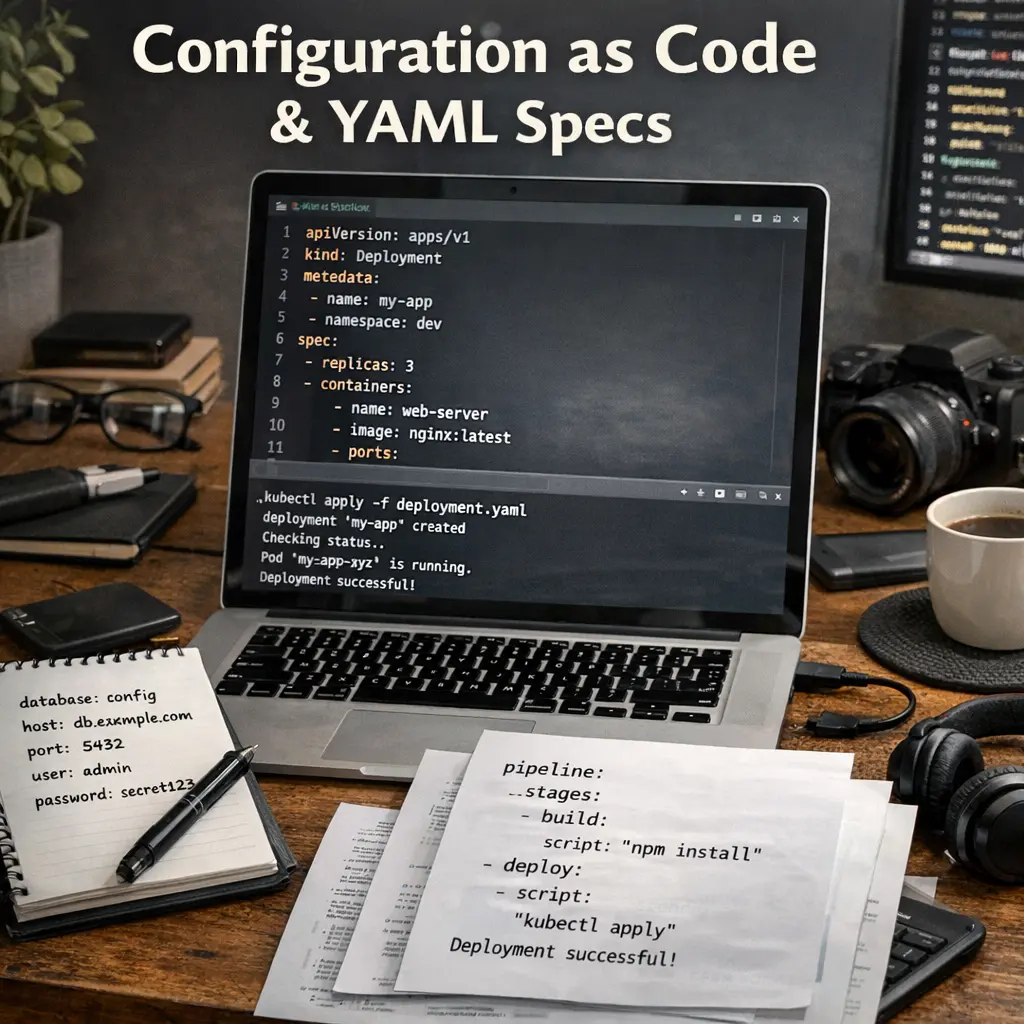
Configuration as Code & YAML Specs (Agent Architecture) refers to the practice of defining system, application, or agent configurations in human-readable YAML files. This approach enables automated, version-controlled configuration management, ensuring consistency across environments. In agent architectures, YAML specs outline agent behaviors, resources, and interactions, allowing seamless deployment and updates. This method enhances transparency, repeatability, and collaboration by treating configuration files as code within development workflows.
Configuration as Code & YAML Specs
Configuration as Code & YAML Specs (Agent Architecture) refers to the practice of defining system, application, or agent configurations in human-readable YAML files. This approach enables automated, version-controlled configuration management, ensuring consistency across environments. In agent architectures, YAML specs outline agent behaviors, resources, and interactions, allowing seamless deployment and updates. This method enhances transparency, repeatability, and collaboration by treating configuration files as code within development workflows.
💡 Key Takeaways
- Define Configuration as Code and why YAML is a common choice for specs
- Write YAML-based configurations to describe systems, environments, and deployments
- Understand benefits like versioning, reproducibility, and automated provisioning
- Learn YAML structures (maps, lists) and basic validation techniques (linting, schema checks)
❓ Frequently Asked Questions
What is Configuration as Code (CaC)?
CaC manages system and application settings with machine-readable files (often YAML or JSON) stored in version control to enable repeatable, auditable deployments.
What is YAML and why is it commonly used for configuration?
YAML is a human-friendly data format that represents hierarchical data with indentation; it supports comments and is easy to read, making it popular for config files.
What is the difference between YAML and JSON in config files?
JSON is strict and machine-oriented, uses braces and brackets and has no comments; YAML is more readable, supports comments and anchors, but relies on indentation for structure.
Why would you validate YAML against a schema in configuration as code?
Schema validation catches structural and type errors early, ensures required fields exist, and helps enforce consistency across environments.