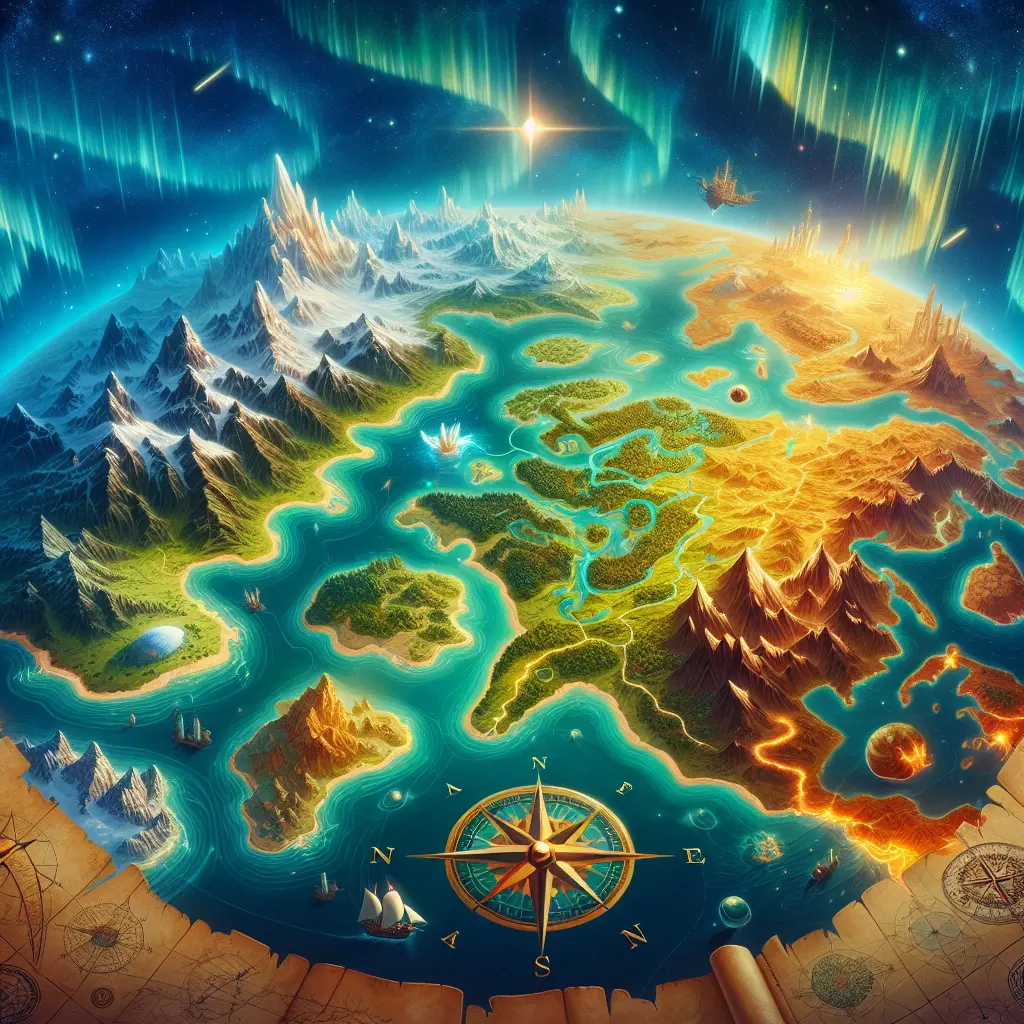
Epic worldbuilding and maps refer to the imaginative creation of detailed, immersive fictional worlds, often seen in fantasy or science fiction genres. This process involves inventing cultures, histories, and geographies, while maps visually represent these lands, helping readers or players navigate and understand the setting. Together, they enhance storytelling by providing depth, context, and a sense of adventure, making the world feel vast, believable, and engaging for audiences.
Epic Worldbuilding & Maps
Epic worldbuilding and maps refer to the imaginative creation of detailed, immersive fictional worlds, often seen in fantasy or science fiction genres. This process involves inventing cultures, histories, and geographies, while maps visually represent these lands, helping readers or players navigate and understand the setting. Together, they enhance storytelling by providing depth, context, and a sense of adventure, making the world feel vast, believable, and engaging for audiences.
💡 Key Takeaways
- Design cultures, histories, and geographies that feel coherent within a franchise or universe.
- Create maps that help readers or players navigate your world and understand spatial relationships.
- Align lore with plot, factions, and gameplay to maintain consistency across franchises.
- Integrate storytelling and visual design to make worldbuilding engaging for readers and players.
❓ Frequently Asked Questions
What is epic worldbuilding?
The deliberate creation of a detailed, believable fictional universe with cultures, histories, geographies, and systems (like magic or technology) to support stories or games.
How do maps aid worldbuilding?
Maps visualize landscapes, distances, routes, and borders, helping readers or players navigate lands and ensuring geographic consistency across the franchise.
What core elements should you invent in worldbuilding?
Cultures and languages, histories, geographies (lands, seas, climate), governance and economies, and any technology or magic systems.
What makes a map usable in a franchise or universe?
Clear scale and orientation, labeled regions and landmarks, consistent terrain and climate, and notes on travel routes or connections between areas.