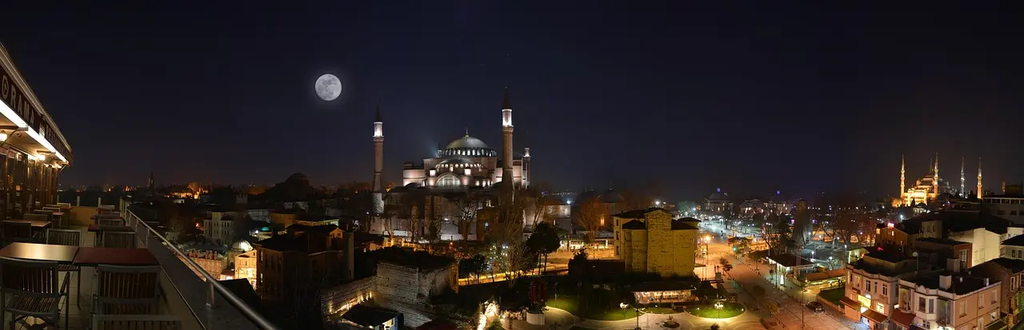
Hagia Sophia is a historic architectural marvel located in Istanbul, Turkey. Originally built as a cathedral in the 6th century during the Byzantine Empire, it later served as a mosque and now functions as a museum and mosque. Renowned for its massive dome, intricate mosaics, and grand design, Hagia Sophia reflects the rich cultural and religious history of the region, making it one of the world’s most iconic landmarks.
Hagia Sophia
Hagia Sophia is a historic architectural marvel located in Istanbul, Turkey. Originally built as a cathedral in the 6th century during the Byzantine Empire, it later served as a mosque and now functions as a museum and mosque. Renowned for its massive dome, intricate mosaics, and grand design, Hagia Sophia reflects the rich cultural and religious history of the region, making it one of the world’s most iconic landmarks.
💡 Key Takeaways
- Trace Hagia Sophia's transformation from a Byzantine cathedral to an Ottoman mosque and its status as a global heritage site.
- Identify its architectural innovations, especially the monumental dome, pendentives, and integration of mosaics.
- Understand its cultural and religious significance as a symbol of shared heritage and cross-cultural influence.
- Explore its influence on later architecture and its recognition as a UNESCO World Heritage site.
❓ Frequently Asked Questions
What is Hagia Sophia?
Hagia Sophia is a historic building in Istanbul, Turkey. It was completed in 537 as a Byzantine cathedral, later became a mosque, then a museum, and in 2020 was reconverted into a functioning mosque. It is part of Istanbul's UNESCO-listed Historic Areas.
Who built Hagia Sophia and when?
It was commissioned by Byzantine Emperor Justinian I and completed in 537. The architects were Anthemius of Tralles and Isidore of Miletus.
What are Hagia Sophia's key architectural features?
Hagia Sophia is famed for its massive central dome, innovative use of pendentives, and a vast interior space that blends Christian mosaics with later Islamic calligraphy and decorations.
How has Hagia Sophia's use changed over time?
It began as a Byzantine cathedral, was converted to a mosque after the Ottoman conquest in 1453, became a museum in 1935, and was reconverted to a mosque in 2020.
How can visitors access Hagia Sophia today?
As a functioning mosque, it is open to worshippers; visitors can enter outside prayer times. Dress modestly, and note that non-Muslim visitors may be restricted during prayer times.