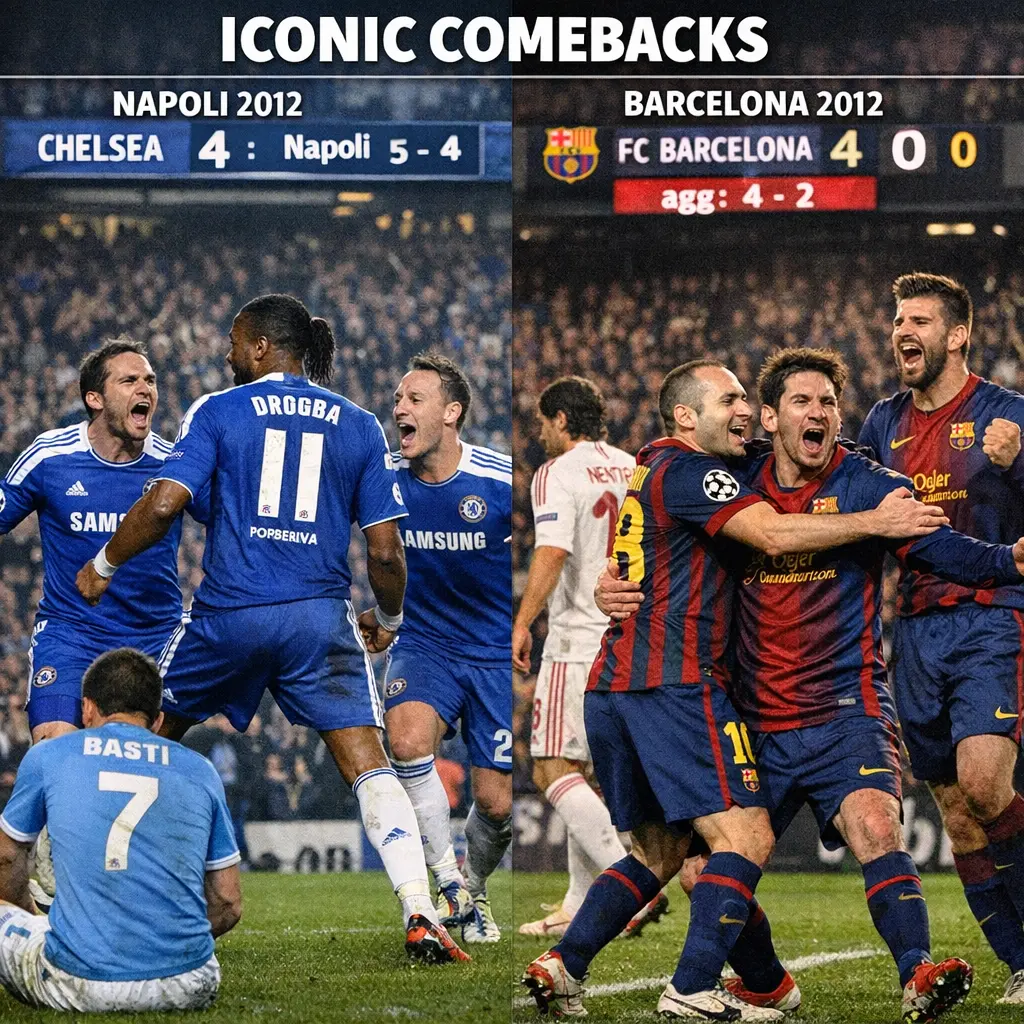
The phrase refers to Chelsea F.C.’s dramatic Champions League comebacks in 2012. Against Napoli, Chelsea overturned a 3-1 first-leg deficit with a thrilling 4-1 win at Stamford Bridge. Later, facing Barcelona in the semi-finals, Chelsea drew 2-2 at Camp Nou despite playing with ten men, securing a 3-2 aggregate victory. These iconic matches showcased Chelsea’s resilience and determination, ultimately leading them to their first Champions League title.
Iconic Comebacks: Napoli 2012 and Barcelona 2012
The phrase refers to Chelsea F.C.’s dramatic Champions League comebacks in 2012. Against Napoli, Chelsea overturned a 3-1 first-leg deficit with a thrilling 4-1 win at Stamford Bridge. Later, facing Barcelona in the semi-finals, Chelsea drew 2-2 at Camp Nou despite playing with ten men, securing a 3-2 aggregate victory. These iconic matches showcased Chelsea’s resilience and determination, ultimately leading them to their first Champions League title.
💡 Key Takeaways
- Understand what makes Napoli 2012 and Barcelona 2012 iconic comebacks.
- Learn how tactical shifts and timely substitutions can alter momentum.
- Explore the roles of psychology, resilience, and crowd energy in turning a game around.
- Identify turning points: critical goals, defensive fixes, and game management strategies.
❓ Frequently Asked Questions
What is an iconic comeback in football?
A comeback is when a team trails in a match and overcomes the deficit to win or advance, often in high-stakes or knockout games, leaving a lasting impression.
How did Barcelona's 2012 comeback unfold?
In the 2012 UEFA Champions League semifinal, Barcelona trailed AC Milan after the first leg and then won 4-0 at Camp Nou to advance 4-2 on aggregate.
What is an aggregate score and how does it work in two-legged ties?
The aggregate score is the total goals from both legs. The team with the higher aggregate advances; if tied, rules like away goals, extra time, or penalties decide the outcome depending on the competition.
Why are Napoli 2012 and Barcelona 2012 considered iconic comebacks?
They are remembered for dramatic momentum shifts where teams overturned deficits in important matches, showcasing resilience, strategic changes, and dramatic late or decisive goals.