Multiversal politics and crossovers refer to the complex interactions, alliances, and conflicts that occur between different universes or realities within a fictional multiverse. Characters, governments, or factions from separate worlds engage in diplomacy, war, or cooperation, often leading to dramatic crossovers where heroes and villains from distinct universes meet. These narratives explore the consequences of interdimensional travel, cultural clashes, and the balance of power across multiple realities.
Multiversal Politics & Crossovers
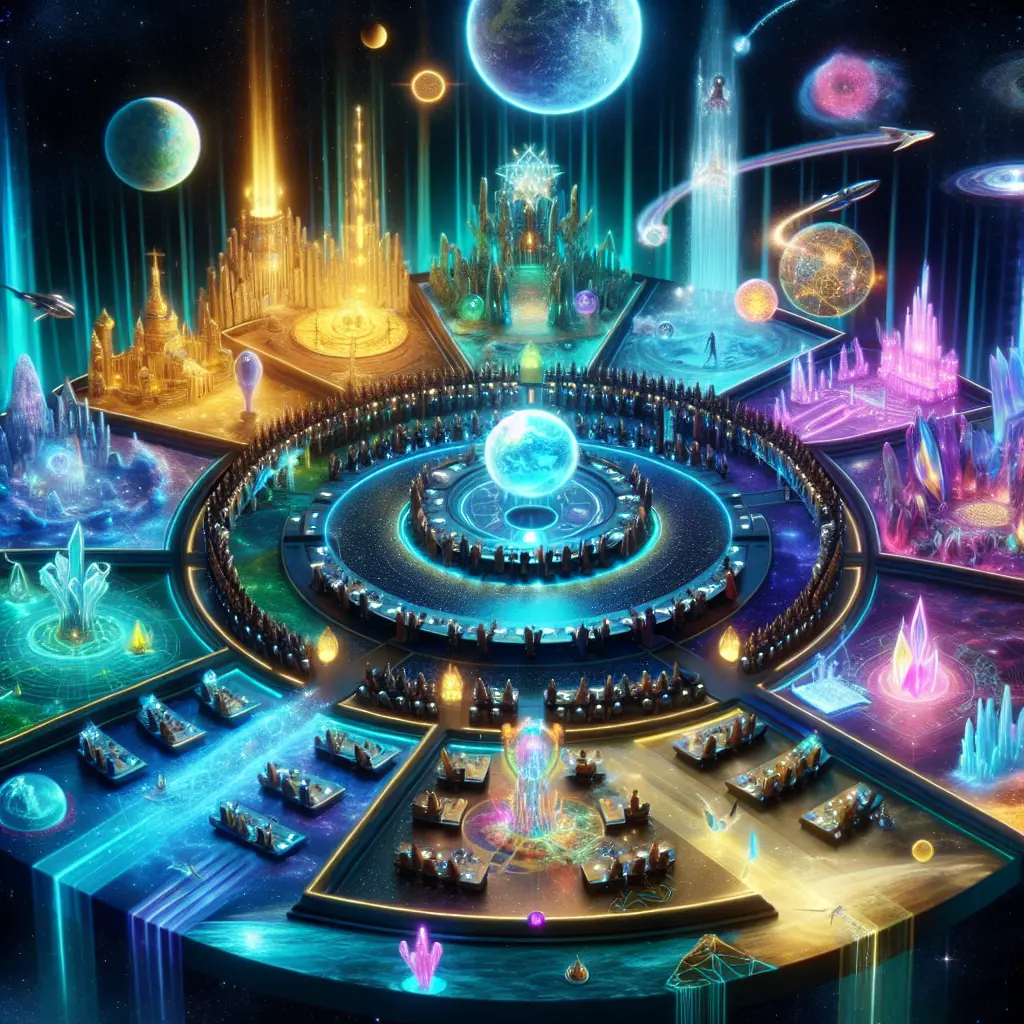
Multiversal politics and crossovers refer to the complex interactions, alliances, and conflicts that occur between different universes or realities within a fictional multiverse. Characters, governments, or factions from separate worlds engage in diplomacy, war, or cooperation, often leading to dramatic crossovers where heroes and villains from distinct universes meet. These narratives explore the consequences of interdimensional travel, cultural clashes, and the balance of power across multiple realities.
💡 Key Takeaways
- Understand how diplomacy, treaties, and alliances form across different realities in multiversal politics.
- Identify typical power dynamics—sovereignty, resource control, and deterrence—between universes and factions.
- Recognize common sources of inter-universal conflict and how crossover events can escalate or resolve tensions.
- Explore how sci-fi concepts like cyber futures and crossovers shape governance, institutions, and diplomacy in multiversal settings.
❓ Frequently Asked Questions
What is multiversal politics?
The interactions among actors from different universes—through diplomacy, treaties, alliances, and conflicts—that shape power across realities.
What is a multiversal crossover?
A scenario where characters, governments, or factions from separate worlds meet in a shared setting, often creating new alliances or rivalries.
Who can participate in multiversal diplomacy?
Governments, factions, corporations, or sentient beings with authority over their world may negotiate across universes.
What types of outcomes can multiversal crossovers produce?
Shifts in power, new treaties, altered borders, or dramatic alliances that change the balance across realities.
What role do gateways or portals play in multiversal politics?
They enable travel, trade, and strategic leverage, making control of access important bargaining chips in diplomacy.