Privacy, PII Handling & Policy Enforcement (Agent Architecture) refers to a system design where autonomous agents manage personal identifiable information (PII) according to defined privacy policies. These agents monitor data access, ensure compliance with legal and organizational regulations, and enforce rules for data usage and sharing. The architecture aims to protect sensitive information, minimize unauthorized access, and provide transparency and control over how PII is processed within digital environments.
Privacy, PII Handling & Policy Enforcement
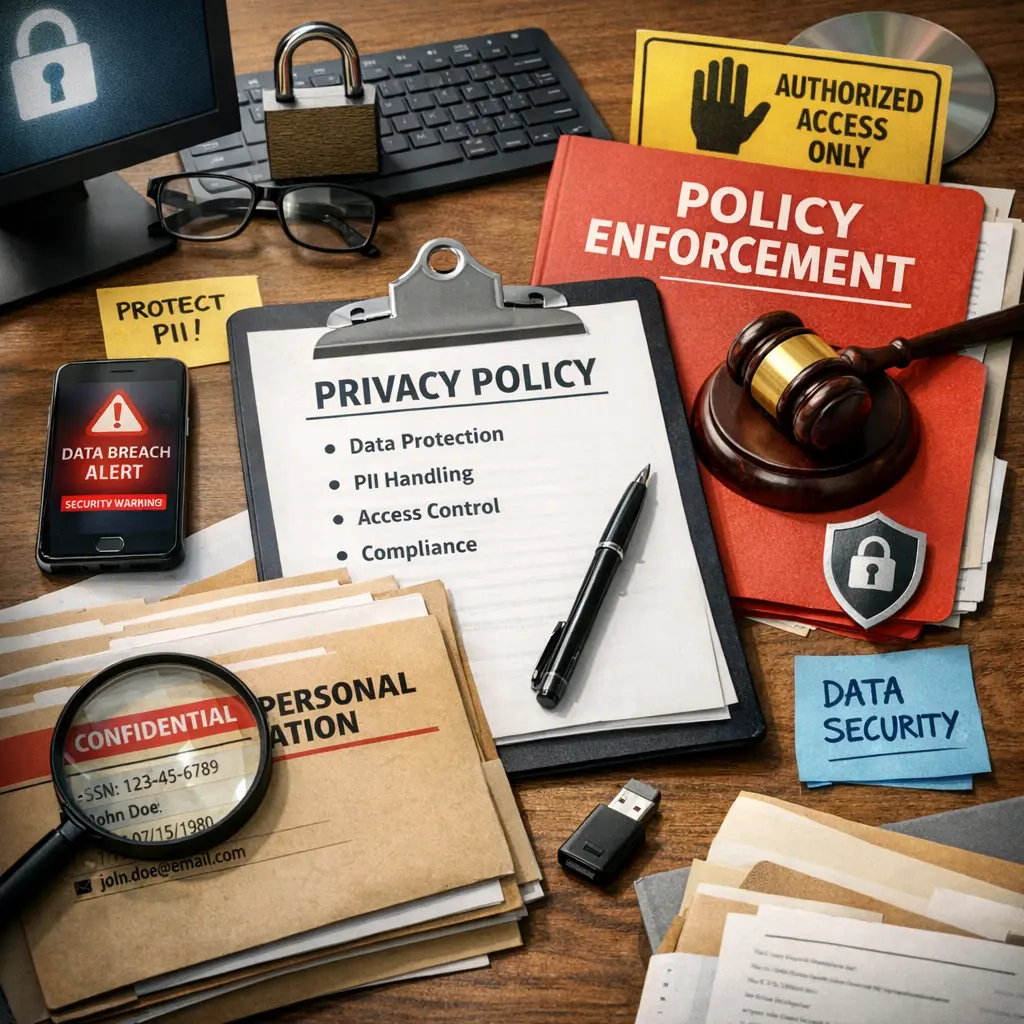
Privacy, PII Handling & Policy Enforcement (Agent Architecture) refers to a system design where autonomous agents manage personal identifiable information (PII) according to defined privacy policies. These agents monitor data access, ensure compliance with legal and organizational regulations, and enforce rules for data usage and sharing. The architecture aims to protect sensitive information, minimize unauthorized access, and provide transparency and control over how PII is processed within digital environments.
💡 Key Takeaways
- Identify what counts as PII and sensitive data in typical systems.
- Apply privacy-by-design practices: minimize data collection, limit retention, and secure storage and transfer.
- Understand how policy enforcement works in practice: access controls, monitoring, audits, and breach response.
- Know how to handle data subject rights (access, deletion, consent) and comply with applicable privacy regulations.
❓ Frequently Asked Questions
What is PII and why is it important to protect it?
PII (personally identifiable information) is data that can identify someone. Protecting it helps prevent identity theft, fraud, and privacy breaches.
What are common best practices for handling PII securely?
Collect only what you need (data minimization), restrict access, encrypt data in transit and at rest, and implement clear retention and secure disposal policies.
What does policy enforcement mean in the context of privacy?
Policy enforcement means applying privacy rules and controls (e.g., access controls, monitoring, incident response) to ensure consistent, compliant handling of PII.
What rights and considerations should guide PII processing?
Follow a lawful basis or consent, respect purpose limitation, honor data subject rights (e.g., access, correction, deletion), and comply with breach notification requirements when applicable.