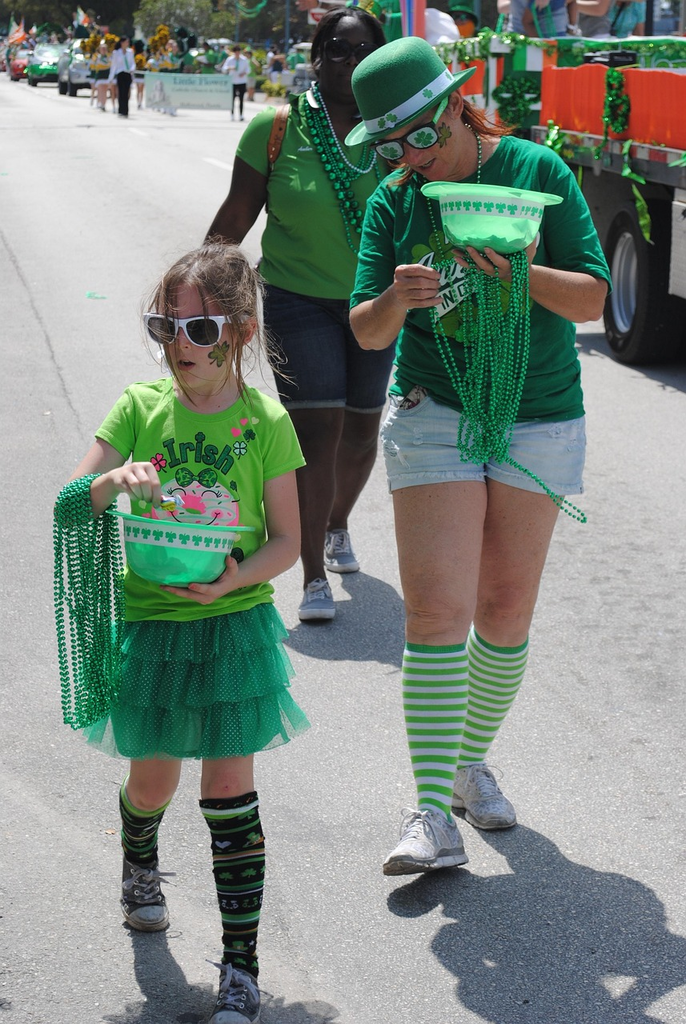
St. Patrick's Day attire typically features vibrant shades of green, symbolizing Irish heritage and luck. Common elements include shamrock-shaped accessories, leprechaun hats, and clothing adorned with festive slogans or Celtic designs. Many people wear green shirts, dresses, or even novelty costumes to celebrate. Accessories like beaded necklaces, face paint, and socks further enhance the festive look, helping participants express their holiday spirit and avoid the playful tradition of being pinched for not wearing green.
St. Patrick's Day Attire
St. Patrick's Day attire typically features vibrant shades of green, symbolizing Irish heritage and luck. Common elements include shamrock-shaped accessories, leprechaun hats, and clothing adorned with festive slogans or Celtic designs. Many people wear green shirts, dresses, or even novelty costumes to celebrate. Accessories like beaded necklaces, face paint, and socks further enhance the festive look, helping participants express their holiday spirit and avoid the playful tradition of being pinched for not wearing green.

💡 Key Takeaways
- Identify traditional St. Patrick’s Day attire elements (green clothing, shamrock motifs, and leprechaun-inspired accessories).
- Understand the cultural significance of wearing green on the holiday.
- Choose weather-appropriate, event-appropriate outfits for parades, gatherings, or pubs with festive flair.
- Create stylish and inclusive outfits that celebrate the holiday respectfully without relying on stereotypes.
❓ Frequently Asked Questions
What color is traditionally worn on St. Patrick's Day and why?
Green is worn to honor Ireland's shamrock and landscape; it’s also tied to folklore that wearing green protects you from leprechauns' pinches.
What symbols commonly appear on St. Patrick's Day attire?
Shamrocks, Celtic knots, and leprechaun imagery are popular symbols in clothing and accessories.
What are common accessories for St. Patrick's Day outfits?
Green hats, bead necklaces, pins, scarves, and shamrock-themed jewelry are frequently worn.
How should you dress for a family-friendly or public event?
Choose comfortable green clothing, avoid offensive symbols, and consider layering for weather.