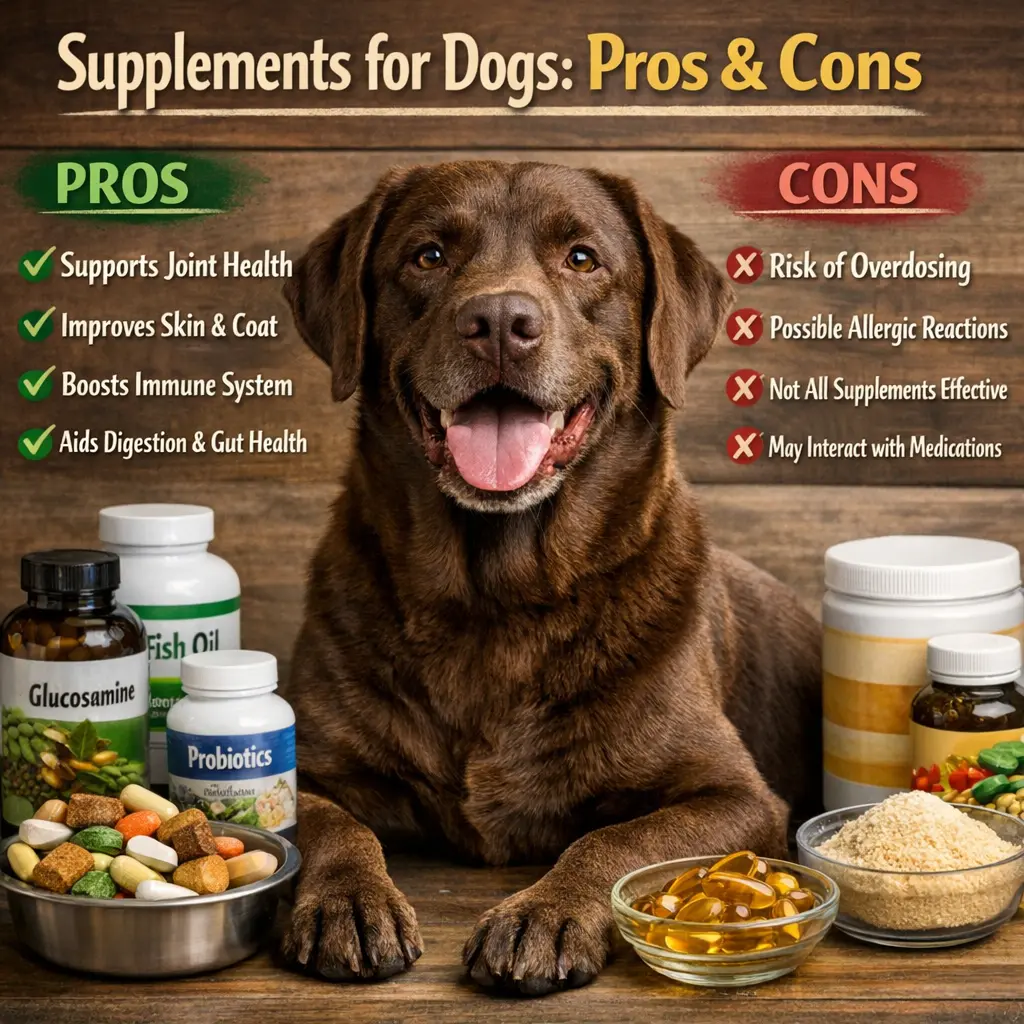
Supplements for dogs can enhance their diet by providing essential nutrients, supporting joint health, and boosting immunity, especially for pets with specific deficiencies or health issues. However, unnecessary supplementation may cause imbalances or adverse reactions, as some ingredients can interact with medications or lead to toxicity. It’s important to consult a veterinarian before adding supplements to ensure they are safe and appropriate for your dog’s individual needs.
Supplements for Dogs: Pros and Cons
Supplements for dogs can enhance their diet by providing essential nutrients, supporting joint health, and boosting immunity, especially for pets with specific deficiencies or health issues. However, unnecessary supplementation may cause imbalances or adverse reactions, as some ingredients can interact with medications or lead to toxicity. It’s important to consult a veterinarian before adding supplements to ensure they are safe and appropriate for your dog’s individual needs.
💡 Key Takeaways
- Identify common supplements for dogs and their typical purposes (e.g., joint support, digestive health, skin and coat).
- Assess safety, potential side effects, and interactions with medications or foods.
- Evaluate the strength of evidence behind popular supplements and recognize biased or false claims.
- Know when to consult a veterinarian, how to read labels, and how to approach dosing and product quality safely.
❓ Frequently Asked Questions
What is the main reason dog owners give supplements?
To address nutritional gaps or support a specific health issue when advised by a vet; supplements are not a substitute for a balanced diet.
Which common supplements are often used for dogs, and what do they target?
Omega-3 fatty acids for skin/coat and inflammation; Glucosamine/Chondroitin for joints; Probiotics for digestion. Evidence varies by dog and condition.
What are potential downsides of giving dog supplements?
Possible side effects, interactions with medications, quality issues, and overdose risk; not all supplements are needed or beneficial for every dog.
When should you consult a veterinarian before starting supplements?
If your dog has a medical condition, is pregnant or nursing, or takes other medicines; get a vet’s guidance on whether and how to dose.